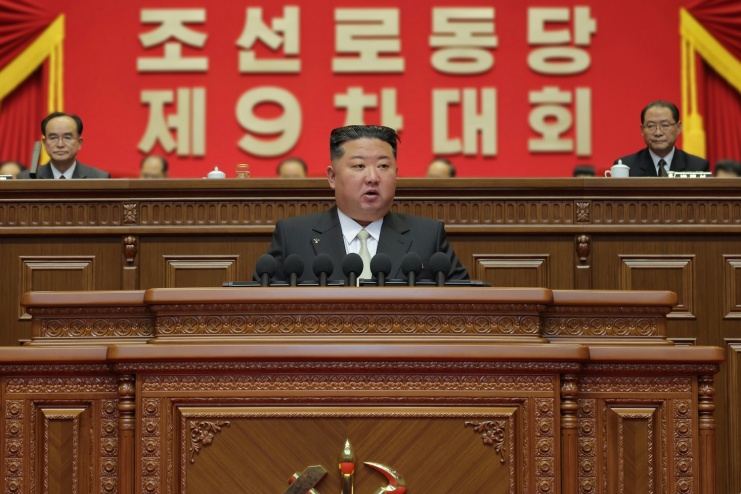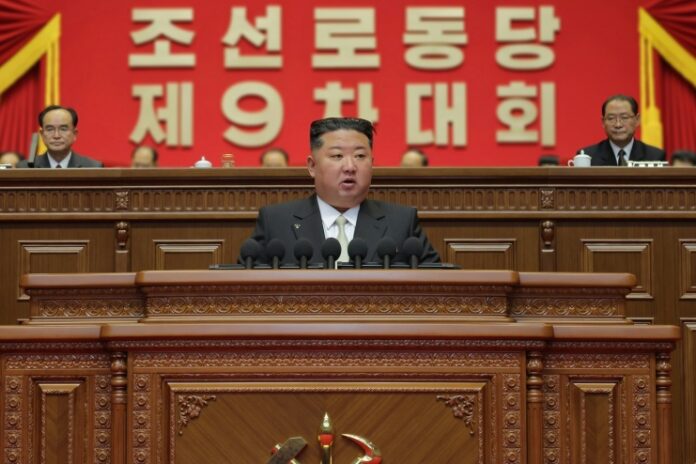
North Korea has launched a sweeping reshuffle of senior officials across party organs and state enterprises following the Ninth Congress of the Workers’ Party of Korea (WPK), held in February 2026, with sources indicating that economic performance is now the primary criterion for advancement.
A Daily NK source in North Hamgyong province said on Wednesday that the personnel shake-up had spread beyond party and government agencies to reach first- and second-tier state enterprises — a category referring to major state-run industrial and commercial units under direct central management. “Noticeable replacements of economically capable officials are taking place even at that level,” the source said. “Even influential provincial officials are visibly on edge.”
Observers inside the country interpret the reshuffle not as routine turnover but as a deliberate effort to restructure party-centered governance and tighten the framework for policy enforcement and accountability.
Candidates with hands-on experience in production management, finance, and administration are said to be the most frequently discussed for key posts. “Officials who can demonstrate results through concrete numbers and outcomes appear to be the ones moving into better positions,” the source said.
The shift suggests that authorities have concluded they can no longer afford to tolerate poor economic management. Unconditional loyalty, long a prerequisite for advancement in the North Korean system, appears to be giving way to a demand for demonstrable competence.
General affairs bureau gains power under Kim Yo Jong
At the center of the reshuffle is a striking elevation in the status of the general affairs bureau — a body that oversees internal party administration and discipline. Historically viewed as one of the weakest and least desirable postings within the party apparatus, the bureau has been transformed into a key power center following the appointment of Kim Yo Jong, the sister of Kim Jong Un, as its director.
“Not long ago, the general affairs bureau was considered the least influential department — one officials actively tried to avoid,” the source explained. “Now it is emerging as a core institution.” Who is assigned to its senior posts is increasingly seen as a reliable indicator of the leadership’s political priorities and the direction of future power operations.
Internally, the reshuffle is understood as both a reaffirmation of the leadership’s confidence in select officials and a tightening of party surveillance and control across all sectors of the economy.
The atmosphere among officials is one of heightened anxiety. As personnel reviews continue at the provincial level, some officials are treating the process not as a routine announcement but as a critical signal about their own political standing and future prospects.
Seniority and career track record no longer appear sufficient to secure a good posting. The ability to execute party policy and deliver measurable results is emerging as the decisive factor in North Korea’s post-congress personnel system, and observers are watching closely to see what the reshuffle ultimately means for how the country manages its economy and structures political control.
Reporting from inside North Korea
Daily NK operates networks of sources inside North Korea who document events in real-time and transmit information through secure channels. Unlike reporting based on state media, satellite imagery, or defector accounts from years past, our journalism comes directly from people currently living under the regime. We verify reports through multiple independent sources and cross-reference details before publication.
Our sources remain anonymous because contact with foreign media is treated as a capital offense in North Korea — discovery means imprisonment or execution. This network-based approach allows Daily NK to report on developments other outlets cannot access: market trends, policy implementation, public sentiment, and daily realities that never appear in official narratives.
Maintaining these secure communication channels and protecting source identities requires specialized protocols and constant vigilance. Daily NK serves as a bridge between North Koreans and the outside world, documenting what’s happening inside one of the world’s most closed societies.
Disclaimer : This story is auto aggregated by a computer programme and has not been created or edited by DOWNTHENEWS. Publisher: dailynk.com