
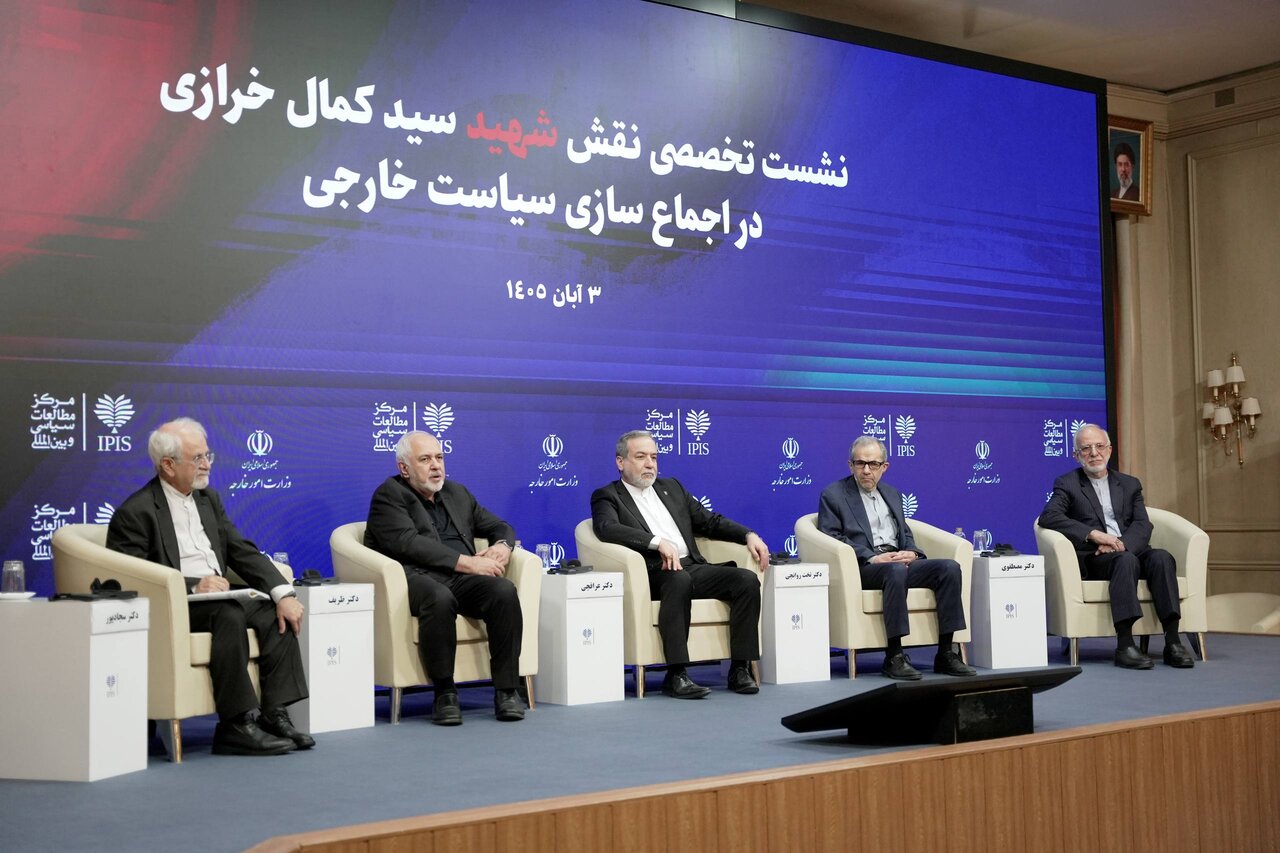
TEHRAN – Iranian Foreign Minister Abbas Araghchi has reaffirmed Iran’s readiness to cooperate with all countries in the region, particularly those bordering the Persian Gulf, stressing that lasting peace, security and stability in West Asia can be achieved only through regional cooperation and without foreign interference.
Speaking on Sunday at a ceremony marking the inauguration of the Martyr Kamal Kharrazi Museum and Document Center at the Foreign Ministry, Araghchi said, “Allow me to look beyond the war. We and the countries of the region must live together in peace, without foreign interference. This is the only way to achieve peace, security and stability in our region.”
Kharrazi served as Iran’s permanent representative to the United Nations from 1989 to 1997 and as foreign minister from 1997 to 2005. He subsequently chaired the Strategic Council on Foreign Relations, an advisory body on Iran’s foreign policy. He died on April 9, 2026, from injuries sustained in a US-Israeli airstrike on his home in Tehran on April 1.
“Our relations and communications with all these countries in the Persian Gulf region remain in place, and we are working to reach a common approach and understanding on a new security structure for the region. This is the only way to establish peace and stability in our region,” he said.
Regional countries must take responsibility for their own security
At the gathering, Araghchi recalled Kharrazi’s remarks at an Iranian-Arab dialogue in Doha in May 2025, in which the late diplomat emphasized that regional prosperity and security depended on cooperation among regional countries rather than reliance on foreign military forces.
“The policy outlined by the late Dr. Kharrazi before the past two wars remains the Islamic Republic of Iran’s fundamental position: regional security must be ensured by the countries of the region themselves, without relying on or allowing the presence of foreign forces. The Islamic Republic of Iran stands ready to help achieve this goal and is prepared to engage in dialogue on the matter,” he said.
“Our neighborhood policy is based on peaceful coexistence with our neighbors. We have been, are, and will remain neighbors. Therefore, we must find a common solution to ensure our own security and that of the region, with all regional countries involved and no foreign forces interfering,” Araghchi added.
The foreign minister argued that the two wars against Iran since 2025 had demonstrated the shortcomings of regional security arrangements built around a foreign military presence.
According to Araghchi, US military bases in the region had failed to provide the security expected by their host countries and had instead contributed to instability.
“These wars have shown that the security structures of some countries in the region, which relied on a foreign military presence and interference, have failed to deliver the desired results. US bases in the region have not brought peace and security to the countries hosting them. On the contrary, their presence has itself become a source of insecurity,” he said.
Araghchi added that these bases had been involved in attacks against Iran and had subsequently come under Iranian retaliatory action, arguing that their presence had intensified insecurity rather than prevented it.
He further maintained that foreign military forces were deployed in the region primarily to protect Israel, a principal source of instability and conflict in West Asia.
Iran calls for a new regional security order
Araghchi said the experience of the recent wars had prompted a reassessment of existing security arrangements and created an opportunity for regional countries to pursue new approaches based on their own capabilities and cooperation.
He said Iran welcomed initiatives that would enable countries in West Asia to take greater responsibility for their collective security without depending on external military powers.
The foreign minister also stressed that the war against Iran had fundamentally changed the regional landscape, including the situation in the Strait of Hormuz.
“Nothing will be the same as it was before the 40-day war,” he said, emphasizing that regional countries would need to recognize the new realities.
“The current war has changed everything. We must accept that new realities have emerged. Shipping routes through the Strait of Hormuz will no longer be the same as before, and the strait will no longer be managed as it was in the past. There are issues we have discussed in negotiations, and those talks will continue,” Araghchi said.
Disclaimer : This story is auto aggregated by a computer programme and has not been created or edited by DOWNTHENEWS. Publisher: tehrantimes.com




