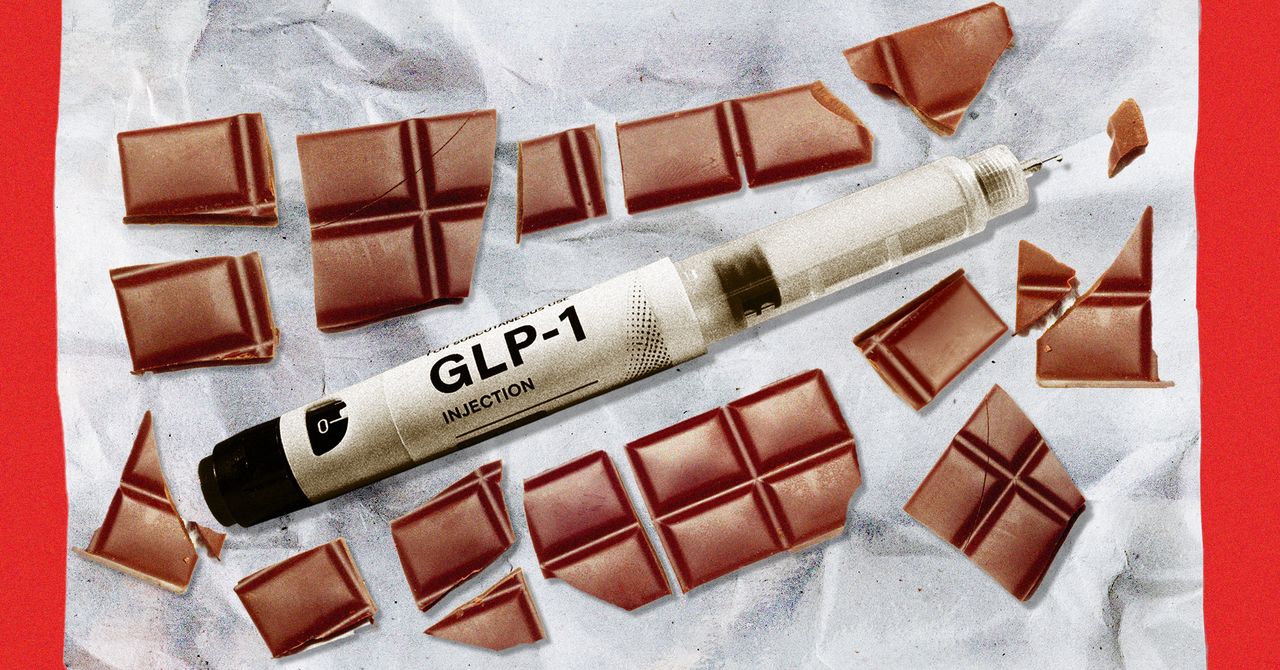
First came GLP-1 injections, then GLP-1 pills. Now there’s GLP-1 chocolate. That’s right, a GLP-1 drug in chocolate.
To be clear, this isn’t a new medication rubber-stamped by the Food and Drug Administration. It’s a copycat product offered by telehealth outfit Journi Health, and it’s aptly called Melt. The chocolate morsels, which are taken once daily, contain orforglipron, the active ingredient in Eli Lilly’s prescription weight-loss pill Foundayo. (Eli Lilly also makes the GLP-1 injectable medications Mounjaro and Zepbound.)
As GLP-1 shots exploded in popularity, Lilly and Novo Nordisk, which makes Ozempic and Wegovy, knew they could appeal to even more patients if they put their drugs in pill form.
“One of the bigger barriers to adoption has been that some patients just don’t want to take an injection,” Ken Custer, executive vice president of Eli Lilly, previously told WIRED. Foundayo was approved in April, while a pill version of Novo Nordisk’s Wegovy won approval in December 2025.
And here’s where Journi Health’s pitch comes in. Founder Luna Yu says Melt is for people who have difficulty with injections or swallowing pills, including those who are new to GLP-1s as well as those already taking one who are looking to maintain their current weight. “Lastly, it’s for the microdosers who are looking for the longevity benefits,” she says. (For the record, taking any GLP-1 medication below the lowest FDA-approved or standard therapeutic dose has not been tested or proven effective in human trials.)
Yu isn’t a doctor, but Melt does require a prescription from one. Would-be patients go through a virtual medical evaluation where a licensed clinician reviews their health history, determines if Melt is a good fit, and sets the dose. It costs $189 for a monthly subscription of 24 individually wrapped squares of chocolate, which includes physician review. (Foundayo’s list price is $649 for a 30-day supply, but with insurance it could be much lower.)
Melt is considered a compounded drug, essentially a custom mix made for a patient by a pharmacy using FDA-approved ingredients but with a formulation that is not itself FDA approved. The FDA allows pharmacies to compound medications when there’s a patient need—for instance, if a patient is allergic to a dye or ingredient in a medication or needs a smaller dose because of their weight—or when the brand-name version is in shortage.
When injectable GLP-1s were in shortage from 2022 through early 2025, compounding pharmacies were allowed to make their own versions for patients, leading to a booming online market. Telehealth companies sold their versions for a fraction of the price of the name-brand medications, making them a more affordable option for people without insurance coverage for GLP-1s.
Now that commercial GLP-1s are no longer in shortage, the FDA says pharmacies cannot routinely compound what are “essentially copies” en masse, though there are some exceptions for documented, patient-specific medical needs.
FDA has expressed particular concerns with unapproved GLP-1 drugs and has cracked down on virtual clinics selling them. Eli Lilly has filed multiple lawsuits against companies selling them, but the drugs still remain available online.
When asked about Journi’s Melt, a spokesperson for Eli Lilly told WIRED, “Foundayo is an FDA-approved oral orforglipron medicine, which was developed through years of innovative science and backed by robust clinical trials. An unstudied knockoff that uses chocolate for purported weight loss treats a serious health need as a marketing gimmick. Regulators and law enforcement must take decisive action against knockoff products being marketed to unsuspecting consumers.”
Yu says Journi Health is able to offer Melt because it’s not an exact copy of the original. “It’s really in a novel form factor whereby it allows the patient to have a different experience.” Plus, she says, an edible formulation meets a need for patients who have trouble with injections or swallowing pills.
“We’ve spoken with patients who’ve discontinued treatment because of these barriers,” she says. “They deserve alternatives worth exploring.”
Whether the FDA will find this convincing remains to be determined. For now, though, all that stands between patients and the “novel form factor” is a few clicks.
Disclaimer : This story is auto aggregated by a computer programme and has not been created or edited by DOWNTHENEWS. Publisher: wired.com