
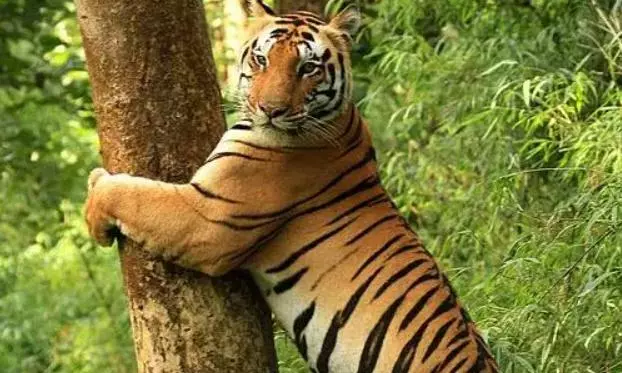
The National Tiger Conservation Authority (NTCA) has initiated an investigation into missing tigers, and possible poaching of big cats in Nagarjunasagar Srisailam Tiger Reserve (NSTR) with official sources saying that a senior officer will soon visit the reserve for an on the spot investigation.
Even as this probe, following a report on August 2 in these columns on 22 tigers missing from NSTR in the last couple of years is set to get underway soon, the NTCA has written to all tiger-bearing states, warning their chief wildlife wardens (CWSs) to be on the alert to prevent poaching and illegal trade in tiger products.
Declaring that the “vulnerability” of wild tigers, which account for more than 70 per cent of the world’s wild tigers, “is beyond mention,” NTCA inspector general Dr Sanjayan Kumar cautioned all CWWs that the demand for tiger parts and poaching “pose a serious threat to tiger population and may have implications for the illegal transboundary trade in tiger parts and derivatives including tiger landscape of India.”
Consequently, the NTCA official said, all tiger-bearing states must enhance “preventive and enforcement measures” to “strengthen protection of tigers and prevent poaching and illegal trade in tiger parts and derivatives.”
Calling for “heightened vigilance” at the field-level, he said, this must be done, “particularly in vulnerable areas and along potential routes used for illegal wildlife trafficking.”
The NTCA official also called for prompt investigations into incidents of tiger poaching, seizure of tiger parts or products, or suspected illegal trade having possible international linkages, and action taken against anyone found involved in such activities under the provisions of the Wild Life (Protection) Act, 1972, and other relevant laws.
In a letter to all CWWs dated July 31, Dr Kumar said that it had come to the NTCA’s notice with it receiving several reports regarding instances of poaching of tigers, illegal trade and seizure of tiger products from Cambodia and Myanmar. As per reports, there is still demand for tiger body parts and derivatives in countries in South East Asia including China, the letter said.
Disclaimer : This story is auto aggregated by a computer programme and has not been created or edited by DOWNTHENEWS. Publisher: deccanchronicle.com




