By Anushree Mukherjee
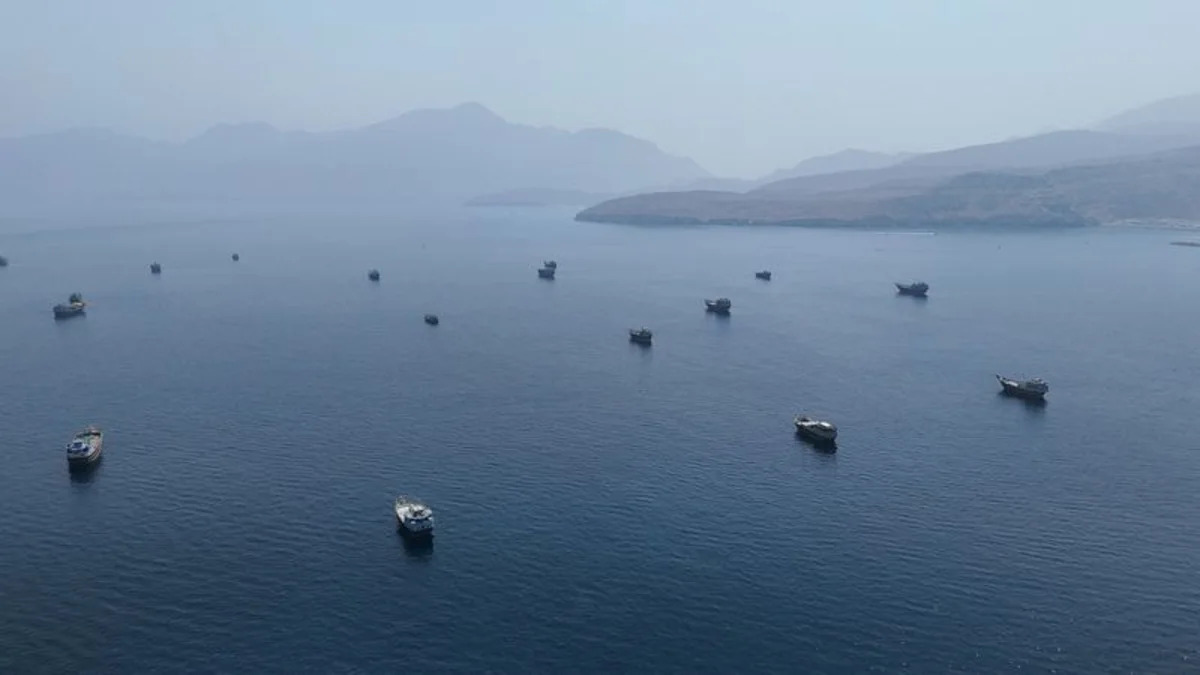
LONDON, Sept 22 (Reuters) – Oil prices fell to a two-week low on Tuesday as prospects for Gulf supplies improved, with Iran signaling it could reopen the Strait of Hormuz within seven days and Saudi Arabia set to resume exports from its Red Sea port of Yanbu.
The Brent crude futures November contract was down $2.11, or 2.1%, to $98.23 a barrel at 1151 GMT.
The WTI October contract, which expires on Tuesday, lost $2.48, or 2.59%, to $93.30 a barrel. The more actively traded November contract was down $2.36, or 2.55%, at $90.01 a barrel.
Brent November, WTI October and WTI November futures all touched their lowest levels since September 8.
Iran can reopen the Strait of Hormuz within seven days if the US eases military pressure and lifts its blockade on Iranian ports, a senior Iranian official told Reuters on Tuesday.
The official said the Iranian delegation to the UN General Assembly in New York has full authority to revive diplomacy with the US.
Hamad Hussain, senior climate and commodities economist at Capital Economics, said the Iranian comments were a sign that diplomacy efforts could be working.
Before US-Israeli attacks on Iran began in late February, the Strait of Hormuz handled about one-fifth of global oil and liquefied natural gas supplies.
“There may also be other obstacles, such as the issue of tolls and fees, to overcome before a lasting solution can be achieved,” Hussain added.
Saudi Arabia has restarted operations at its East-West Pipeline and could resume exports from Yanbu port later on Tuesday, three sources briefed on the matter said.
Drone attacks forced Saudi Arabia to shut the pipeline on September 13, halting crude loadings at Yanbu.
Market focus is also on US President Donald Trump’s meetings with world leaders at the UN General Assembly this week, against the backdrop of an unstable Middle East and Russia’s 4-1/2-year-old war in Ukraine that shows no signs of abating.
Meanwhile, Saudi Aramco has increased exports through the Strait of Hormuz after the disruption at Yanbu. Around 14 million barrels of its crude were loaded on seven supertankers inside the Gulf on Sunday, tanker tracking data showed.
Ole Hansen, head of commodity strategy at Saxo Bank, said he does not see much further downside to oil prices until supplies increase through the Strait of Hormuz, particularly of refined products where shortages are most acute.
Diesel prices have rallied in Europe and the US to record highs as wars in Iran and Ukraine sharply cut exports from some of the biggest producers such as Russia, Saudi Arabia and the United Arab Emirates.
(Reporting by Anushree Mukherjee in London, Pranav Mathur in Bengaluru and Trixie Yap in Singapore; Editing by Shri Navaratnam, Louise Heavens and Mark Potter)
Disclaimer : This story is auto aggregated by a computer programme and has not been created or edited by DOWNTHENEWS. Publisher: finance.yahoo.com