It’s said that meetings are where minutes are kept but hours are lost.
One lesser-documented but still painful consequence of the 2026 Formula 1 regulations has been the need to map out exactly how the limited quantity of electrical energy can be deployed and recharged to achieve the so-called ‘optimal lap’. And that, naturally, requires a meeting – albeit, perhaps unusually, a productive one.
Since the energy store on an F1 car has a capacity of 4 megajoules, but the rules permit between 6 and 9MJ to be deployed per lap depending on the circuit, the car is continuously either expending electrical energy or harvesting it. Ahead of each grand prix, the FIA publishes a document which not only lays out headline figures such as the deployment limit, but also drills into minutiae such as the ‘low-power zones’ where harvesting is restricted to avoid large differences in closing speeds between cars.
There is an optimal balance to be found in identifying areas where drivers can minimise speed lost by harvesting, and where the available electrical boost can be best deployed to improve laptimes. This obviously differs from circuit to circuit depending on the ratio of straights to corners, the length of those straights and the radius of the corners.
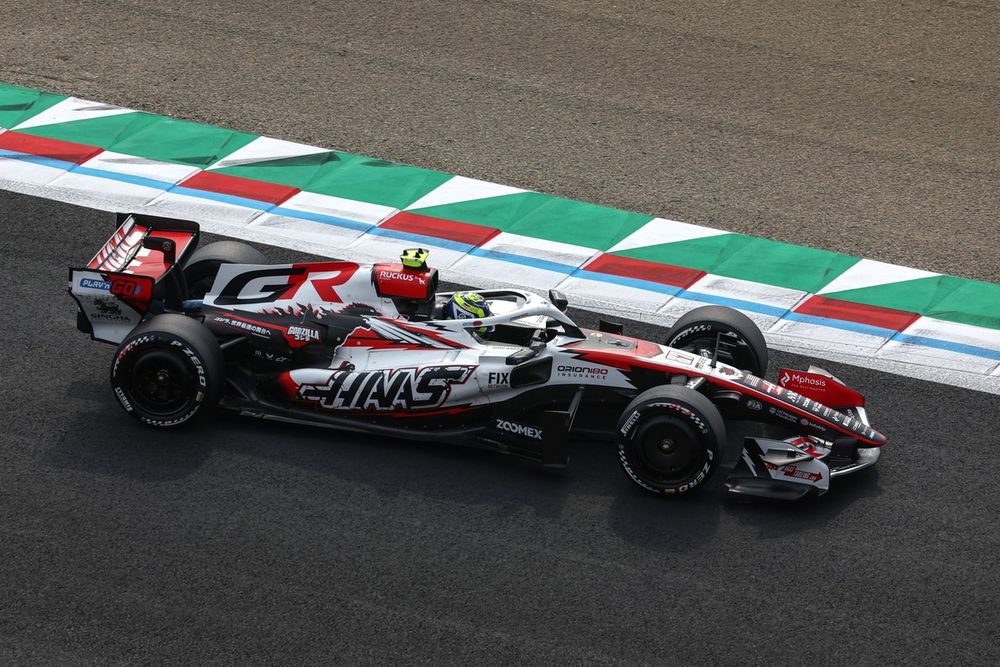
“It’s a lot of numbers on a sheet,” Oliver Bearman told media including Motorsport.com.
“And actually, with distances of the lap as well, it’s a bit confusing. Luckily we have a good group upstairs who are translating that for us mortals and sort it out.
“But, yeah, it’s a lot more stuff to go over. And, for example, now we have a dedicated half-hour, 45-minute PU meeting [every weekend], which we would never even think of having last year because it was so straightforward.
“So it’s definitely another thing to think about. But now we’re on round five, so we’re getting there – we’re getting up to speed step by step.”
Rule tweaks introduced in Miami aimed to reduce some of the more intrusive aspects of energy management
Photo by: James Sutton / Formula 1 / Formula Motorsport Ltd via Getty Images
In the set of rules tweaks announced before the Miami Grand Prix weekend, the FIA reduced the energy cap at some circuits – Montreal being one of them – where the track characteristics limit the amount of energy which can be harvested under braking. The aim of the change was to address driver complaints that they were having to lift-and coast too often, and take fast corners at part-throttle, to avoid being running out of energy on the straights.
It also reduces the need for super clipping, where the electrical motor runs in reverse torque while the car is at full throttle, acting like a dynamo to charge the battery. Under the initial 2026 parameters it would have been highly likely that in Montreal, for instance, cars would have run out of charge on the back straight and have to super clip before the final corner, reducing the challenge and spectacle of the famous ‘Wall of Champions’ at the exit onto the start/finish straight.
But the inherent compromise is that this comes at a cost to overall lap time, because top speeds on the straights reach a lower peak, although it also makes for a less savage drop-off in speeds as the energy runs out. So the mathematical challenge persists.
“Reducing the amount you recover reduces the amount that you deploy,” explained Haas head of car engineering Hoagy Nidd during a media call during the April break.
“And what it means is that you can recover a greater proportion of what you need to do whilst under braking conditions or under part-throttle conditions on corner exit, normal sort of grip limited areas of the circuit. That means that if you achieve your energy target under, how do I say, more normal driving conditions, you don’t need to start altering your behaviour in order to make the final megajoule of energy there.
“So you don’t need to start having lift and coast, you don’t need to start using super clipping, you don’t need to have the drivers holding part throttle on exit corners to avoid deploying in one place and putting it somewhere else.
“Yeah, it’s something that, in a way, it’s kind of introducing a problem to fix another problem. Maybe not ideal, but it’s probably where we are with this current hardware across the whole grid.”
We want your opinion!
What would you like to see on Motorsport.com?
– The Motorsport.com Team
Disclaimer : This story is auto aggregated by a computer programme and has not been created or edited by DOWNTHENEWS. Publisher: motorsport.com