
Historical background and human ties: Relations between Iran and Russia are not merely relations between two governments or neighboring countries. They are rooted in a long history of contact, dialogue, travel, trade, scholarship, literature and mutual understanding between the two peoples. In this context, culture has emerged as the most natural and enduring language of dialogue between Iranians and Russians — a language through which poets, writers, artists, intellectuals and ordinary people in the two lands have communicated with one another long before politicians began to do so.
The historical relations between the two countries date back more than five centuries. From the presence of Persian literature in Russia’s cultural landscape and the expansion of Iranian studies and Persian-language education at Russian universities, to the translation of Russian literary works into Persian, these exchanges have consistently served as a foundation for mutual understanding.
For Iranians, names such as Alexander Pushkin, Leo Tolstoy, Fyodor Dostoevsky and Anton Chekhov have formed an important part of the cultural experience of several generations. In Russia, meanwhile, Ferdowsi, Saadi, Hafez, Omar Khayyam and Nezami are also well known, while Persian literature holds a distinguished position within the country’s long tradition of Iranian studies. This intellectual exchange demonstrates that the two peoples can come to know one another not only through politics and economics, but also through culture and shared human experience.
Strategic capacities and contemporary events
This historical heritage has today become one of the most important assets in Iran-Russia relations in the 21st century. In recent years, the organization of cultural weeks, academic cooperation, closer interaction among centers of Iranian and Oriental studies, and exchanges of artistic groups have created new opportunities.
In 2025, Russia’s Cultural Week was held in Iran, and now the Cultural Days of Iran in Russia are underway from September 25 to October 4.
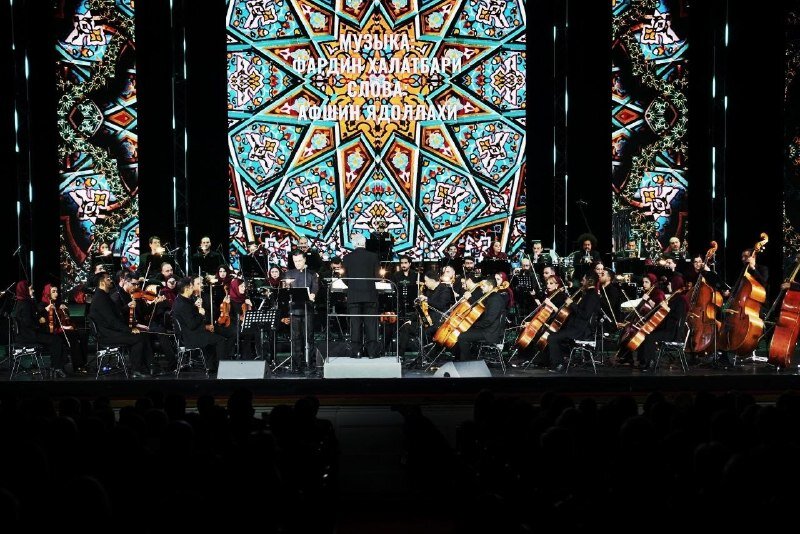
Against this backdrop, the “Cultural Days of the Islamic Republic of Iran in the Russian Federation” provide an opportunity to transform a historical asset into a platform for future cooperation. The participation of a 168-member delegation of artists and cultural figures, representing the 168 martyred students and the teacher of Shajareh Tayyebeh School in Minab, together with the inaugural ceremony at the historic Bolshoi Theatre — the heart of Russia’s cultural life — marks a significant milestone. The enthusiastic reception by the Russian public of performances by the National Orchestra of Iran and the presence of Iranian visual artists have made the event one of Iran’s most extensive cultural programs ever held in Russia.
The program is being held in four cities — Moscow, St. Petersburg, Kazan and Astrakhan — and encompasses a wide range of activities, including works from nearly 30 artistic fields, musical performances, cinema, animation, creative industries and special programs for children.
The event elevates culture from a “side program” to a “strategic field for mutual understanding and cooperation.” Academic meetings addressing the role of culture in deepening bilateral relations, the position of the Persian language, Iranian studies and the written heritage of the two countries demonstrate that cultural cooperation between Tehran and Moscow has moved beyond exhibitions and performances toward the production of knowledge, ideas and joint projects.
The same approach is being pursued in St. Petersburg. Meetings between the culture ministers of the two countries, the convening of the Joint Cultural Committee and the signing of an agreement on joint film production are examples of how shared interests can be transformed into sustainable mechanisms of cooperation.
Shared civilizational values and complements to political relations
Iran and Russia are both civilizations with deep historical memories. Both attach importance to family, hospitality, respect for elders, historical heritage, literature, music and the preservation of cultural identity. In both societies, culture is an integral part of how people understand their history, identity and place in the world. This characteristic provides a foundation for deeper dialogue between the two peoples.
Culture also complements political and economic relations. No economic agreement can reach its full potential without mutual understanding and social trust, and no lasting political relationship can remain independent of ties between peoples. The better Iranians know Russia, and the more directly Russians experience Iran, the greater the opportunities for expanding interaction in scientific, academic, tourism, media, economic and technological fields.
This reality has gained greater significance amid the current international environment. In recent years, the Islamic Republic of Iran has witnessed the positions and actions of the Russian Federation in international forums in support of Iran’s national sovereignty and opposition to the use of force. In particular, during the attacks by Israel and the United States against Iran, Russia adopted a clear position at the United Nations Security Council condemning the actions and describing the attacks as contrary to the UN Charter and international law.
Naturally, such positions are taken into consideration in Iran’s political memory. Yet what makes relations enduring is the connection among the societies, universities, artists, media organizations and younger generations of the two countries. Culture can sustain at the societal level what has been initiated at the political level.
The Minab Cultural Caravan across four major Russian cities
The Cultural Days of Iran in Russia are part of a long-term process in which the four host cities have become venues for direct encounters between Iranians and Russians. Performances by the National Orchestra of Iran, featuring 60 musicians, exhibitions of handicrafts, film programs, and academic meetings provide opportunities for Russian audiences to gain direct exposure to Iran.
Kazan holds a particularly significant position in this process. In 2026, the city is hosting important cultural events related to the Islamic world, while the historical coexistence of diverse cultures in Tatarstan makes it a suitable setting for dialogue. Astrakhan, owing to its historical position in the Caspian region, represents another link in this chain. Expanding the geographical scope of the program to Kazan and Astrakhan conveys a clear message about the importance of paying attention to the regional and people-to-people dimensions of bilateral relations.
Cinema and the creative industries represent one of the most transformative areas of cooperation. The agreement on joint film production and professional meetings can pave the way for projects that not only bring the two markets closer together, but also introduce the shared narratives of the two societies to audiences in other countries.
The same approach is being pursued in academia and the field of written heritage. The revival of the “Iran Room” at the Institute of Oriental Manuscripts in St. Petersburg, along with Persian-language meetings, represents an investment in the shared historical memory of the two peoples.
The Future of cultural and people-to-people relations between Iran and Russia
Today, we need cultural diplomacy more than ever — diplomacy founded on mutual understanding and respect for civilizational diversity. In the contemporary world, the most effective way to counter media stereotypes is to create opportunities for peoples to meet and interact directly. Artists, scholars and students who take part in this process are the true ambassadors of the ties between the two societies.
Iran and Russia have reached a stage in which the potential for cooperation extends far beyond traditional forms of bilateral relations. Based on the text of the Comprehensive Strategic Partnership Treaty, cooperation between the two countries can develop into a deeper bond when the peoples of the two countries also gain a better understanding of one another. Culture, in this context, is not at the margins of bilateral relations; it is one of their principal foundations.
We believe that the two great peoples of Iran and Russia, despite their differences, share many commonalities that can be used to build a future based on mutual respect and cooperation.
The Cultural Days of Iran in Russia provide an opportunity to see, hear and better understand one another. The ultimate message of this event is that relations between the two countries are not defined solely in their capitals. Rather, these relations are rooted in the hearts, minds and deep people-to-people ties that have developed throughout history and will continue to endure.
Disclaimer : This story is auto aggregated by a computer programme and has not been created or edited by DOWNTHENEWS. Publisher: tehrantimes.com




