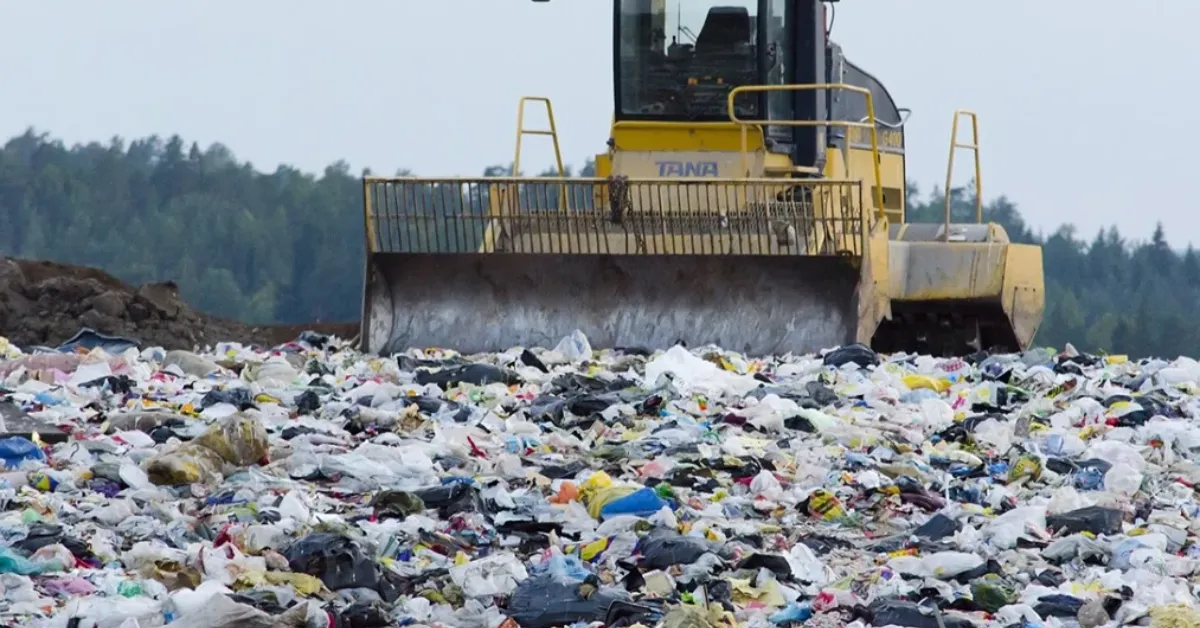
For decades, India’s growing cities have dealt with their waste by moving it out of sight. Over time, municipal dumping grounds have grown into mountains of mixed garbage, often close to homes, informal settlements and roads.
But what happens when a city finally clears one of these mountains? Can land occupied by garbage for years become a park, a forest or another public space? And what happens to the people who have depended on these sites for their livelihoods?
The Dumpsite Remediation Accelerator Programme (DRAP), launched in November 2025, seeks to accelerate the cleanup of 214 major legacy dumpsites across 200 urban local bodies (ULBs). These sites account for 80% of the remaining legacy waste targeted under the programme, which aims to reclaim land for productive urban use while preventing the creation of new dumpsites by September 2026.
The programme covers 200 ULBs and targets complete remediation of 214 of the most challenging dumpsites across states and Union territories. The scale of the task is considerable, but the experiences of cities already working on or reclaiming such sites show that the challenge extends beyond removing old waste. It involves deciding what happens to the recovered land, where the extracted material goes, and whether the people who have worked with waste for years have a place in the new system.
1. Gorakhpur: A former dumping ground becomes an eco-park
In Gorakhpur, Uttar Pradesh, a 40-acre site that had served as the city’s primary waste disposal ground for seven years has been transformed into the Kachre Se Kanchan Rapti Eco Park, in September 2026.
The remediation involved processing around 400 tonnes of accumulated waste every day. Instead of treating the site as a dumping ground indefinitely, the project sought to recover the land and give it a public-facing purpose.
The cleared site was subsequently developed into a public space with green lawns, walking and jogging tracks, a children’s play area, an open gym and a yoga zone. Solar lighting and water-conservation structures were also incorporated.
According to the Ministry of Housing and Urban Affairs, the park also has a livelihood component. A women-led self-help group, Shakti Ki Rasoi, operates a restaurant on the premises. The park reportedly attracts around 500 visitors daily.
2. Raichur: Reclaiming a dumpsite for green cover
In Raichur, Karnataka, the reclamation of the Yakalaspura dumpsite is taking a different route. Rather than developing a conventional public park across the reclaimed land, the project includes restoring green cover.
The 35-acre site has undergone scientific remediation, with approximately 62,252 metric tonnes of waste processed and nearly 22 acres of land reclaimed till 2026, according to the Ministry of Housing and Urban Affairs.
Part of the restored area now supports a Miyawaki forest spread across approximately five to seven acres. The Miyawaki method involves planting a dense mix of native species to encourage the development of green cover.
At a former dumpsite, such an intervention offers a potential ecological use for land cleared of accumulated waste.
Planting trees alone does not establish that the land is free from contamination or suitable for every ecological use. Soil quality, the survival of planted species, groundwater conditions and continued maintenance all matter.
3. Delhi: Bhalswa shows why clearing a landfill takes time
Delhi’s Bhalswa dumpsite offers a contrasting picture.
While cities such as Gorakhpur have developed public spaces on reclaimed land, Bhalswa illustrates the scale and complexity of processing decades of accumulated waste.
Dating back to 1994, the landfill occupies approximately 70 acres. In June 2022, it held around 73 lakh metric tonnes of legacy waste. Biomining operations began in July that year, involving the excavation, treatment and mechanical separation of old waste into different material streams.
By 26 May 2026, approximately 43 acres had been reclaimed. However, around 23.17 lakh metric tonnes of waste, including legacy and fresh waste, remained to be processed, according to the Ministry of Housing and Urban Affairs.
The figures show that reclaiming a large dumpsite is a gradual process. Biomining involves separating recoverable materials from mixed waste, with different fractions requiring different destinations. Recovered recyclables may enter recycling chains, combustible material may be processed into refuse-derived fuel, and soil-like or inert material may be used for suitable purposes, subject to its quality and applicable environmental requirements.
Even after the visible mound shrinks, the land cannot automatically be considered ready for housing, parks or other public uses. Environmental safeguards, including leachate management and fire prevention, remain important, as does monitoring the quality and stability of reclaimed ground.
For communities living near Bhalswa, the measure of success is therefore not just the volume of waste removed. It is whether the risks associated with the landfill actually decline, whether fresh waste is managed appropriately and whether the recovered land ultimately serves a clearly defined local purpose.
4. Pune: What happens to the people who work with waste?
Pune provides an example of how waste workers can be incorporated into a city’s everyday waste-management system. SWaCH, a worker-owned cooperative of waste pickers, enables its members to collect segregated waste door to door and recover recyclable materials.
Workers provide a service to households while earning from user fees and the sale of recyclables.
The model grew out of organising by the Kagad Kach Patra Kashtakari Panchayat, a waste-pickers’ union that has advocated for workers’ rights since 1993.
Although Pune’s cooperative model is not itself an example of a former dumpsite being turned into a park, it offers a useful way to examine the livelihood dimension of remediation.

A 2025 study on Delhi’s waste infrastructure highlights a related concern. The closure of traditional waste collection and sorting points, known as dhalaos, and their replacement by compactors or other facilities have affected informal waste pickers, particularly women. Some have had to use their homes for sorting and storing waste, blurring the boundary between their workplace and living space.
The transition to a new waste-management system therefore needs to account for the people already working within the old one. Workers need safe working spaces, protective equipment, fair and predictable earnings, access to social security and a meaningful role in decisions affecting their livelihoods. Where new processing facilities are established, cities should assess whether experienced waste pickers can be employed or organised into cooperatives to run parts of the system.
The real test begins after remediation
DRAP’s national target is ambitious, but the scale of the remaining work is substantial.
In January 2026, the Ministry of Housing and Urban Affairs reported that 1,138 dumpsites had been fully remediated and 1,020 were under remediation, out of 2,488 identified sites containing more than 1,000 tonnes of waste each. Approximately 15.51 crore metric tonnes of legacy waste had been processed, and 8,484 acres of land reclaimed.
These figures indicate the scale of the intervention, but they do not by themselves establish whether nearby residents are experiencing better air quality, whether groundwater risks have declined, or whether waste workers have secured safer livelihoods.
The examples from Gorakhpur and Raichur show how reclaimed land can be put to new uses, while Bhalswa demonstrates why remediation cannot be measured only by the visible reduction of a garbage mound.
So for cities, the practical priority is twofold: deal responsibly with the waste accumulated over decades and stop creating new mountains through inadequate segregation, collection and processing.
A reclaimed site is only the beginning. Its real value will depend on what replaces the dump, how effectively the city manages the waste it generates every day, whether the land is safe for its intended use, and whether the people who have long handled that waste are recognised as essential workers in the process.
Sources:
‘Dump Site Remediation Acceleration Plan’: By Ministry Of Housing & Urban Affairs, Published On 29 January 2026
‘Waste To Woods: Raichur Reclaims 22 Acres With Miyawaki Transformation’: By Press Information Bureau, Published On 18 August 2026
‘Pune Civic Body To Complete Biomining Of Waste Dumped At Uruli Devachi-Phursungi Site By 2023 End’: By Ajay Jadhav, Published On 7 April 2023
‘Reclaiming The Land Beneath The Waste:Transforming India’s Legacy Dumpsites’: By Press Information Bureau, Published On 21 September 2026
‘The Intersection Of Waste, Space And Informality: Exploring Spatial And Livelihood Impacts Of Dhalao Closures On Women Waste Pickers In Delhi’: By Shalaka, Urban Studies, School Of Global Affairs, Dr. B.R. Ambedkar University Delhi, Published On 14 June 2025
Disclaimer : This story is auto aggregated by a computer programme and has not been created or edited by DOWNTHENEWS. Publisher: thebetterindia.com