This story is part of The Better India’s new wildlife series, Species in Focus: 52 species. 52 stories. 52 reasons to protect India’s wildlife. One species at a time, the series explores India’s rare, endangered and lesser-known wildlife, their habitats, behaviour, ecological roles and conservation status.
For years, the sight of an otter swimming through Kashmir’s rivers had become rare.
Once found across the Jhelum River basin, the Eurasian otter (Lutra lutra) had nearly disappeared from the valley, its numbers declining amid fur-driven poaching, habitat destruction and water pollution.
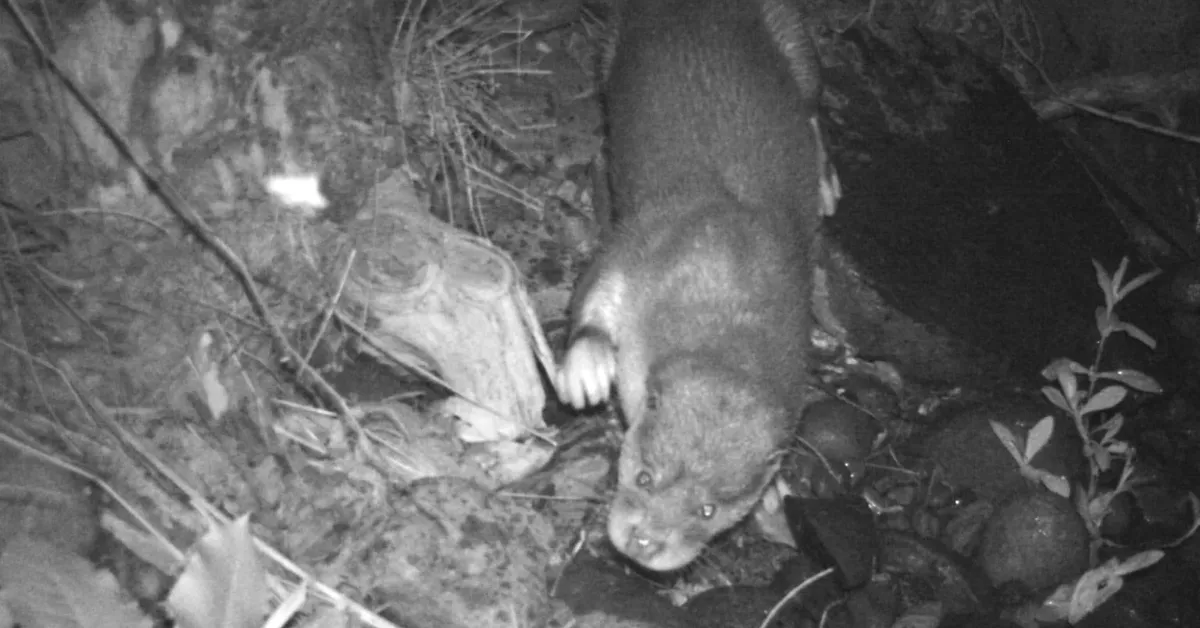
Now, after decades of little evidence of its presence, the elusive mammal is being spotted again in Kashmir’s waterways.
A study published in the journal Biological Diversity on 23 October 2026, titled Re-Emergence of Eurasian Otter (Lutra lutra) in the Valley of Kashmir, India: A Conservation Triumph and a Challenge, documents recent sightings and field evidence of the species in the valley.
Authored by Irfan Khursheed Shah and Sohail Ahmad Wagay, the study brings together reports that suggest the otter is reappearing after decades of near-local extinction.
The researchers identify historical hunting for fur, habitat destruction, and water pollution as major reasons behind the species’ decline.
Srinagar had once served as a commercial centre for the valley’s pelt and fur trade. Although wildlife protection measures introduced from the late 1970s onwards helped curb hunting and the trade, the otter population had already fallen sharply.
The return was first noticed in 2025
According to the October 2026 paper, the first widely reported public evidence of the otter’s return emerged in June 2025, when a video of an animal in a tributary of the Lidder River went viral.
Viewers initially mistook it for a crocodile.
The researchers say that professional enhancement of the footage helped establish that the animal was a Eurasian otter, a species that had become unfamiliar to many residents.
Following the video, camera traps were installed along the Rambiara and Lidder tributaries in July 2025.
Although these did not capture the animals, researchers photographed spraints (otter droppings), which can help establish an animal’s presence in an area.
Another video subsequently surfaced from Ganderbal district, showing an otter feeding on a fish in the Sindh stream, another tributary of the Jhelum. Together, these records provided evidence of the animal’s presence across different parts of the valley.
The findings also build on earlier field research. A separate study published in the IUCN/SSC Otter Specialist Group Bulletin in January 2026 documented Eurasian otters in the Hirpora Wildlife Sanctuary, along the Rambiara River catchment in Shopian district.
The Wildlife Trust of India researchers Tanushree Srivastava, Manvi Singh, Muneeb Nazir and Ishwar Narayanan, along with Sohail Ahmad Wagay of the J&K Department of Wildlife Protection, recorded an initial direct sighting during fieldwork in March 2024. They subsequently conducted a systematic survey between April and June 2025, covering a 12-km stretch of the river.
The team recorded 21 signs of otter presence, including one direct sighting, spraints, pugmarks, tracks, fish-feeding remains, and camera-trap photographs.
The study reported an average encounter rate of 0.34 signs per kilometre and a camera-trap capture rate of 4.31 captures per 100 trap nights.
However, neither study establishes the total number of otters now living in Kashmir Valley.
Why the return matters for freshwater ecosystems
The Eurasian otter is classified as Near Threatened on the International Union for Conservation of Nature (IUCN) Red List.
It is a semi-aquatic mammal that inhabits rivers, streams, and other freshwater environments. As a top predator, it helps regulate prey populations and is considered an indicator of freshwater ecosystem health.
A separate finding from the Hirpora study also points to the importance of involving local communities in conservation. Only 15% of respondents recognised the Eurasian otter, although 92% supported its conservation.
More than half reported declining fish populations in the area, indicating potential ecological pressures that also affect otter habitats.
What could threaten their return?
The October study cautions that the conditions in Kashmir’s waterways have changed considerably since the period when otters were commonly reported.
Urban expansion over paddy fields, conversion of agricultural land into apple orchards and construction along riverbanks have reduced and fragmented potential habitats. The decline in traditional irrigation canals has further affected the network of waterways available to the animals.
The researchers also identify river pollution from heavy metals, pesticides, microplastics, and plastic waste as potential threats.
Destructive fishing practices involving chemicals and electric currents, human disturbance and the increasing presence of stray dogs could further affect their survival.
We are into the middle stage of our ’13 Weeks of Otters’ series, and next up we have one that the IOSF are very familiar with, the Eurasian Otter! Photo by Terry Evans! #Conservation #Eurasian #Otter #Wild https://t.co/NBY5RQ0ZNR https://t.co/CklFyxizXv
— International Otter Survival Fund (IOSF) (@IOSF) August 8, 2022
Climate change presents another challenge.
Changes in water levels, floods, landslides and prolonged dry spells can damage or expose the sheltered riverbank spaces, known as holts, where otters rest and raise their young. The researchers also flag the possibility of conflict with expanding trout farms, which are an increasingly important source of livelihood in the valley.
What conservation efforts need to focus on
The October 2026 paper recommends a coordinated conservation plan involving researchers, wildlife authorities and conservation organisations.
This includes protecting and improving river habitats, addressing pollution, preventing hunting and monitoring the species across its newly documented locations.
It also calls for public awareness campaigns to address misconceptions about otters.
The researchers recommend educational initiatives in schools, awareness material in local languages and outreach at tourist destinations to help residents recognise the species and understand its behaviour.
The authors note that otter encounters rarely result in harm to humans globally, and that most interactions are neutral.
Better public understanding, therefore, is an important part of ensuring the animals can persist in waterways shared with people.
For now, the recent records establish the Eurasian otter’s presence in Kashmir’s river systems, rather than a confirmed recovery of its population.
Sustained monitoring and protection of these freshwater habitats will be necessary to determine whether the species can establish a lasting presence in the valley.
Sources:
‘Re‐Emergence of Eurasian Otter ( Lutra Lutra ) in the Valley of Kashmir, India: A Conservation Triumph and a Challenge’: By Irfan Khursheed Shah, Sohail Ahmad Wagay, Published in October 2026
‘Eurasian Otters Make Remarkable Re-Emergence In Kashmir Valley After Decades-Long Absence’: By Eurasia Review, Published on 8 November 2026
‘An Overview on Lutra lutra’: By Seyed Parsa Mousavi, Mohammad Mahdi Ramzanipour, and Mohammad Forouhar Vajargah, Published on 15 April 2023
‘The Satpura Otter Saga’: By Raza Kazmi, Wildlife Conservation Trust, Published in December 2024
Disclaimer : This story is auto aggregated by a computer programme and has not been created or edited by DOWNTHENEWS. Publisher: thebetterindia.com