Good food isn’t enough to draw a crowd in 2026. We take a look at what else Melbourne venues do to get your attention, and keep it.

When Hector’s Deli – one of Melbourne’s busiest sandwich shops – recently opened on Lygon Street, Max Allison-Brock wasn’t nervous about the newcomer. His own cafe, Good Measure, sits just 400 metres away and is equally busy. If people ask whether he thinks the queues for his internet-famous Mont Blanc coffee will move down the road, he tells this story.
“I saw people sitting out the front of Garfield [also on Lygon Street] eating pizza, and they had Hector’s doughnuts in a bag and a bunch of Mont Blancs on the table.
“People are shying away from bar-hopping and now want to do the ‘little treat hop’,” he says.
Rather than a street of competitors, he sees an emerging hub for flavour chasers.
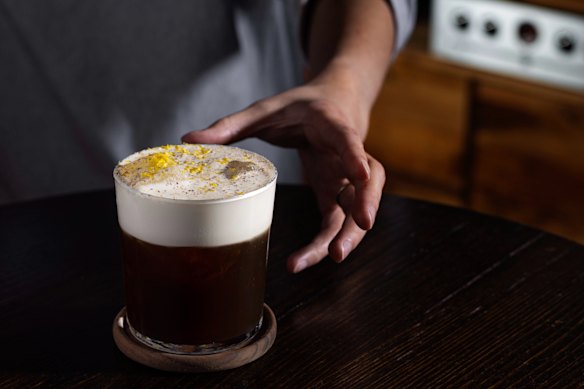
If you haven’t heard of a Mont Blanc, you’d probably be able to spot one: the cream-capped coffee scented with orange and nutmeg has spawned hundreds of imitations across Melbourne since Good Measure opened in October 2021.
Restaurant reviews, news and the hottest openings served to your inbox.
The cafe was one of the first to create a so-called signature drink: a creative calling card often involving several different components from cream “clouds” to sodas and syrups.
In the past five years, cafes new and old have added such drinks to their menu in a bid to differentiate themselves from competitors – and convince cash-strapped diners they can’t get this at home.
“I might not go out and be able to spend hundreds of dollars on dinner, but boy can I buy a Mont Blanc,” says Sophie McIntyre, founder of Club Sup.
McIntyre organises events for adults to make friends, ranging from a book swap over coffee and pastries to a pub dinner complete with trivia. Every venue where she stages events is chosen for its homey atmosphere.
She was part of a round-table discussion on Melbourne’s evolving dining scene, presented by The Age Good Food Guide and presenting partner T2 Tea. Kayla Saito, group bar manager for The Mulberry Group’s venues including Lilac Wine and Hazel, and Kantaro Okada, founder of 279, Hareruya Pantry and Le Bajo cafes, were among the attendees.
“It’s such an experience; there’s so much joy in drinking that drink,” McIntyre says of the Mont Blanc.
This phenomenon of buying small luxuries, often called the lipstick effect by economists, is believed to spike during economic downturns.
Good Measure sells close to 6500 Mont Blancs in an average week. At $9 (or $12 for a large), it’s by no means cheap compared to a flat white, but it is a more affordable splash-out than dinner at a hatted restaurant or a night of cocktails.
Right now, tight household budgets are dovetailing with a drop in alcohol sales as people, especially Gen Z, become more health-conscious. Allison-Brock sees a link between semi-sobriety and the rise of viral treats that people will queue up for.
People are still spending, but where and when that occurs has shifted.
“Sleep is one of the biggest growing categories [of tea sales] because people are valuing their sleep so much more,” says Christelle Young, managing director of T2 Tea, which sells six styles of sleep-related tea.
Growth in sleep-related supplements worldwide is forecast to increase in value 5.51 per cent in the next five years.
When people do choose to go out, it needs to be worth whatever they’ve sacrificed to be there: sleep, their health routine or their savings for that fortnight.
Zoe Rubino, co-owner of Fitzroy restaurants Poodle and Rocco’s Bologna Discoteca, has noticed this sentiment among diners. “Because they’re choosing to spend their money with you – that is finite – they’re putting a higher expectation on the experience,” she says.
So how do venues rise to the occasion? One way is to create a dining room that’s magical and makes diners not want to leave.
Creative director Inneke Hutter of Studio Co & Co, who came from the film and TV industry, takes this approach in her design projects including Elio’s Place in the CBD, the Rising Sun Hotel in Richmond and Rocco’s, which she worked on with Rubino and Emilio Scalzo.
Both Poodle and Rocco’s have been created with “stickiness” in mind, so diners can spend all night there: there’s a courtyard that’s casual, a dining room for a more formal meal and a bar for a drink.
The Lucas Collective, behind Kisume, Chin Chin and Maison Batard, always strives to transport people to different worlds. Batard has a basement nightclub, a rooftop bar and two dining rooms, which means someone could spend all night there.
“Your night doesn’t feel so static,” says Celia McCarthy, brand manager for the group. “Batard is a really good example of that: maybe you start here, but you end here and you don’t have to leave.”
With two-hour sittings (or less) now standard in dining rooms across Melbourne, a sharp increase in rideshare fares, and a preference for early bookings, people are also more reluctant to bounce from venue to venue.
Consistency is also critical when diners feel cash-strapped. A bad dish, drink or service interaction stings when it’s one of few luxuries in someone’s weekly budget.
Frank Camorra, founder of the MoVida restaurants, has learnt over his 24 years running venues that it’s important to give diners what they want. For him, it’s his signature anchovy and tomato sorbet tapa, first served at MoVida on Hosier Lane around 2005.
“It’s like a rock band not playing their greatest hits, right? [People] want those classics.”
 Emma Breheny – Emma is Good Food’s Melbourne eating out and restaurant editor and editor of The Age Good Food Guide.
From our partners
Disclaimer : This story is auto aggregated by a computer programme and has not been created or edited by DOWNTHENEWS. Publisher: www.smh.com.au