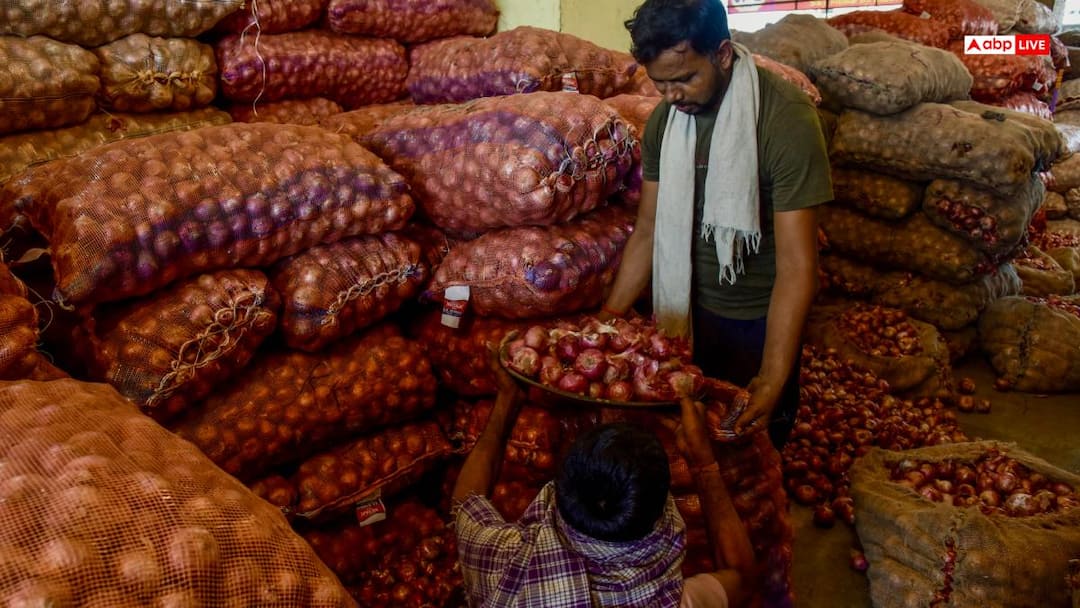
- Onion retail prices surged 82% to Rs 53.78/kg since June.
- Reduced supply from major states and delayed Kharif crop.
- Government uses buffer stock, restricts exports to stabilize prices.
Onion prices have moved sharply higher in the domestic market over the past three months, with the average retail price rising to Rs 53.78 per kg on September 17 from Rs 29.50 per kg on June 1, government data showed.
The increase translates into an 82.3% rise since the beginning of June. Wholesale prices have also recorded a substantial increase during the same period, with the average rate almost doubling.
The price movement comes as onion arrivals from Maharashtra and Karnataka have declined, while the fresh Kharif crop has been slower to reach markets, reported Dainik Bhaskar.
Retail Prices Cross Rs 50 Per Kg
The average retail price of onions stood at Rs 29.50 per kg on June 1. By September 17, it had increased to Rs 53.78 per kg.
Wholesale prices have followed a similar trend. The average wholesale rate was Rs 22.60 per kg on June 1, rising to Rs 46.20 per kg by September 10.
It eased slightly to Rs 45.68 per kg on September 17 but remained almost twice the June level.
Also Read : Share Markets Volatile Amid US-China Talks, Sensex Soars 300 Points, Nifty Opens Flat
Lower Arrivals Put Pressure On Supply
The rise in prices has been attributed to lower onion availability from major producing states.
The summer crop in Maharashtra has faced a shortfall, resulting in reduced arrivals from the state. Supplies from Karnataka have also declined.
The delayed arrival of the new Kharif crop has added to the supply constraints. As stocks from the earlier crop decline and fresh arrivals take time to reach markets, availability has remained under pressure.
However, onion prices are expected to come down as the supply situation improves.
Why Prices Typically Rise Around August-September
The August-September period often sees pressure on onion prices because of the transition between crop cycles.
Stocks from the previous crop begin to run down, while the arrival of the new Kharif crop takes time. This can create a temporary gap in market supplies.
Demand also tends to increase during the festive period. Consumption rises around festivals such as Rakshabandhan and Ganesh Utsav, with more festivals ahead.
Rain can further affect the movement of onions. Disruptions to logistics and delays in transporting produce to markets can add to supply pressures.
Also Read : Tata Trusts Calls Chandrasekaran’s Reappointment ‘Void Ab Initio’, Rejects Board Decision
Government Uses Buffer Stocks To Provide Relief
The government has measures in place to contain the impact of rising onion prices.
One of these involves releasing onions from the buffer stock built through procurement at lower prices. During periods of higher market prices, these onions can be sold at rates such as Rs 35 per kg to provide some relief to consumers.
The government can also restrict onion exports when domestic availability is under pressure. Taxes or other restrictions on exports can be used to prevent a shortage in the domestic market.
While such measures can help limit the impact on consumers, higher retail prices and changes in policy can still affect household budgets.
Disclaimer : This story is auto aggregated by a computer programme and has not been created or edited by DOWNTHENEWS. Publisher: abplive.com