
Good morning. Tech giant OpenAI is poised to be among the largest IPOs—but it’s not going public this year.
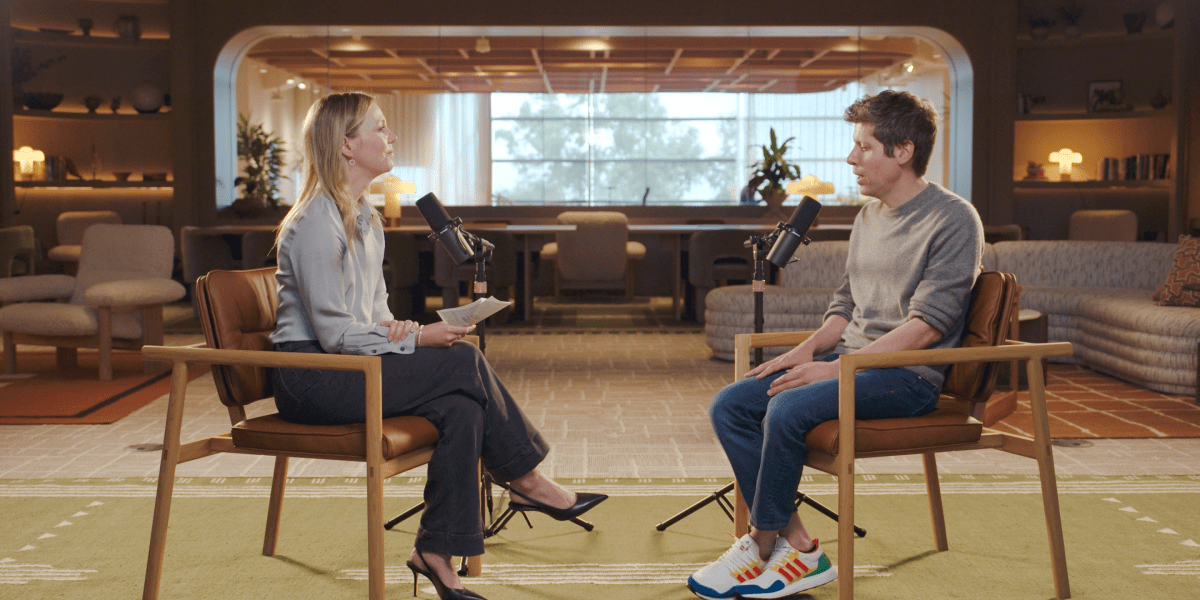
Growing concerns about AI safety are contributing to OpenAI’s decision to delay its market debut, with an IPO potentially coming in 2027 or later. “I actually think that, given everything happening with safety, right now would be an ill-advised moment to go public, and we don’t feel pressure on that,” OpenAI CEO Sam Altman told Fortune Editor-in-Chief Alyson Shontell in an exclusive interview on Friday.
Altman was pressed on whether the IPO would come in 2026 or 2027. “I would say not 2026,” he told Shontell. “Yeah, we got a lot of stuff to do, like meeting this moment of what is going to be required for safety and alignment, and how the industry and governments can work together.” The company has long maintained that it is not in a hurry to rush ahead with an IPO, he said.
Altman’s comment is the first on-the-record confirmation that the IPO will not happen in 2026. OpenAI has not publicly disclosed a target debut date. The company confidentially filed for a potential IPO in June.
Both OpenAI and rival Anthropic have taken initial steps this year toward becoming public companies. Last week, however, AI researcher Jacob Coxon, who had worked at both OpenAI and Anthropic, resigned from Anthropic and said on social media that he was leaving the industry over safety concerns. “The people building AI earnestly believe that it could kill us all by the end of the decade,” Coxon wrote on X. His post was followed by calls to slow the race toward AI.
Altman also talked with Shontell about the risk AI poses to humanity, how quickly the models are developing, whether more powerful AI can be controlled, and what he would do if he concluded AI could not be built safely. You can watch Shontell’s complete interview with Altman here.
OpenAI CFO Sarah Friar will play a leading role in taking the company public. At Goldman Sachs’ Communacopia + Technology Conference in San Francisco on Sept. 8, Friar said enterprise revenue grew 32% from June to July, compared with a 20% increase in overall annualized revenue run rate during the same period. She also detailed OpenAI’s push into specialized industries such as chip design, life sciences, and financial services.
On Sept. 10, OpenAI unveiled a new version of ChatGPT geared toward big banks and other financial firms, powered by its new GPT-6 Astra model, Fortune reported.
Sheryl Estrada
Sheryl.Estrada@fortune.com
Leaderboard
Fernando Araujo was appointed CFO of TransMedics Group, Inc. (Nasdaq: TMDX), effective Sept. 21. Araujo brings more than 20 years of public-company finance leadership at GE HealthCare, General Electric, and 3M. He succeeds Gerardo Hernandez, who will transition to commercial strategic advisor to lead TransMedics’ expansion into Latin America.
Kanishka Ragula was promoted to CFO of FatPipe, Inc. (Nasdaq: FATN), a technology company, effective Sept. 11. Ragula previously worked in J.P. Morgan’s Technology Investment Banking group, advising on M&A, equity, and debt deals for companies including OpenAI, StubHub, and PagerDuty, and most recently served as FatPipe’s director of finance. He succeeds Eric Sherb, who will continue advising the company in a consulting capacity.
Big Deal
A new BNY report argues that CFOs need to pair balance sheet agility with pragmatic AI adoption to keep pace with faster, more volatile markets.
BNY CFO Dermot McDonogh and other leaders featured in the report frame data, AI, and agility as interconnected: Better data creates visibility, AI turns that visibility into insight, and agility enables finance teams to act—whether by optimizing collateral, accelerating budgeting cycles, or reallocating capital to higher-return opportunities.
The report also highlights an emerging line item for finance chiefs to watch: token usage, as AI spending shifts from experimental pilots to a core component of enterprise resource allocation.
Going deeper
Millions of aging small-business owners are approaching retirement with no real plan for what happens to the businesses they built—and the dysfunction is only getting harder to ignore, according to research by JPMorganChase.
“Powering 10 Million Small Businesses,” puts a hard number on the problem, Fortune reports. Read more here.
Overheard
“Any pursuit of superintelligence has to be grounded in the core principle that if the AI we build is not helping humanity and under human control, it’s not worth pursuing.”
—Satya Nadella, chairman and CEO at Microsoft, wrote in a LinkedIn post on Sunday.
Disclaimer : This story is auto aggregated by a computer programme and has not been created or edited by DOWNTHENEWS. Publisher: fortune.com



