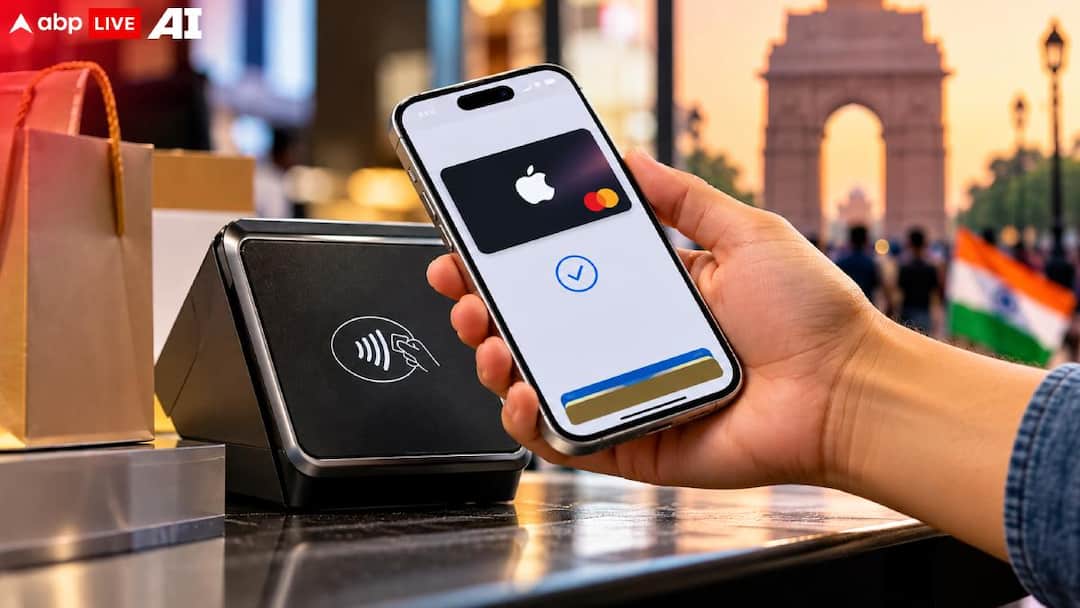
- Apple Pay launched in India with Axis Bank credit cards.
- No debit, RuPay, or UPI support; limiting wider adoption.
- Acceptance depends on merchant terminals and specific Apple devices.
- Targets niche users in India’s UPI-dominated payment market.
Apple Pay is live in India, but for now it is open only to a narrow group of customers. Apple launched the service with Axis Bank as its first local banking partner, covering iPhone, iPad and Apple Watch users. The rollout is staged, and at launch it leaves out the payment rails most Indians use every day.
Only Axis Bank Credit Cards Work
Initial support covers Axis Bank-issued Visa and Mastercard credit cards, so owning an iPhone alone does not make a user eligible. Even among Axis customers, Apple says support depends on the bank, the issuer and the individual card, so some cards may not be added. Axis Bank has not said how many cardholders meet the eligibility criteria or what those criteria are.
Axis is a sizeable issuer. Reuters reported it had around 16.3 million credit cards outstanding in August. But the missing names matter more. HDFC Bank, ICICI Bank and SBI Card are not supporting Apple Pay at launch, as negotiations over commercial terms continue. Until those issuers sign on, a large share of India’s credit card holders will find the Wallet app unable to take their cards.
No Debit Cards, No RuPay
Debit cards are the most widely held plastic in India, and they are excluded. RuPay is not supported, and neither are debit cards. The RuPay exclusion applies even to RuPay cards issued by Axis Bank.
RuPay is India’s homegrown network, so its absence leaves out a big group of domestic cardholders.
No UPI, Where Most Payments Happen
The biggest gap is UPI. The service launched without UPI support, which accounted for 84% of India’s digital payment transactions according to a 2025 IMF report. UPI processed 14.4 billion transactions in August 2026.
The two systems work differently. Apple Pay is card-based and needs individual issuers and payment infrastructure providers to integrate with it, whereas UPI moves money directly between bank accounts without cards. In practice, users cannot use Apple Pay to make a regular UPI payment by scanning a UPI QR code, and apps such as Google Pay, PhonePe and Paytm remain necessary for those payments.
Apple could change this, but not quickly. To offer UPI it would need a TPAP licence from the NPCI, as PhonePe and Google Pay hold, along with a sponsor bank.
ALSO READ: 5 Laptops Worth Buying Right Now: Lenovo V15 G4, HP OmniBook 5 OLED, More
Acceptance Depends On Merchant’s Terminal
Apple says the service has wide reach. Named merchants include Apple Store locations, Blinkit, Chaayos, Croma, Interflora, Ixigo, Le15 Patisserie, Reliance brands, Tata 1mg and Zomato. Apple worked with payment providers including Cashfree, JusPay, Mswipe, Paytm, PayU, Pine Labs, Razorpay and Worldline to reach their merchant networks.
There is a caveat for shoppers, though. A shop that takes contactless cards does not automatically support every Apple Pay transaction, because the merchant or payment infrastructure must support it. Acceptance is also restricted to merchants and terminals enabled for the service, which complicates a broad rollout. Small neighbourhood shops that run on QR codes are the least likely to be covered.
Device Requirements
Apple specifies an iPhone XR or later running iOS 18 or later. Apple Watch support starts with Series 6 running watchOS 11 or later, paired with an iPhone XR or later.
Mac support is described as coming soon. Android users, who make up the majority of smartphone owners in India, are outside Apple’s ecosystem altogether.
What Works Well
The launch does have strengths. Apple Pay needs no PIN or one-time password at checkout and relies on Face ID, Touch ID or a device passcode. There are no Apple Pay user fees or transaction limits.
If a phone goes missing, Find My’s Lost Mode suspends Apple Pay, and cards can also be removed remotely.
A Card-First Bet In A UPI-First Market
Analysts see Apple Pay as an alternative rather than a replacement. It serves a narrow segment: Axis credit cardholders who shop at NFC-enabled merchants and prefer Apple’s Wallet to swiping a card or using UPI apps.
Because it depends on card infrastructure rather than bank-to-bank transfers, it competes for a much narrower slice of India’s payments activity.
There is some history here too. India Today noted that Apple stopped accepting credit and debit cards for App Store purchases in India in 2021, after the RBI introduced its card-tokenisation mandate. Apple Pay’s arrival closes part of that gap, but only for a small group.
What To Watch Next
Four developments will decide whether this launch grows beyond a niche offering: commercial deals with HDFC Bank, ICICI Bank and SBI Card; any move to add debit cards; any RuPay integration; and whether Apple pursues a UPI licence.
Apple has indicated that more banks and cards will be supported over time, but no timeline has been given.
Disclaimer : This story is auto aggregated by a computer programme and has not been created or edited by DOWNTHENEWS. Publisher: abplive.com