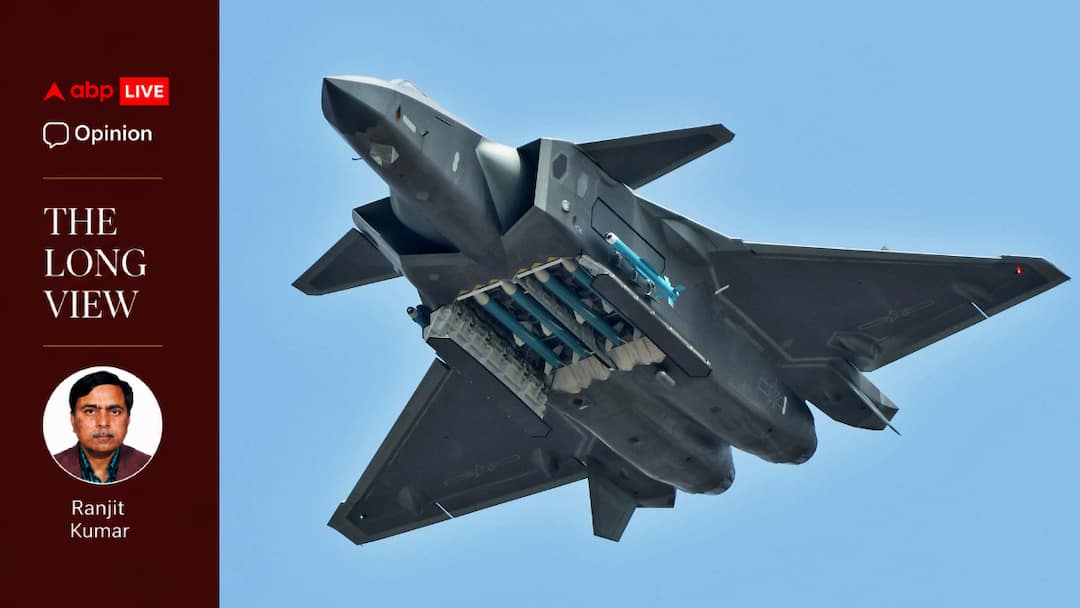
- China rapidly deploys 500 J-20 fifth-generation fighters, posing challenge.
- Indian Air Force faces persistent delays in fleet modernization programs.
- India’s AMCA project and LCA production face critical delays.
- This creates a significant capability gap, raising two-front concerns.
The recent insights shared by the defence portal The War Zone serve as a critical wake-up call for the Indian military establishment. China military analyst Andreas Rupprecht has disclosed that China is rapidly advancing its production of the J-20 fifth-generation fighter aircraft, with estimates suggesting that the Chinese Air Force may have deployed approximately 500 units to date.
This formidable aircraft, aptly nicknamed the Mighty Dragon, presents a significant challenge to the Indian Air Force, which is projected to acquire its own fifth-generation capabilities at least a decade later. The stark contrast in numbers, with India potentially fielding zero fifth-generation fighters against China’s 500, highlights the glaring asymmetry between the two nations’ air forces.
Modernisation Delays And Squadron Shortfalls
The current predicament faced by the IAF can be attributed to a persistent lack of political and bureaucratic commitment to fighter fleet modernisation. Since the early 2000s, the IAF has consistently raised alarms regarding the urgent need to bolster its fighter squadrons to prevent a repeat of the Kargil-like situation, during which then-Army Chief General V.P. Malik expressed his frustration with the limited resources available, stating, “we will fight with whatever we have.”
Despite assurances from leadership that the IAF would be equipped with indigenously developed Light Combat Aircraft (LCA) and Advanced Medium Combat Aircraft (AMCA), the reality remains that the IAF is still awaiting these crucial additions. Furthermore, the long-standing requirement for 126 Medium Combat Aircraft, initiated in 2007, has only been partially addressed with the acquisition of 36 Rafale jets.
In stark contrast, China has made significant strides in its military aviation capabilities, leaving the IAF trailing behind. The J-20, developed by the Chengdu Aircraft Corporation, was first introduced into service in 2017, and since then, its production has accelerated, with estimates indicating that the Chinese Air Force is adding four to five squadrons annually.
By the end of this year, it is anticipated that China will have inducted around 500 fifth-generation fighters into its arsenal. Moreover, while the Chinese military is also advancing its efforts on the next-generation J-35 stealth aircraft, the production of the J-20 continues unabated, further solidifying China’s position in the realm of advanced military aviation.
ALSO READ: OPINION | India Must Retain Chabahar
AMCA Timeline And Production Challenges
The big question is whether Indian security czars are listening to the roaring noise of J-20s over the Himalayas? Just two decades ago, the Indian Air Force was regarded as significantly superior to its Chinese counterpart in terms of combat capabilities. However, the current disparity between the two air forces starkly highlights the troubling decline in the IAF’s operational effectiveness when compared to the advancements made by the Chinese military aviation sector.
The much-anticipated AMCA, touted as India’s fifth-generation fighter jet, remains in the conceptual phase, with its proponents projecting that it will take to the skies by the middle of the next decade. Yet, critical decisions regarding the specific jet engine to be integrated into the aircraft have yet to be finalised.
The Aeronautical Development Agency (ADA), which operates under the auspices of the Defence Research and Development Organisation (DRDO), is still in the process of determining which Indian private sector company will serve as its production partner. This uncertainty raises questions about the timeline and feasibility of the AMCA project.
Experts in the field have expressed skepticism regarding the ambitious timeline set for the AMCA programme, suggesting that it would be nothing short of miraculous if five prototypes and a structural test specimen of this 25-ton stealth aircraft were to be completed by the next year, as per the current schedule. The maiden flight is tentatively slated for 2028-29, with production expected to commence in the middle of the next decade, according to official statements.
Rafale, LCA And Engine Supply Issues
The Indian Ministry of Defence has recently announced its intention to procure 114 Rafale fighter jets, a significant investment amounting to approximately Rs 3,25,000 crore. This acquisition plan is poised to enhance the capabilities of the Indian Air Force, with the expectation that the first squadron of these advanced aircraft, manufactured in France, will be inducted by 2030-31, provided that the production timeline is adhered to.
The remaining 90 Rafale jets are slated for assembly within India, marking a crucial step towards bolstering domestic defence manufacturing and reducing reliance on foreign suppliers.
However, the indigenous production of the LCA is currently facing significant challenges, primarily due to delays in the supply of the General Electric GE-404 engine. Of the 99 engines ordered for the LCA Mk1A aircraft, only seven have been delivered to date, highlighting the pressing issues within the programme.
Furthermore, for the LCA Mk2 and the AMCA, HAL has entered into a licensing agreement with General Electric for the production of the more advanced GE-414 engine. However, there has been a conspicuous lack of progress in initiating the manufacturing activities necessary to bring these aircraft to fruition.
As it stands, the IAF is likely to induct only eight to nine LCA Mk1A aircraft annually at the current production pace, which is far from ideal. The situation appears to be stagnant, with the potential for a more robust induction rate only emerging in the next decade, contingent upon adherence to the established schedules and the resolution of existing supply chain issues.
ALSO READ: OPINION | String Of Pearls Vs Necklace Of Diamonds — Geo-Strategic Games In Asia
Growing Capability Gap
While the IAF is grappling with these worrisome prospects, China, in addition to the advanced J-20, operates a substantial fleet of fourth-generation fighters, including the J-10, J-11, Su-27 and Su-30 aircraft. Projections indicate that by 2030, China aims to deploy over 1,300 advanced fifth and sixth-generation fighters, such as the J-20, J-35 and J-36, significantly enhancing its aerial combat capabilities.
In contrast, the IAF currently operates only 30 fighter squadrons, falling short of the mandated 42 squadrons. Among these are approximately 270 Su-30MKIs, alongside 36 Rafales, around 60 Mirage-2000s, 60 MiG-29s, 100 Jaguars and 40 LCAs. Most of these aircraft, except for the Rafales and Su-30MKIs, are nearing retirement.
Given the current pace of inductions in both air forces, it is reasonable to question the IAF’s future standing against the Chinese Air Force, especially in light of the misleading assertions made by political and bureaucratic leaders regarding the readiness of Indian forces for retaliation.
Preparing For A Two-Front Challenge
The prospect of a conflict with a single nation escalating into a Sino-Pakistani alliance raises significant concerns regarding India’s military readiness. In such a scenario, the potential for a two-front war could severely strain India’s defence capabilities.
The historical context of Operation Sindoor, which showcased India’s military operations, suggests that similar circumstances are unlikely to unfold in the current geopolitical climate. The stark reality is that India’s air power, when juxtaposed with the combined forces of its adversaries, appears inadequate, creating a troubling outlook for the Indian military in the event of hostilities.
The urgency of the situation demands a comprehensive fast-track strategy that not only enhances the operational readiness of the Indian Air Force but also ensures that it can effectively counter any potential threats posed by a coordinated offensive from both China and Pakistan.
(Ranjit Kumar is a senior journalist and strategic affairs analyst)
Before You Go
Negligence: Six-Year-Old Dies After Falling Into 15-Foot Pit in Greater Noida, Contractor Arrested
Disclaimer : This story is auto aggregated by a computer programme and has not been created or edited by DOWNTHENEWS. Publisher: abplive.com