- Reinvented relations focus on defence, security, technology.
- Modi’s 2024 visit established five-year strategic partnership.
- Poland seeks joint defence production, not just arms sales.
- India offers scale; Poland provides NATO-grade tech access.
For decades, Poland stood on the other side of India’s Cold War arithmetic — a loyal cog in the Warsaw Pact, a distant echo of Moscow’s worldview. That past is now being deliberately buried. When New Delhi and Warsaw talk today, they don’t talk about history. They talk about hardware, security, and strategic convergence. Defence is no longer just a part of the relationship. It is the relationship. The irony is inescapable. A country once bound by treaty to view the West with suspicion now sees India as a strategic anchor. India and Poland are not just reviving ties, they are reinventing them from scratch. And at the heart of this unlikely entente is not trade, not culture, but defence.
It took 45 years for an Indian Prime Minister to land in Warsaw again — since Morarji Desai in 1979. Prime Minister Narendra Modi’s August 2024 visit was not just symbolic nostalgia. It ended decades of diplomatic drift. In Warsaw, the two sides formally elevated ties to a Strategic Partnership and inked a five-year Action Plan (2024-2028) — a detailed roadmap covering defence co-production, security cooperation, trade, and tech — laying the institutional foundation for what is arguably the most significant reset in India-Poland relations since the Cold War.
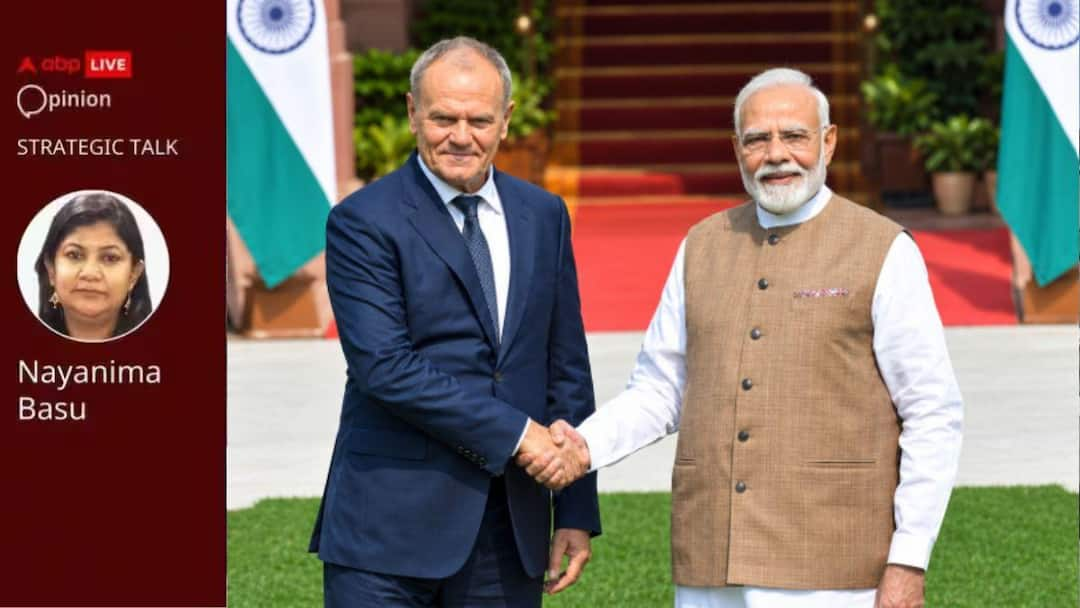
That blueprint is being tested this week. Polish Prime Minister Donald Tusk is in India from October 21-23 with a 100-strong business delegation, visiting New Delhi and Bengaluru. It is the most serious Polish outreach to India since the Cold War.
The gap is telling: Poland is now India’s largest trading partner in Central & Eastern Europe, yet high-level political contact had remained frozen for over four decades. And defence is where the reset gets real. Poland has made it clear it doesn’t want to be just another arms seller to India. As Polish Deputy Foreign Minister Władysław Teofil Bartoszewski told Delhi last month, Warsaw wants to “produce together” and build “common platforms” to guarantee supply when chains break.
Defence is the spine of the new partnership.
And Poland is pitching it differently. As External Affairs Minister S. Jaishankar heard in Warsaw last month from his counterpart Radosław Sikorski, Poland wants to deepen defence cooperation beyond sales towards joint production and resilient supply chains. The message from Deputy Foreign Minister Bartoszewski was blunt: “We are not interested in selling all things to India. We are more interested in talking about producing together… so in case of need, we can guarantee supply to the other.”
He added, “We want to develop common platforms, so in case of need, we can resupply each other fast.” This is music to Make-in-India ears. For India, Poland offers NATO-grade technology with a willingness to share, not just ship. For Poland, battling a war next door and supply chain shocks from Covid to the Red Sea, India offers scale, manpower, and strategic autonomy. The two sides have now agreed to create a dedicated Defence Industry Dialogue — a clear move from transactional to structural.
The India-Poland joint statement, which was issued after the bilateral meeting between PM Modi and PM Tusk on 22 October, 2026, stated it will include “greater business-to-business engagement and, where mutually agreed, partnerships in technology, co-development, co-production and other forms of industrial collaboration”. In plain terms: move beyond India buying Polish kit to India and Poland designing and building together for the world.
PM Modi’s invite was explicit: “We invite Polish companies to engage in co-development and co-production with India in all these strategic areas” — defence, space, and nuclear energy. Tusk’s pitch was equally blunt: “We want Poland to be a gateway to Europe for Indian companies, and India to be a gateway to Asia for Polish companies”. And he stressed there is “no conflict of interest” between the two despite India’s ties with Moscow.
He also said, “Our drones were very useful and have been very useful recently. And I am convinced that our cooperation, both in the area of satellites and drones, has helped our countries in times of political tensions and crises, and I am very proud of that.”
Polish drone and loitering munitions were also deployed by India during Operation Sindoor which led to hostilities with Pakistan in May 2025.
No India-Poland reset can ignore Ukraine.
Since the war began, Poland has become the frontline state for EU and NATO, hosting nearly a million Ukrainian refugees and serving as the logistical gateway to Kyiv. It was from Poland that PM Modi boarded the now-famous Rail Force One to Kyiv in 2024.Poland gives India a different lens into Europe — not the old Paris-Berlin axis, but the security-anxious, fast-growing Eastern flank that lives the Russia threat daily. For Poland, India is a voice that talks to both Moscow and Kyiv and champions resilient supply chains and maritime security. New Delhi’s push for “localised non-attack arrangements” and protecting seafarers resonates in Warsaw.
This is complemented by the bigger picture: the conclusion of the India-EU free trade agreement (FTA) and the new India-EU Security and Defence Partnership have created a tailwind for bilateral upgrades like this.
Ultimately, the India-Poland reset will not be judged by joint statements in Hyderabad House, but by joint production on the factory floor. The Action Plan till 2028, the new Defence Industry Dialogue, and the pending pact on classified information are all in place — the plumbing is ready. If implemented, Poland can give India battle-tested European technology without strings, and India can give Poland scale and a gateway to Asia. After four decades of diplomatic drift, New Delhi and Warsaw have finally found a reason to matter to each other.
Disclaimer : This story is auto aggregated by a computer programme and has not been created or edited by DOWNTHENEWS. Publisher: abplive.com