As an energy crisis is met with a temporary tax break and an economic downturn is met with an employee bonus scheme. Columnist Brian Melican asks, ‘Has the German government lost its mind?’
Germany is great at producing many things, but pop music is not our forte. In terms of chart-toppers per capita, Britain and especially Sweden knock us into a cocked hat. Yet if there’s one German song of genuinely worldwide renown that isn’t ‘99 Luftballons’, it’s got to be Kraftwerk’s 22-minute A-side ‘Autobahn’.
No wonder: as well as its insistent electronic melody, it’s got a catchy title. Because while Germany is not seen as a musical powerhouse, it is known the world over for its motorways and love of cars.
So perhaps I shouldn’t have been surprised when, early last week, the government decided to introduce a temporary rebate on fuel duty. The thinking is obvious: Germans love driving and the economy is car-dependent, so if the price of oil rises sharply and consumers have to pay more at the petrol pump, the government should do its bit too, by reducing its tax take.
There’s one problem, though: it is a monumentally stupid idea.
Even during the first such “tank rebate”(Tankrabatt), introduced in 2022 after prices shot up in the wake of the Russian invasion of Ukraine, reducing fuel levies was questionable policy: prices stayed high and the oil companies pocketed most of the difference.
In 2026, though, it’s just plain foolish: in contrast to 2022, when prices were high but supply was good, prices are now high and supply is bad – very bad.
As everyone knows, one fifth of the world’s oil passes – no, passed – through the Strait of Hormuz. There is so little of the stuff going around that the European Commission is worried about a potential kerosene shortage.
Yes, right now, Germany may, as our Minister for the Economy Katharina Reiche recently stated, have sufficient supplies of oil, gas, and derivatives. And yes, there’s currently a cease-fire (at the time of writing…) But will that still be the case in a few months’ time? And wouldn’t it be prudent, in view of the unpredictability of Donald Trump, Benjamin Netanyahu and their Iranian adversaries, to not actively encourage people to keep using petrol and diesel as normal by stopping price rises?
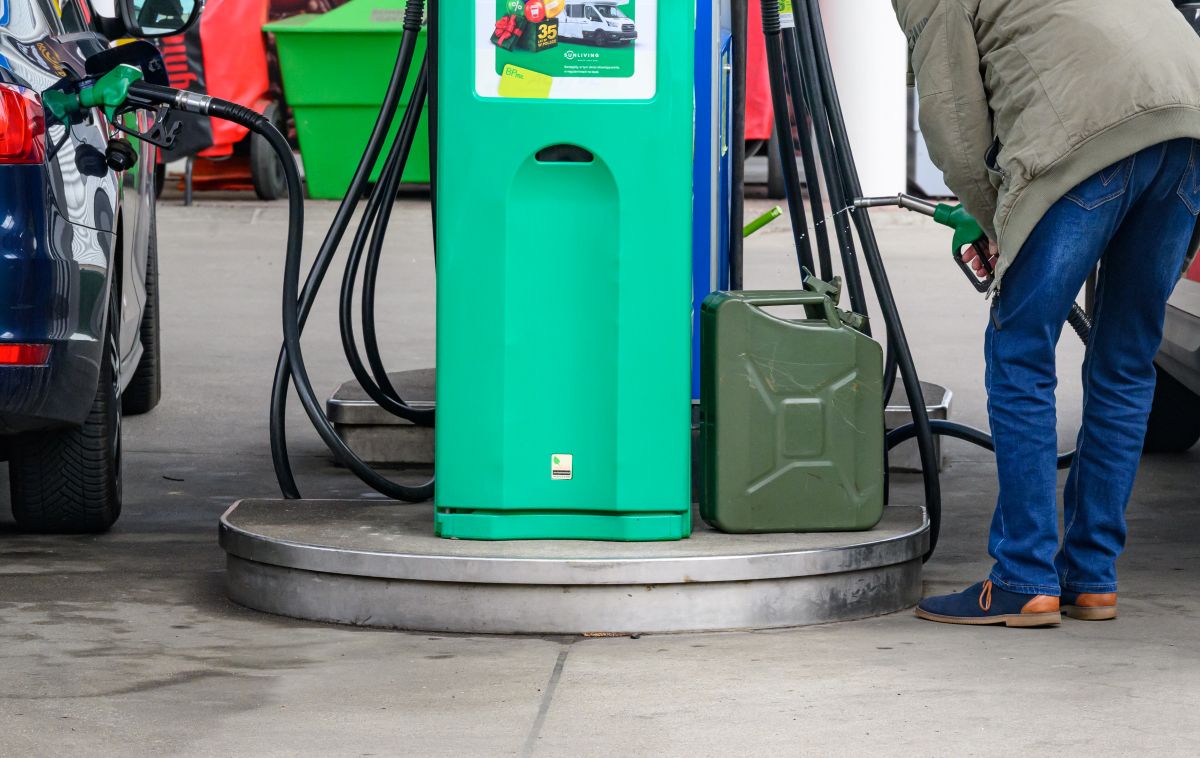
A man fills a 20-liter canister with fuel at a gas station. Photo: picture alliance/dpa | Patrick Pleul
Certainly, all of the government’s economic advisors think so: the head of the Wirtschaftsweise advisory committee called the Tankrabatt “the worst of all the options thus far discussed”. But, hey, what does she know…?
The fact that a government led by a self-proclaimed ‘Man of Business’ like ex-Blackrock bigwig Friedrich Merz clearly sets so little store by received economic wisdom (and common sense) might explain why they think that employers will, in year six of economic stagnation and with companies going to the wall at a frightening rate, voluntarily shell out €1,000 extra to their staff.
This was another surprising (read: crazy) piece of policy last week – so strange, in fact, that I had to check several times that I’d understood it correctly. I kept thinking I’d missed something – that maybe, somewhere, the government was actually doing something more than simply asking companies to willingly part with millions so that people won’t feel the pinch quite as much. But, no, that’s the policy.
Oh, it’s tax-free, too. Because if there’s one thing our eye-wateringly-indebted state exchequer clearly doesn’t need, it’s tax intake (see the above mentioned fuel rebate).
This logic also explains the approach to reforming our cash-strapped public health insurance system, which completely neglects the most obvious, simplest way of increasing the amount of money available to fund it.
Currently, the statutory insurers are headed towards a deficit of €15 billion in 2027 – and spend €12 billion annually on insuring people on the basic unemployment benefit (Grundsicherung). These people are out of work and so, of course, don’t pay in. The government picks up the tab for their jobseeker’s allowance, funding it out of general taxation, but leaves public health insurers – and, by extension, those they insure – stuck with the healthcare bill.
So one option to reduce insurers’ deficit by 80 percent would be for the government to take responsibility for the unemployed, spreading the load across the shoulders of all taxpayers – including those with private health insurance policies.
But no, why try and find new sources of revenue when you can simply up prescription charges, lower pay-outs to people in long-term care, and raise income cut-off thresholds for insurance contributions (driving high-earners into the arms of private providers…)? Why go looking for funds to maintain existing levels of provision when you can freeze reimbursements to physiotherapy surgeries or potentially cut access to diagnostics like skin-cancer screening?
READ ALSO: How Germany’s major public health insurance reform will affect you
No, try as I might – and as painfully aware as I am that I, just a few months back, chided Friedrich Merz for talking the country down – I can’t find positives here. Or even just basic logic.
These policies are utter madness. Even the environment minister (We still have one?) was on the radio this week saying that there is no need for the government to tell people to save fuel.
Our government has lost its way.
Or, to put it in terms its petrol-headed ministers might understand: this government is careering down the autobahn at dangerous speed in slippery surface conditions.
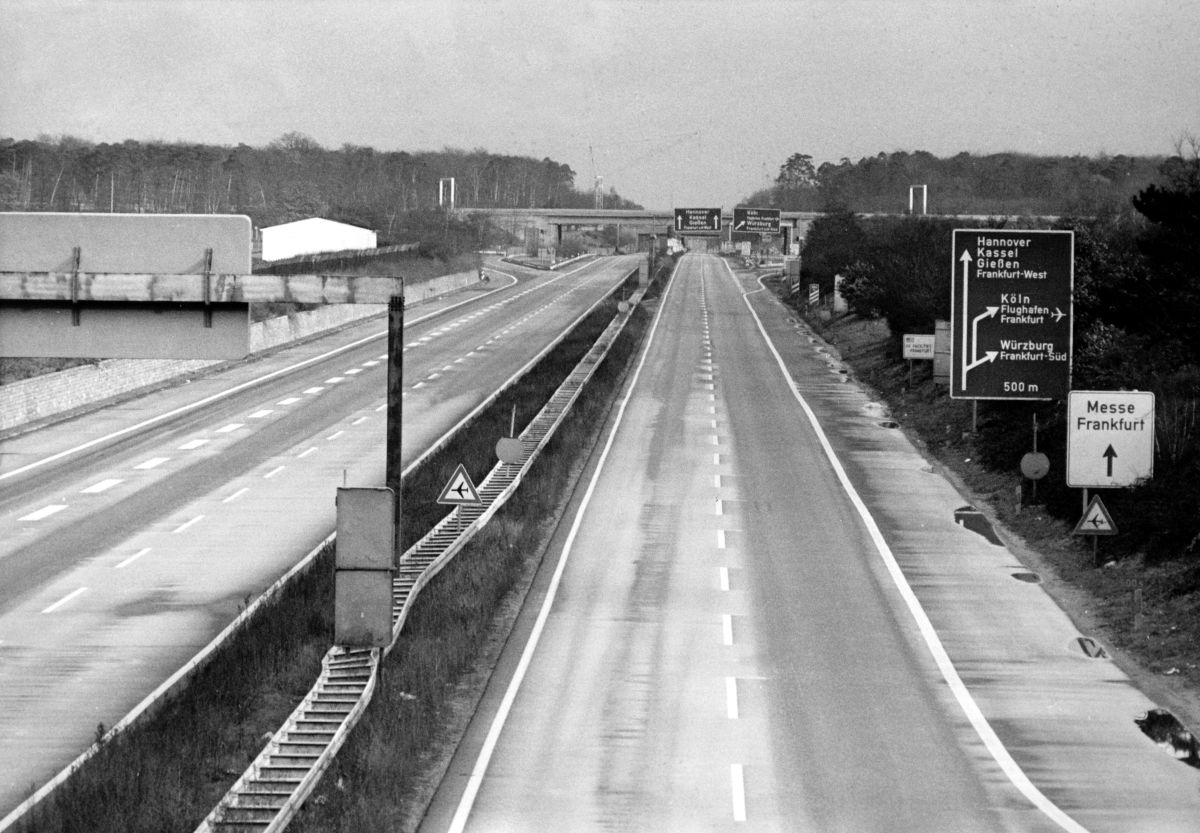
An empty Autobahn is pictured in Germany during a ‘Car-free Sunday’ in 1973. Photo: picture alliance/dpa | dpa
If it were to take its foot off the accelerator for a moment and look in the rear-view mirror, it would see that there is historical precedent for how to deal with oil supply crises arising from geopolitical tension in the Middle East: after the Yom Kippur War, in the midst of a prior oil crisis in 1973, Germany acted swiftly to reduce petrol consumption, imposing temporary speed limits and even total bans on driving on four consecutive Sundays.
The country – and its car culture – survived: Kraftwerk released ‘Autobahn’ in 1974. Right now, though, we’re on more of a ‘Highway to Hell’.
Disclaimer : This story is auto aggregated by a computer programme and has not been created or edited by DOWNTHENEWS. Publisher: thelocal.de