
- China questioned Ladakh’s status; locals demand statehood.
In a noteworthy meeting held in New Delhi in September, Prime Minister Narendra Modi and Chinese President Xi Jinping engaged in discussions aimed at mending strained relations between India and China. This important meeting came despite ongoing tensions surrounding the Union Territory of Ladakh, which has once again emerged as a significant point of contention between the two nations.
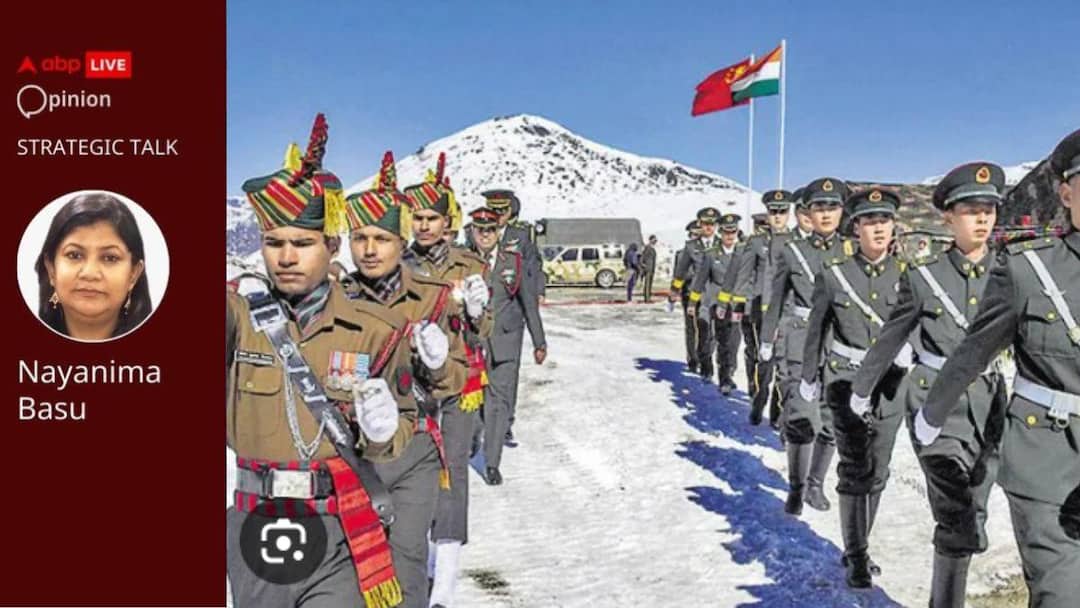
The dialogue in New Delhi unfolded against the backdrop of the lingering aftermath of the 2020 border clash that resulted in the tragic loss of 20 Indian soldiers while defending their territory against the Chinese People’s Liberation Army (PLA).
Xi’s visit marked his first trip to India in seven years, signalling a potential thaw in relations as both leaders aimed to address a multitude of pressing issues, ranging from border disputes to enhancing bilateral trade. Their meeting, which occurred on September 12 during the BRICS Summit, was the third direct engagement between Modi and Xi in the past three years, underscoring their commitment to charting a new course for their often tumultuous relationship.
Since the harrowing events of the Galwan Valley clash in June 2020, the diplomatic relations between India and China have gradually transitioned from a state of complete freeze to a more cautious and strategic stabilization. While deep-seated mistrust remains a significant hurdle, both countries have implemented a series of vital political, military, and economic measures over the past three years in an effort to reset their ties.
As part of these efforts, both nations have executed systematic troop pullbacks from critical friction points along the Line of Actual Control (LAC)-specifically the Galwan Valley, Pangong Tso, Gogra, and Hot Springs. This tactical withdrawal has led to the establishment of temporary buffer zones designed to minimize the risk of immediate confrontations.
Following these military de-escalation efforts, direct flight services between key cities in both countries were resumed, and restrictions on Chinese capital investments in India were lifted. These developments were the result of persistent diplomatic dialogue, facilitated by the Working Mechanism for Consultation and Coordination (WMCC) and high-level discussions among senior military officials, reflecting a renewed commitment to fostering communication and cooperation between the two nations.
Despite all these positive steps, Ladakh continues to remain at the centre of the ongoing tensions between both the countries. Earlier this month, Beijing said China has never recognised Union Territory of Ladakh, calling India’s naming exercise of 28 of its districts “illegal and void.”
She said, “China has never recognized the so-called Union Territory of Ladakh unilaterally and illegally established by India, and firmly opposes the so-called standardized names publicized by India … This move by India is illegal and void and does not change the fact that the western sector of the China-India boundary belongs to China.”
Needless to say, New Delhi vehemently rejected the statement that was made by China’s foreign ministry spokesperson Mao Ning. This comes after the Ministry of Home Affairs published standardized names for 28 locations and geographical features in Ladakh, such as Gogra and Hot Spring, to improve cartographic precision.
While this is not a new statement that has been made by China, matters turned from bad to worse in 2019 when Ladakh was bifurcated from Jammu and Kashmir owing to the abrogation of Articles 370 and 35A under the Jammu and Kashmir Reorganisation Act in August of that year.
In fact, right after this move by the Narendra Modi government in 2019, the border skirmish in the Western sector of the Line of Actual Control (LAC)-the de-facto border between India and China -in Eastern Ladakh began in April-May 2020 as China amassed a massive amount of troops there.
Since then, the internal security situation in Ladakh has remained tense. Residents of Ladakh, who initially supported both the abrogation and subsequent bifurcation, have been demanding statehood and a local assembly. They argue that self-governance and accountability are essential, as decisions affecting their lives should be made by locally elected representatives rather than distant central authorities.
Furthermore, by seeking protection under the Sixth Schedule of the Constitution, Ladakhis hope to gain autonomy through the establishment of District Councils. These councils would have legislative powers over crucial areas such as land management, forest usage, and local administration. This initiative would also serve as a preventive measure against an influx of outsiders that could disrupt the delicate social fabric of the region.
The Union Territory has seen large-scale agitation as the demand for statehood intensifies. This agitation is jointly led by two major socio-political coalitions: the Leh Apex Body (LAB) and the Kargil Democratic Alliance (KDA), alongside prominent activists such as Sonam Wangchuk.
They have presented a four-point demand to the Central government: full statehood with its own legislative assembly, inclusion under the Sixth Schedule to protect their land and natural resources, domicile-based reservations for jobs, and greater political representation through the creation of two separate Lok Sabha seats (one for Leh and one for Kargil), rather than continuing to share the single existing parliamentary seat.
After seven years of deliberation, the government seems to have finally come up with a solution to address the crisis by drafting a new Article specifically for Ladakh. Several meetings have taken place between the Ministry of Home Affairs (MHA), the Ladakh Autonomous Hill Development Council (LAHDC), and the KDA to discuss this issue.
The proposed new Article is expected to be an “expanded” version of Article 371, which grants special provisions to certain states to tackle regional disparities, safeguard local culture, and promote equitable development.
While the government is offering Article 371-type protections for Ladakh as a more flexible alternative to the Sixth Schedule, local leaders remain steadfast in their demand for a full legislature and Sixth Schedule status to secure stronger legislative autonomy.
Also Read: OPINION | Afghanistan, Taliban And US-Russia Contestation
As China’s remarks once again threatens to de-stabilised the bilateral ties, the Apex Body Leh strongly condemned Beijing’s repeated attempts to question the status of Ladakh as an integral part of India.
“Ladakh has been an inseparable part of India and will always remain so. The people of Ladakh have consistently stood shoulder to shoulder with the Indian Army in safeguarding the nation’s borders, from the 1962 India-China war to the Galwan clash and other instances of Chinese aggression.
Our people have made immense sacrifices in defending the sovereignty and territorial integrity of the country,” the body said in a statement.
Even while facing their own hardships, the people of Ladakh have sent a clear message: they reject China’s unfounded claims and stand firmly with India. The government must honour its word. Grant statehood to Ladakh without further delay. Doing so will lock in its rightful place as an integral part of India and deliver a decisive, befitting reply to Beijing.
To neglect this promise is to alienate a loyal population and invite a grave risk to the country’s internal security. The moment to act is now.
Also Read: OPINION | India-US Ties: No More Diplomacy Of Deference, Now Diplomacy Of Deterrence
[Disclaimer: The opinions, beliefs, and views expressed by the various authors and forum participants on this website are personal and do not reflect the opinions, beliefs, and views of ABP News Network Pvt Ltd.]
Disclaimer : This story is auto aggregated by a computer programme and has not been created or edited by DOWNTHENEWS. Publisher: abplive.com




