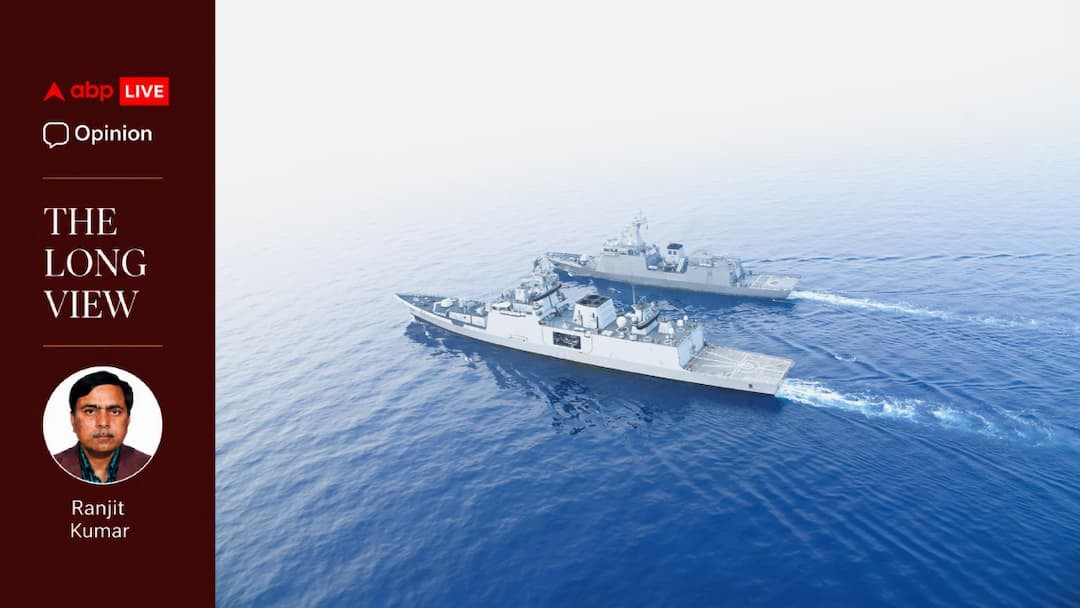
- India boosts ASEAN ties amidst South China Sea tensions.
- Second ASEAN-India maritime exercise held, China remained silent.
- India provides BrahMos missiles, strengthening partners against China.
- India advocates rules-based maritime order, countering China’s expansion.
In a strategic move to enhance its presence in the South China Sea, India has significantly strengthened its engagement with the ten-member ASEAN bloc. This initiative comes in the context of rising tensions in the region, particularly due to China’s growing discontent with the increasing involvement of foreign naval forces. By showcasing its naval capabilities in these contested waters, India aims to assert its position and counterbalance China’s influence.
The recent second edition of the ASEAN-India maritime exercise has not yet drawn an official response from the Chinese government, a stark contrast to the first edition, which provoked a strong reaction from China. During that event, China deployed surveillance assets to monitor the movements of Indian warships participating alongside the Singaporean navy, highlighting the sensitive nature of military activities in the region.
Despite China’s earlier efforts to establish joint maritime engagements with ASEAN in 2018, the involvement of other non-littoral navies, such as the United States, has underscored the notion that the South China Sea is an international maritime zone, free from the exclusive control of any single nation.
This evolving dynamic not only sends a clear message to China regarding its territorial claims but also reflects India’s growing rapport with the ASEAN bloc, which comprises several emerging economies that are increasingly facing territorial pressures from China’s assertive expansionism.
The construction of artificial islands and the subsequent militarization of these territories by China have raised significant concerns among ASEAN members, prompting them to seek stronger partnerships with nations like India that advocate for a rules-based maritime order.
India’s Push For A Rules-Based Maritime Order
In a bid to uphold international maritime law and counteract China’s unilateral actions, India has publicly encouraged the ASEAN bloc to adhere to the 2016 code of conduct, which explicitly calls for the recognition of the South China Sea as international waters.
By facilitating joint maritime exercises with regional littoral states, India is effectively communicating to China that the maritime domain is open to participation from other naval powers, thereby reinforcing the principle that any activities conducted in the area should not compromise peace and stability.
This proactive stance not only bolsters India’s strategic position in the region but also aligns with the collective interests of ASEAN nations, who are increasingly seeking to safeguard their sovereignty against external pressures.
India engages with ASEAN member states at a bilateral level to enhance military interoperability and strengthen security ties, aligning with its Act East policy. Given India’s shared maritime boundaries with several ASEAN nations, fostering cooperation in the high seas is essential for collectively addressing threats such as piracy and other non-state actors.
ALSO READ: OPINION | Tarang Shakti 2026: F-35s, Rafales And Sukhois Are Here. But Where Are The Drones?
Philippines Hosts Second ASEAN-India Maritime Exercise
In 2023, the Indian Navy initiated multilateral cooperation with ASEAN through the inaugural ASEAN-India maritime exercise hosted by Singapore. This year, the Philippines has taken the lead in hosting the second edition of the exercise in Subic Bay, a strategically vital area in the South China Sea. This decision is particularly significant amid escalating tensions between China and the Philippines over territorial disputes involving islands near the Philippines.
To counter potential unilateral military actions from China, the Philippines is enhancing its defence capabilities, with India emerging as a key supplier of military equipment. India has responded positively, notably transferring the advanced BrahMos supersonic cruise missile.
Additionally, other ASEAN nations, such as Vietnam and Indonesia, have also received BrahMos missiles from India, further entrenching India’s role in the maritime disputes involving ASEAN and China by bolstering the military capabilities of its regional partners.
‘Anchored In Trust, United At Sea’
India has cultivated a robust relationship of trust with the member states of the Association of Southeast Asian Nations (ASEAN), viewing them as integral to both its immediate and extended neighbourhood. This relationship spans from the land borders shared with Myanmar to the maritime boundaries with Indonesia, highlighting the geographical and strategic significance of these connections.
The theme selected for the second edition of the ASEAN-India maritime exercise, “Anchored in Trust, United at Sea,” aptly reflects the deepening ties and mutual respect that have developed over the years. India’s commitment to fostering peace and stability in the region is well recognized by ASEAN nations, who appreciate India’s non-intrusive approach that respects their sovereignty and refrains from coveting the maritime assets of the area.
The ASEAN bloc acknowledges India’s genuine efforts to promote a peaceful maritime environment, particularly through its adherence to the United Nations Convention on the Law of the Sea (UNCLOS). This commitment is aimed at ensuring the prosperity and stability of the South China Sea, a region of significant geopolitical importance.
By advocating for a code of conduct that emphasizes cooperation and respect for international law, India has positioned itself as a responsible partner in regional security. This approach not only enhances India’s standing among ASEAN members but also reinforces the collective goal of maintaining a rules-based order in the maritime domain.
ALSO READ: OPINION | How India’s New Missile Warships Could Reshape Its Naval Strategy
AIME-2026 Completes Sea Phase
The ASEAN-India Maritime Exercise 2026 (AIME-2026), which commenced on September 28, has completed its sea-phase, showcasing the active participation of frontline warships from both ASEAN member states and the Indian Navy, including the Sahyadri and Kulish.
The exercise is designed to facilitate professional, operational, and social engagements that aim to enhance mutual understanding, cooperation, and interoperability among the naval forces involved. Through these collaborative efforts, India and ASEAN nations are not only strengthening their maritime capabilities but also reinforcing the bonds of trust and partnership that are essential for ensuring a secure and stable maritime environment in the region.
The Harbour Phase involved a variety of professional, operational, and social activities, including Subject Matter Expert Exchanges, sporting and cultural events, community outreach, and Operational Synchronisation. This phase culminated in a Pre-Sail Brief before the transition to the Sea Phase, where the participating maritime forces engaged in coordinated exercises and operational serials.
The primary objective of the Sea Phase was to enhance professional understanding, operational coordination, and interoperability through practical training and collaborative activities at sea.
Regional Naval Cooperation And China’s Influence
In addition to India, other powers such as the United States and allied navies have been actively engaging with ASEAN, signalling to China that the region will not be left vulnerable to its aggressive manoeuvers.
India has not only organized multilateral engagements with ASEAN but has also participated in various other regional exercises. These naval collaborations are crucial in equipping ASEAN members to counter any aggressive actions from Chinese forces, effectively conveying to Chinese leadership that ASEAN is prepared to respond to military provocations.
It is in India’s strategic and economic interest to ensure that the South China Sea does not become dominated by China. The rapidly evolving geopolitical dynamics between the United States and China may eventually lead to China’s attempt to control international commercial and military traffic in the region.
Given that over half of India’s international maritime trade transits through the South China Sea, it is imperative for India to safeguard its interests. By bolstering military, diplomatic, and economic ties with ASEAN, India is compelled to enhance its engagement with the ASEAN bloc to address the challenges posed by China’s territorial expansion.
( Ranjit Kumar is a senior journalist and strategic affairs analyst)
Disclaimer : This story is auto aggregated by a computer programme and has not been created or edited by DOWNTHENEWS. Publisher: abplive.com