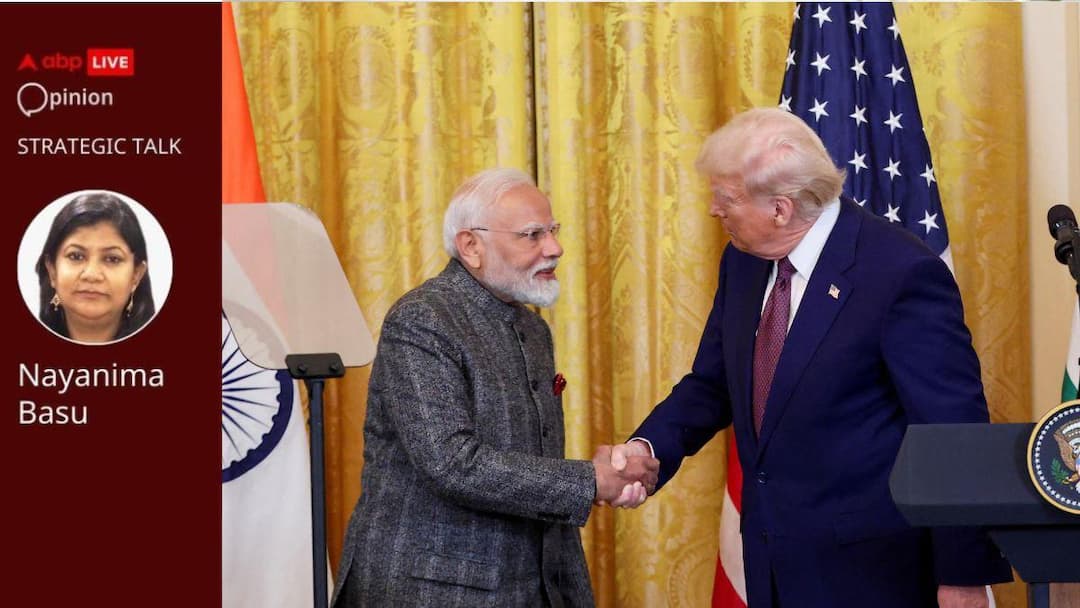
- Modi, Trump discussed bilateral ties post-sanctions legislation.
- U.S. sanctions bill threatens India’s Russian oil purchases.
- India-U.S. ties face growing trust deficit, need assertion.
On a significant geopolitical front, Prime Minister Narendra Modi of India and U.S. President Donald Trump engaged in a phone call on September 25, 2026-just 12 days following the enactment of the controversial Lindsey O. Graham Sanctioning Russia and Iran Act of 2026 in the United States. This legislation, which was passed with the intent of imposing stringent sanctions on countries dealing with Russia and Iran, has raised considerable concern in India.
The bill holds the potential to penalise Indian purchases of Russian oil and gas through the imposition of steep tariffs, which could escalate to 100 percent.
The ramifications of this law, although not yet implemented, could severely strain India’s bilateral relations with the U.S., a worry that was echoed in a recent address by India’s External Affairs Minister, S. Jaishankar, during his visit to New York for the United Nations General Assembly.
During the phone call, Prime Minister Modi characterised the conversation as “productive,” although there has been no accompanying readout issued from the White House, highlighting a potential lack of emphasis that the Trump administration places on U.S.-India relations.
Also Read: Modi Calls BRICS ‘Ecosystem Of Solutions’, China To Host Next Summit
This absence of an official statement suggests that the call may not have been viewed as significant by the current U.S. administration.
Modi’s own announcement of the call on social media refrained from mentioning whether the contentious Russian sanctions bill was part of their discussion. Instead, he focused on a review of various aspects of bilateral cooperation-addressing trade, defense, energy, critical technologies, and other areas of mutual interest.
The leaders purportedly concurred on the necessity of sustaining “close engagement” to further advance the India-U.S. Comprehensive Global Strategic Partnership, alongside exchanging views on regional and international issues, including efforts aimed at promoting global peace and security.
What’s particularly concerning in the current climate is India’s apparent reliance on diplomatic firefighting tactics rather than a confrontational approach towards Washington. This follows a trend where the U.S. has increasingly complicated the dynamics of their bilateral relationship, making it clear that New Delhi does not enjoy the robust bipartisan support it once did.
The overarching reality is that the India-U.S. partnership now teeters on fragile ground, marked by uncertainty and growing tension. Past sentiments of a strong alliance are waning, and the current geopolitical landscape suggests that both sides need to navigate this delicate relationship with care and strategic foresight.
The implications of the new sanctions act could potentially lead to a re-evaluation of India’s energy strategies, pushing New Delhi to seek alternatives to Russian oil and gas and possibly reorienting its foreign policy to lessen dependency on any single supplier.
Therefore, discussions in the wake of this phone call are not merely ceremonial but carry with them the weight of substantial economic and diplomatic consequences that could redefine the future trajectory of India-U.S. relations.
The time ahead will likely be characterised by intense scrutiny on how both nations manage their commitments and navigate the complexities of their partnership amidst shifting global ties.
Gone are the days when India can rely only on diplomatic niceties to deal with an ever-hardening America. As External Affairs Minister Jaishankar indicated in his address to the Asia Society, that India today is developing a trust deficit factor with the United States.
He said, from trade to terrorism, essentially there has been no support forthcoming from the U.S. side, rather they have made matters either more complicated or have given a deaf ear.
On the ongoing negotiations for having a bilateral trade agreement, Jaishankar said, “The trade negotiation, I mean, if you look at the stakes involved, the complexity of it involved, bear in mind India is a society of small producers, small agriculture producers, small factories. So the, you know, apart from the per capita gap between India and the United States, the nature of production, nature of society is very different. So, a trade negotiation required a certain amount of, I think, patience and detailing to see it through.”
More importantly he said on terrorism, as a partner the United States does “not fully” appreciate India’s concerns.
Referring to Pakistan but not naming it, the External Affairs Minister said, “What for us in India is particularly important is the issue of terrorism … As a country, perhaps there are very few countries which have been subjected to the kind of terrorism that we have from a neighbour as part of a deliberate, conscious policy over many, many decades.”
“Now, if something which matters so deeply to us, there isn’t enough understanding or appreciation or empathy of that, I think that creates a problem, too. If my prime-one of my primary concerns is not fully appreciated by my partner, then clearly there is an impact of that on the relationship.”
India must stop treading softly and confront the United States head-on, with clarity, and zero apology. This is not new. Washington has always tried to bully, pressure, and arm-twist New Delhi when its own interests are at stake. Donald Trump is just more crude and loud about it-others before him did the same with a polished smile.
India has never bowed to such tactics before, and it must not start now. What we need is not diplomacy of deference, but diplomacy of deterrence. It’s time for India to stand tall, reclaim its strategic autonomy, and answer every challenge with assertive, unapologetic national interest.
Also Read: OPINION | This Is India’s Time In BRICS, It’s Now Or Never
[Disclaimer: The opinions, beliefs, and views expressed by the various authors and forum participants on this website are personal and do not reflect the opinions, beliefs, and views of ABP News Network Pvt Ltd.]
Disclaimer : This story is auto aggregated by a computer programme and has not been created or edited by DOWNTHENEWS. Publisher: abplive.com