
- Three fighter programs delayed, awaiting crucial US engine deliveries.
- F414 engine manufacturing deal stalled over cost, technology transfer.
- US reliance risks India’s defense autonomy; reassessment needed.
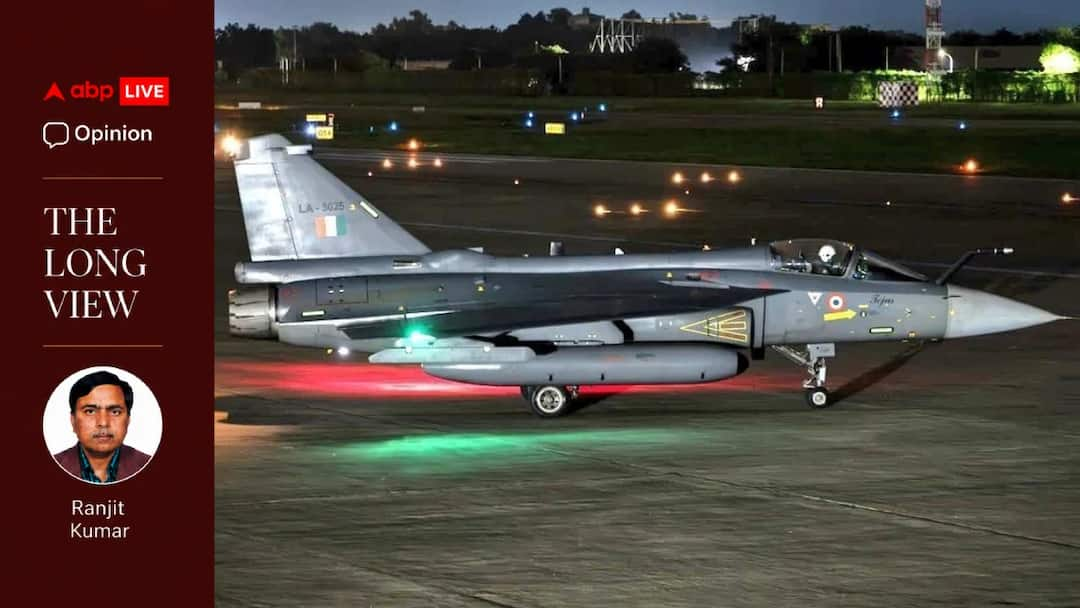
The Indian Air Force’s three indigenous fighter-aircraft programmes—critical to addressing the combined air-combat challenge posed by China and Pakistan—are contending with substantial delays and uncertainty. First, the Tejas LCA Mk1A is behind schedule in meeting its 2021 contract commitment to the IAF. The programme requires 99 F404 engines, but only ten have been delivered so far, constraining the production and delivery of the aircraft.
Second, the upgraded LCA Mk2, or Medium Weight Fighter (MWF), is intended to replace the ageing Jaguar, Mirage 2000 and MiG-29 fleets. Its progress remains uncertain because negotiations over the F414 engine have taken too long to conclude. The proposed agreement would enable licensed manufacture of the advanced engine in India, following support from US President Joe Biden and Indian Prime Minister Narendra Modi after their 2023 summit in Washington. Third, the Advanced Medium Combat Aircraft (AMCA), India’s ambitious fifth-generation fighter programme, is also expected to use the F414, with production under licence in India. Its development is therefore exposed to many of the same unresolved issues.
Tejas Mk1A, Mk2 And AMCA: The Engine Supply Challenge
The Aeronautical Development Agency, which is developing both the Tejas and the AMCA, is preparing to present a full-scale engineering model of the 4.5-generation LCA Mk2 at next year’s Aero India exhibition in Bengaluru. The display is likely to intensify questions about the programme’s prolonged delays and its delivery timetable, particularly as the IAF has been waiting since the start of the century to modernise its air-combat fleet through indigenous fighters. All three frontline programmes—the LCA Mk1A, LCA Mk2 and AMCA—are running behind schedule, reflecting limitations in domestic capabilities as well as reliance on US-made engines. Because those engines are subject to US export regulations, their availability remains a significant source of uncertainty for India’s fighter-modernisation plans.
Indian fighter-aircraft programmes were shaped around the capabilities of General Electric’s F404 and the more powerful F414 engines, reflecting expectations of a deepening strategic partnership with the United States and its stated intention to regard India as a partner and security provider in the Indo-Pacific. However, deliveries of F404 engines have missed several deadlines, with supply-chain difficulties cited as the reason. Although production of the F414 in India was approved and an agreement was reached in June 2023, that agreement has yet to be implemented.
F414 Technology Transfer And Cost Concerns
Reports indicate that technical discussions on F414 production were concluded in April, while the cost is expected to be settled by the end of the current financial year. At the same time, reports that GE is seeking a very high price for technology transfer—while limiting the transfer to 80 percent—have raised concerns about the arrangement’s value. Such terms could make locally produced fighter aircraft prohibitively expensive and leave India with substantial dependence on the foreign supplier.
The broader concern is that, in a crisis, access to engines, technology, maintenance, or operational support could be affected by changing geopolitical circumstances or by Washington’s assessment of India’s actions in relation to US strategic interests. Given the history of sanctions and restrictions affecting US-origin defence systems, India may reasonably worry that support could be withheld or limited on national-security grounds. These risks underline the importance of carefully assessing the terms of technology transfer and ensuring that domestic production provides dependable operational and maintenance autonomy.
Slow F404 Deliveries Affect Tejas Mk1A Induction
Deliveries of the LCA Mk1A to the Indian Air Force have begun, but progress remains extremely slow because Hindustan Aeronautics Limited is not receiving the F404 engines from the United States according to the schedule agreed by General Electric. India’s three indigenous fighter programmes, each under development for roughly two to three decades, depend on American-made engines after efforts to field the indigenous Kaveri engine failed to achieve their intended outcome.
These delays have disrupted India’s plans for inducting domestically developed fighters and may weaken confidence in the country’s indigenous aerospace programme. If the aircraft cannot be delivered in the required numbers and on schedule, the objective of strengthening India’s combat capability could be undermined. In a major confrontation with China or Pakistan, the Air Force could face serious operational pressures if its planned fighter fleet is not available as expected.
Trump’s Second Term And Uncertainty Over India-US Defence Cooperation
The Biden administration had advanced an agreement for licensed production of the F414 engine in India during a period of strong strategic cooperation between India and the United States. Under Donald Trump’s second administration, however, defence cooperation has encountered uncertainty, amid a greater emphasis on selling American equipment than on enabling production in partner countries through technology transfer. Trump’s apparent shift in approach toward India, his reported personal rapport with Pakistani Field Marshal Asim Munir, the perceived weakening of his commitment to the Quad, and remarks made in New Delhi by senior US official Christopher Landau about avoiding a repeat of the US experience with China have all prompted concern in India about the future of bilateral strategic and defence ties.
In hindsight, India may have placed excessive confidence in the United States, relying on assurances that Washington would help strengthen India as a counterweight to China. That trust appears to have been a miscalculation. By depending heavily on American support for its military development, India risked putting too many of its strategic interests in one partner’s hands. The consequences are now visible in the difficulties facing three of India’s fighter-aircraft development programmes.
India’s Strategic Autonomy And The Limits Of US Technology Transfer
The United States had indicated that it would support India’s efforts to build domestic capabilities, and India consequently relied on American cooperation in developing different classes of light combat aircraft. Yet geopolitical priorities can shift rapidly, and India has had to contend with a US president who approaches international relations in transactional terms. Rather than transfer technology to support India’s independent development, Washington has promoted the sale of costly F-35 fifth-generation fighters.
India’s pursuit of an indigenous fighter is intended not only to expand its defence-manufacturing capacity but also to preserve its strategic autonomy. Major powers may have little incentive to encourage that independence, particularly when India is among the world’s largest arms buyers and reduced purchases could affect American and European manufacturers. India should also consider the limits of technology-sharing arrangements: Dassault, for example, reportedly declined to provide the Rafale’s source code for licensed production in India, despite an agreement valued at Rs 3.25 lakh crore.
Although the United States approved the licensed manufacture of F414 engines in India more than three years ago, the relevant agencies in both countries remain in negotiations. General Electric has yet to receive an export authorisation letter from the US administration, leaving the proposed production arrangement unresolved.
Why India Must Reassess Its Dependence On American Engines
Delays in supplying F404 engines, coupled with limited progress in negotiations over domestic F414 production, raise concerns about the future of India’s fighter-development programme. Reliance on US-made engines could leave the programme vulnerable to American commercial and strategic priorities. It is high time India re-evaluate long and short term implications of leaving Indian fighter development programme critically dependent on US companies, who believe only on buyer seller relationship. Strategic observers rightly comment that India putting all its eggs in one basket might prove costly.
(Ranjit Kumar is a senior journalist and strategic affairs analyst)
Disclaimer : This story is auto aggregated by a computer programme and has not been created or edited by DOWNTHENEWS. Publisher: abplive.com






