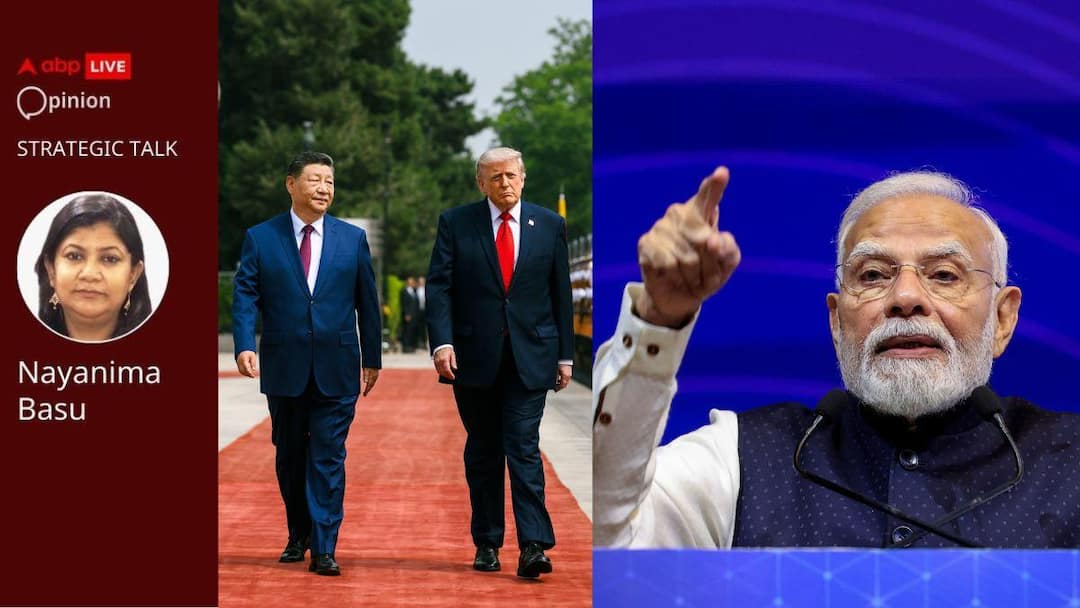
- Xi Jinping’s US visit highlights complex, evolving US-China relations.
- Despite US efforts, economic dependence on China has grown.
- India’s multipolar vision challenged by emerging US-China ‘G2’.
Chinese President Xi Jinping recently undertook his first state visit to the United States since 2015, a significant event considering the dramatic shifts in the bilateral relationship between Washington and Beijing over the years. From 2015 to 2026, the dynamics between the two nations have evolved considerably, with an increased dependency of the United States on Chinese trade, despite ongoing efforts to seek alternatives.
During the presidencies of Donald Trump and Joe Biden, the U.S. government implemented several strategies aimed at reducing reliance on China for trade and business. Initiatives such as ‘Friendshoring’-which encourages businesses to relocate their supply chains to friendly neighbouring countries-and the ‘China plus one’ strategy-aimed at diversifying sourcing options-were critical components of this approach.
Nevertheless, these efforts largely fell short of their intended goals.
In particular, there were aspirations to strengthen trade relationships with India as a potential alternative to China. However, progress was hindered by India’s stringent regulatory framework and trade policies, which complicated the prospect of a more open partnership. Moreover, mixed signals from the United States regarding the strategic dimensions of the U.S.-India relationship further impeded progress.
Compounding these challenges, the U.S. strategy of ‘China containment’ has often appeared inconsistent and vague, blurring lines about America’s intentions. Over time, the emphasis on the Indo-Pacific region as a strategic focus has waned, leading to a complex and often contradictory approach towards China and its role in global trade and politics. The evolving landscape continues to shape the intricate and critical nature of U.S.-China relations as both nations navigate their interdependence amid geopolitical tensions.
This trip by President Xi follows his previous state visit in 2015, highlighting the long gap between his official appearances in the U.S. During the years between these visits, President Xi has continued to engage in diplomatic activities in the United States, most notably when he travelled to California in November 2023.
During this visit, he participated in the Asia-Pacific Economic Cooperation (APEC) summit held in San Francisco, where he met with then-President Joe Biden. Their discussions were significant, focusing on various issues that impact relations between China and the U.S., reflecting the complexities and dynamics of their interactions in the rapidly changing global landscape.
Also Read: OPINION | Pakistan Does China-Style Collision, India Should Remain Alert
The ongoing state visit to Washington DC by the Chinese President not only signifies deeper ties between the United States and China, but also casts a long shadow over India’s position in this evolving landscape. As India looks on, it finds itself grappling with the reality that its vision of a multipolar world-with strategic autonomy and diverse global partnerships-is encountering significant obstacles.
Historically, the concept of a G2 has been floated by various American leaders, most notably President Trump, who has articulated a vision of a bipolar world in which only the United States and China exert primary influence. This idea implies a power dynamic where these two nations dictate the terms of global governance and economic interactions, reducing the roles of other countries.
Observing the optics of Xi Jinping’s visit to the United States, one cannot ignore the unmistakable gestures of cooperation, discussions on trade, and strategic alignment that suggest the emergence of this G2 framework.
In his remarks at the White House arrival ceremony, President Xi said, “China and the United States, as two major countries, shoulder a historic responsibility of advancing human development and progress. The interests of China and the United States are deeply intertwined, and there is plenty of room for us to work together. China-U.S. cooperation may not solve every problem in the world. But, without our cooperation, it would be hard to solve many of the world’s problems.”
For India, this development presents a complex challenge. New Delhi has long aspired to play a pivotal role on the global stage, advocating for a multipolar world where power and influence are distributed among several key players rather than concentrated in the hands of just two superpowers.
However, as the dynamics between the U.S. and China evolve, it appears that New Delhi must reconcile itself to a reality where it may have to navigate a world increasingly dominated by these two giants, which could complicate its own ambitions for regional influence and strategic independence.
On Thursday, as Xi landed at the U.S. Joint Base Andrews and was being welcomed on the tarmac by Trump, far away in New York, External Affairs Minister S. Jaishankar held a meeting with U.S. Secretary of State Marco Rubio a day before, in which India raised its concerns over the ‘Lindsey O. Graham Sanctioning Russia and Iran Act of 2026’-a bill that was signed by Trump last week after the U.S. Congress passed it.
The passing of the bill by the U.S. Congress is a clear indication of the fact that the bi-partisan support India once enjoyed in the United States is also fading away as geopolitics undergoes a rapid change.
India’s bilateral relationship with China has also been steadily deteriorating since the border standoff between the two countries in June 2020, even though New Delhi and Beijing are now working towards a fragile rapprochement.
The shifts unfolding during Xi’s U.S. visit also highlight the intricate balance of power that countries like India must now contend with, as they seek to safeguard their interests in a rapidly changing geopolitical environment.
Also Read: Modi Calls BRICS ‘Ecosystem Of Solutions’, China To Host Next Summit
As India navigates its position on the global stage, it’s imperative that New Delhi intensifies its engagement with the Global South. This includes forging stronger ties with developing countries in Africa, Latin America, and Asia, promoting collaborative initiatives, and embracing a leadership role on issues that matter to these nations.
In doing so, India should adopt a more assertive stance regarding its relationship with the United States, recognising that its long-term interests may sometimes diverge from American policies. For instance, in the context of the ongoing Russia-Ukraine war, India must advocate for a nuanced approach that prioritises diplomacy and dialogue rather than aligning too closely with any one party.
Similarly, in addressing the Iran conflict, India could play a crucial role as a mediator by leveraging its historical relationships and seeking peaceful resolutions that benefit all involved parties.
While it’s important for India to engage with Western powers, it must do so without sacrificing its traditional alliances and partnerships. India should resist the temptation to abandon or diminish its ties with countries that have been its allies, whether due to pressure from the United States or changing geopolitical landscapes.
Maintaining these relationships is essential not only for India’s own strategic interests but also for fostering a multipolar world where diverse voices and perspectives are represented.
India’s commitment to a balanced foreign policy that honours its historical partnerships while stepping up to address pressing global issues will serve to enhance its influence and leadership in international affairs.
By positioning itself as a champion of the Global South, India can contribute meaningfully to global peace and stability and redefine its role as a key player on the world stage.
[Disclaimer: The opinions, beliefs, and views expressed by the various authors and forum participants on this website are personal and do not reflect the opinions, beliefs, and views of ABP News Network Pvt Ltd.]
Disclaimer : This story is auto aggregated by a computer programme and has not been created or edited by DOWNTHENEWS. Publisher: abplive.com