
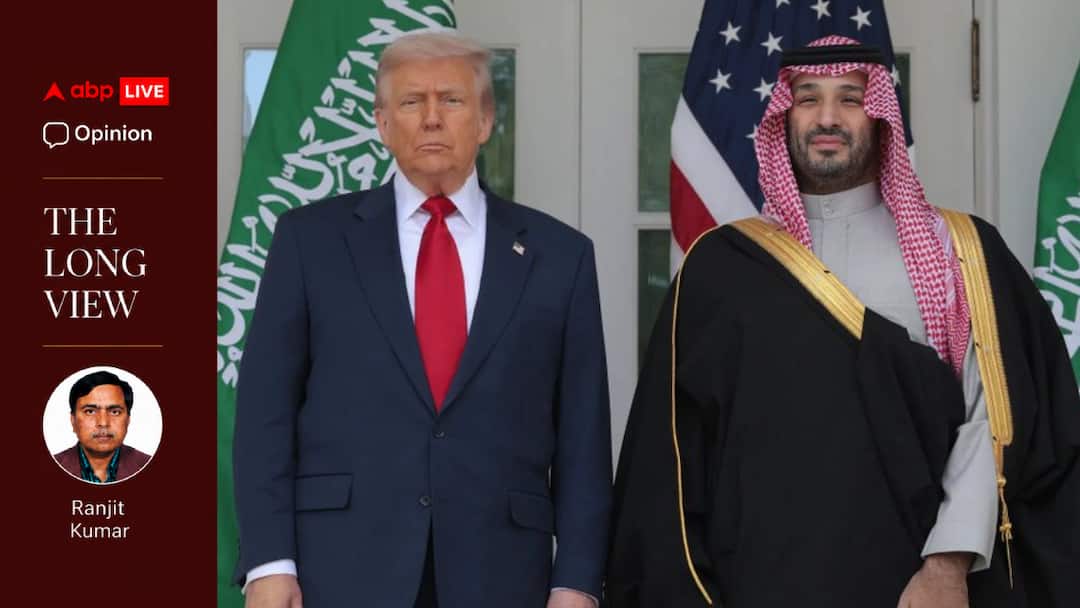
- US-Saudi civil nuclear deal raises regional proliferation concerns.
- Saudi Arabia pursues nuclear energy amidst Iran rivalry, Pakistan support.
- Deal links Saudi recognition of Israel, challenges India’s influence.
The recent agreement between the United States and Saudi Arabia regarding civil nuclear energy cooperation has sparked significant concern, not only within the international non-proliferation community but also among strategic analysts in India. This deal carries the potential risk of proliferating nuclear materials and technology, which could gradually engulf the entire West Asian region, an area that India considers to be part of its extended neighbourhood.
Currently, only Iran and the United Arab Emirates operate nuclear power plants in West Asia, while Israel, despite its suspected possession of nuclear weapons, has refrained from establishing a nuclear power facility. Presently, the region boasts five operational reactors, with five more under construction and an additional four planned across countries such as Saudi Arabia, Egypt, Turkey and Jordan.
The apprehensions of the non-proliferation community are heightened by the fact that West Asia is characterized by its volatile and fragile monarchical regimes, which are often threatened by extremist factions. This precarious political landscape raises fears that nuclear weapons could potentially fall into the hands of rogue elements, thereby exacerbating regional instability. The prospect of nuclear proliferation in such a context is alarming, as it could lead to an arms race or the emergence of nuclear-armed non-state actors, further complicating the security dynamics of the region.
Saudi Arabia’s Nuclear Ambitions
Saudi Arabia has long harboured ambitions of becoming a nuclear power, and the shifting geopolitical landscape is likely to accelerate its efforts to establish nuclear power plants. The kingdom aims to reduce its reliance on fossil fuels, which are increasingly viewed as a finite resource.
In fact, the entire Middle East is now contemplating a transition towards a diversified energy mix that prominently features nuclear energy as a strategic, low-carbon alternative. The International Atomic Energy Agency (IAEA) is playing a crucial role in this transition by providing essential assistance in developing regulatory frameworks, ensuring safety standards and offering technical support to these nations as they embark on their nuclear energy initiatives.
As a signatory to the Nuclear Non-Proliferation Treaty, West Asian nations, including Saudi Arabia, possess the right to utilize civil nuclear energy for peaceful purposes. However, the structure of the US-Saudi nuclear agreement has raised alarms regarding enrichment provisions that could potentially be misused for the development of nuclear weapons.
Saudi Arabia’s aspirations to become a nuclear power, particularly in light of Iran’s nuclear ambitions, may be covertly supported by Pakistan, which recently solidified a mutual defence pact with Saudi Arabia. Following this agreement, Pakistani officials indicated that their nuclear programme could be made accessible to Saudi Arabia if necessary, thereby reinforcing the security alliance between the two nations.
The ongoing tensions between Saudi Arabia and Iran have provided a rationale for Saudi Arabia to pursue nuclear capabilities. Saudi officials have frequently asserted that should Iran develop nuclear weapons, they would follow suit. In this context, the US-Saudi nuclear deal represents a significant strategic advantage for Saudi Arabia.
Also, the joint statement released by Saudi Arabia and Pakistan last September emphasized that any aggression against either nation would be viewed as aggression against both, further solidifying their military cooperation. Historical precedents, such as Saudi financial support for Pakistan’s nuclear programme following Pakistan’s 1998 tests, underscore the depth of their partnership and the potential implications for regional security dynamics.
ALSO READ: OPINION | China’s J-20 Roars: Is India Listening?
Abraham Accords And Regional Diplomacy
The civil nuclear energy cooperation deal between the United States and Saudi Arabia is contingent upon the latter’s acceptance of the Abraham Accords, which necessitates recognizing Israel. This requirement conflicts with Saudi Arabia’s longstanding policy of advocating for Palestinian recognition.
The Abraham Accords, initiated in September 2020, aimed to normalize relations between Israel and several Islamic nations, starting with the UAE, Bahrain and Morocco, and later joined by Kazakhstan in November 2025. This marked a significant shift in Arab-Israeli relations, being the first formal acknowledgment of Israel by Arab states since Jordan’s recognition in 1994.
Currently, Saudi Arabia is navigating the complexities of U.S. pressure that ties its nuclear ambitions to the normalization of relations with Israel. While the kingdom has not openly criticized the Accords, it has taken cautious steps towards Israel without full recognition.
The Sunni monarchy seeks to balance its outreach to Israel with actions that support Palestine, reflecting the need to address domestic public sentiment. Additionally, concerns regarding Iran’s Shia influence have prompted Saudi Arabia to pursue a more comprehensive nuclear security agreement with the U.S., viewing the nuclear deal as a means to enhance both energy security and national defence.
Pakistan’s Role And India’s Strategic Challenge
Pakistan stands to gain significantly from the potential proliferation of nuclear energy and an arms race in the region, positioning itself as a representative voice for Islamic nations. With its existing nuclear power plants, developed with Chinese assistance, Pakistan has acquired valuable experience and skilled personnel, making it a reliable partner for other Islamic states looking to establish their nuclear capabilities.
This development could further entrench Pakistan’s influence in the region as it supports the nuclear aspirations of its allies.
Pakistan is poised to enhance its nuclear profile within the West Asian region, a development that is likely to intensify India’s strategic concerns regarding its neighbouring country. As Pakistan bolsters its nuclear capabilities and strategic heft, India may experience diminishing influence in the Middle Eastern geopolitical landscape.
This shift could alter the balance of power, compelling India to reassess its strategic priorities and alliances in a region where it has historically sought to maintain a significant presence, which is home to around 10 million overseas Indians.
ALSO READ: OPINION | India Must Retain Chabahar
Implications For India And The Region
The United States, through its nuclear power initiatives in the region, aims to reinforce its influence in West Asia while simultaneously reaping substantial financial benefits from investments that could amount to billions of dollars.
This strategy not only seeks to tighten American control over the management and technology associated with sensitive nuclear equipment but also positions the U.S. as a pivotal player in the ongoing geopolitical dynamics. The implications of this approach extend beyond mere economic interests, as it also serves to solidify U.S. partnerships with regional allies, thereby shaping the strategic landscape in favour of American interests.
A particularly noteworthy aspect of the nuclear deal involving Saudi Arabia is the inclusion of vague regulatory provisions that could be exploited by the kingdom to enrich uranium to weapon-grade levels. This development occurs against the backdrop of a conflict in West Asia, largely influenced by U.S. actions against Iran, which aspires to assert itself as a dominant power in the region.
Should Iran successfully showcase its nuclear capabilities in a post-conflict environment, it could trigger a nuclear arms race, prompting the U.S. to extend strategic support to rival regimes as a countermeasure to Iranian ascendancy. In this evolving Shia-Sunni geopolitical rivalry, Pakistan may find itself in a favourable position, while India faces the challenge of navigating a complex Islamic landscape.
Consequently, Indian policymakers must carefully consider these emerging geopolitical realities as they formulate a new foreign policy approach.
(Ranjit Kumar is a senior journalist and strategic affairs analyst.)
Before You Go
Pakistan Occupied Kashmir: PoK Protests Escalate as Demonstrations Spread to Muzaffarabad Against Pakistan Administration
Disclaimer : This story is auto aggregated by a computer programme and has not been created or edited by DOWNTHENEWS. Publisher: abplive.com








