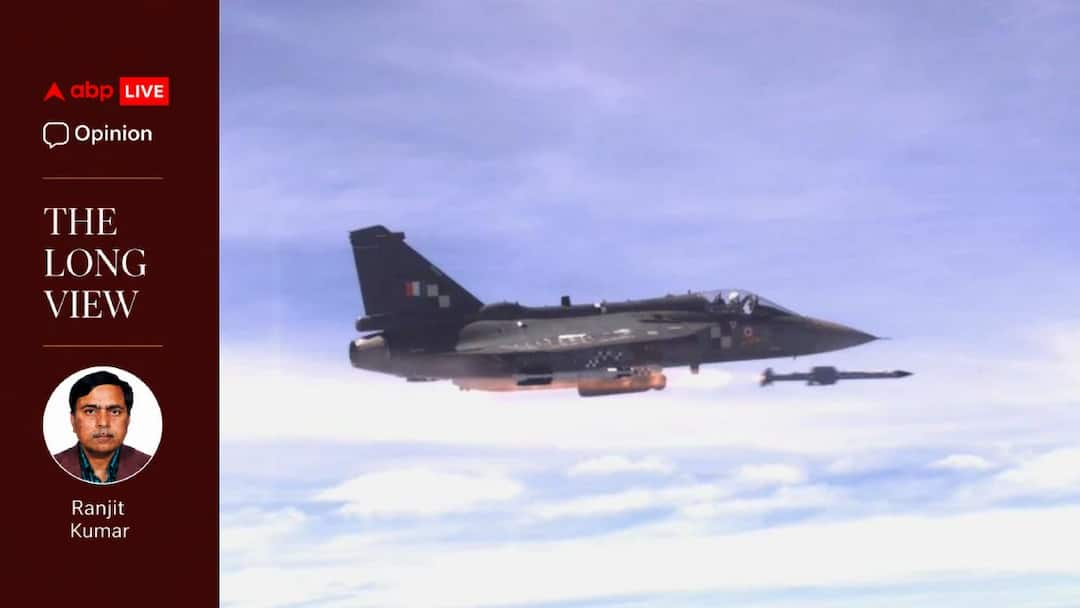
- Long-range air-to-air missiles redefine modern aerial combat dynamics.
- India counters rivals by acquiring advanced long-range missiles.
- Indigenous Astra missile program boosts India’s self-reliance efforts.
- These missiles target enemy support, ensuring air superiority.
Air-to-air missiles are emerging as a challenge to the survival of frontline fighters. Leading air forces are equipping their fighters with longer range missiles. They are ensuring that adversary force is not possessing even longer range missiles than own aircraft. Survival of adversary force’s air-assets and various platforms depend on the air to air missile capabilities of own fighters.
The air to air missiles have in fact relegated a fighter’s roles to a more supportive function within a modern air combat framework. The emergence of long-range air-to-air missiles has effectively diminished the relevance of close-range dogfights, allowing for engagements that can occur from within one’s own airspace while targeting enemy aircraft deep within their territory.
China’s PL-17 And The US Response
In this context, attention has turned to advanced air-to-air missile systems, particularly China’s PL-17, which boasts a range of 300-500 kms and poses a significant challenge to the U.S. Air Force. In response, the U.S. is considering the integration of the European Meteor missile into its F-35 fleet as part of a mid-life upgrade, alongside its own developments such as the AIM-450 Malice and AIM-400 Gunslinger, which have ranges of 450 kms and 400 kms, respectively.
How India Can Counter China’s Fifth-Generation Fighters
India, while lagging in the development of indigenous fifth-generation fighter aircraft, seeks to mitigate this gap through the deployment of longer-range air-to-air missiles. With China’s fifth-generation fighters, the J-20 and J-35, stationed near the Ladakh and Tibet borders, the Indian Air Force can effectively challenge their operations by utilizing longer-range missiles like the R-37 on Sukhoi-30s and Meteors on Rafales, thereby maintaining a strategic parity in the region.
In retrospect, while India may have lagged in acquiring fifth-generation fighter aircraft amidst the advancements of the US, China, and Russia, it has the opportunity to enhance its capabilities through long-range air-to-air missiles. Such missiles would provide the Indian Air Force (IAF) with the necessary resilience in aerial combat, preventing rival air forces from operating even within their own airspace. To ensure effectiveness, these missiles must be equipped with counter-electronic jamming capabilities to overcome adversarial electronic countermeasures.
India’s Astra Missile Programme And Indigenous Capabilities
Currently, India is at least a decade behind in the race for fifth-generation aircraft; however, it has made significant strides in the development of air-to-air missiles. As India continues to advance in this domain, it appears poised to match the firepower of its rivals. The focus of air warfare strategists on long-range air-to-air missiles indicates a shift in aerial combat dynamics, and India’s successful development of the indigenous ASTRA missile, with ranges of 80-100 kms and future versions projected to exceed 300 kms, positions it competitively against other nations.
Traditionally, fighter aircraft have served as platforms for targeting enemy positions through aerial bombardment. However, in the contemporary battlefield, adversary air forces are unlikely to permit enemy fighters to penetrate their airspace without facing significant threats from air-to-air and air defence missiles. Therefore, India must prioritize the development of longer-range beyond-visual-range (BVR) missiles, leveraging the expertise of the Defence Research and Development Organisation (DRDO) to enhance its aerial capabilities and ensure strategic parity with global powers.
How Long-Range Missiles Could Change Air Combat
The introduction of long-range missiles, capable of striking targets at distances of 300 to 500 kms, is set to transform air combat strategies significantly. Air forces equipped with such advanced air-to-air missiles will be able to deter enemy aircraft from entering their airspace, as adversaries can be engaged and neutralized well before they approach. The effectiveness of electronic jammers, as demonstrated during Operation Sindoor, further enhances defensive capabilities by thwarting incoming missile threats, exemplified by the failure of Chinese air-to-air missiles to hit Indian targets.
Operation Sindoor And The Rafale Claim
During the same operation, the Pakistani Air Force claimed to have downed an Indian Rafale fighter, a statement that the Indian Air Force has refuted. The PAF alleged that the Rafale was struck by a Chinese PL-17 missile launched from a JC-10 fighter at a distance of 200 kilometers. This incident highlighted a potential miscalculation by the IAF regarding the PAF’s missile capabilities, leading to the deployment of Rafales closer to the border than might have been prudent.
India’s R-37 Acquisition And Astra-3 Development
In response to the evolving threat landscape, Indian air warfare strategists have sought to enhance their arsenal by acquiring 300 R-37 missiles from Russia, which boast a range exceeding 300 kms. The IAF’s Rafales are already armed with the Meteor missile, which has a range of 200 kms.
Concurrently, Indian missile scientists are advancing the Astra series, with Astra-1 achieving an 80-100 km range, Astra-2 undergoing trials at over 150 kms, and Astra-3 in advanced development with a range exceeding 300 kms. This progress underscores India’s commitment to self-reliance in defence technology, as developed nations are unlikely to share such sensitive technologies, emphasizing the necessity of long-range air-to-air missiles for air superiority.
Targeting Pakistan’s Surveillance And Support Aircraft
During Operation Sindoor, reports emerged indicating that Indian missiles successfully intercepted and destroyed Pakistan Air Force (PAF) surveillance aircraft. This strategic action effectively disrupted the PAF’s command, control, computers, communications, and intelligence (C4I) links, which are essential for the operational effectiveness of modern fighter jets such as the F-35, J-20, J-35, and Rafale.
The implications of this disruption are significant, as it renders PAF fighters less capable of coordinating their operations, thereby diminishing their effectiveness in combat scenarios. The ability to neutralize reconnaissance planes and refuelling aircraft through targeted missile strikes not only immobilizes these assets but also blinds them to the evolving dynamics of the battlefield.
India’s Air Defence Systems And The Role Of R-37
The Indian Air Force (IAF), like many modern military forces, is equipped with advanced air defence systems, including the S-400, which boasts the capability to engage aerial targets at distances exceeding 400 kms.
Additionally, short-range air defence systems such as Akash, Barak-8, and V-SHORADS complement these longer-range systems. However, the role of air-to-air missiles launched from advanced fighter platforms, such as the Su-30MKI and Rafale, is becoming increasingly critical in denying enemy air forces unrestricted access to Indian airspace. The introduction of longer-range missiles, such as the R-37, which can achieve speeds of Mach 6, serves as a formidable deterrent against any fifth-generation fighters attempting to penetrate Indian skies, which typically operate at maximum speeds of Mach 2.
Why Long-Range Missiles Matter For India’s Air Superiority
The evolving capabilities of air-to-air missiles have significantly broadened the operational envelope for aerial engagements, marking a paradigm shift in aerial warfare strategies. This transformation has moved the focus from traditional close-range dogfights to long-range targeting of vital support assets, including early warning aircraft, mid-air refuelling tankers, and electronic warfare platforms. By effectively neutralizing these critical support systems, longer-range missiles can dramatically alter the air combat landscape.
The acquisition of advanced missiles such as the Russian R-37 with a range of 300 kms, the French Meteor with a 200-kilometer range, and the under development indigenous Astra-3, which also boasts a range exceeding 300 kms, underscores India’s capability to counter potential Chinese air assaults without necessarily relying on fifth-generation fighters. The IAF appears to recognize the importance of these longer-range air-to-air missiles in future air combat scenarios, emphasizing the need for indigenous development programs to keep pace with advancements made by rival nations.
( Ranjit Kumar is a senior journalist and strategic affairs analyst )
Disclaimer : This story is auto aggregated by a computer programme and has not been created or edited by DOWNTHENEWS. Publisher: abplive.com