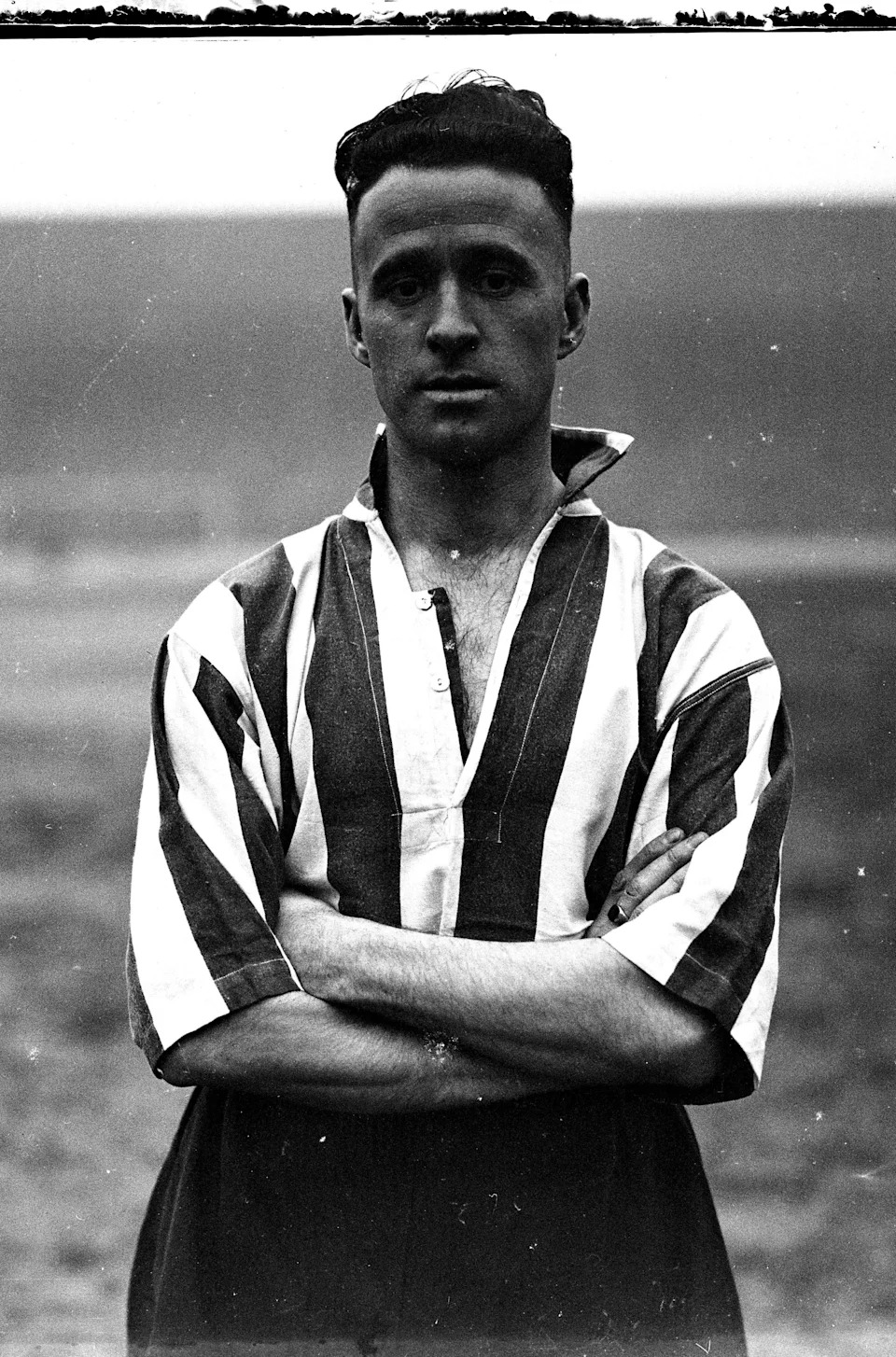
While 1937 is rightly remembered for Sunderland’s first FA Cup win, in league terms the season hadn’t been a success – at least compared to the previous campaign.
After claiming the title in 1936, the lads finished the 36/37 season in eighth place – 13 points behind winners Manchester City – and finished in the same position the following season, albeit just eight points shy of champions Arsenal. The FA Cup had once again been in tantalising grasp – only for Huddersfield Town to snatch the potential of the holders retaining the trophy with a semi-final defeat.
Advertisement
1938/39 began with a renewed determination to reclaim the title – or at least seriously compete for it – but on this day in 1938, Sunderland finally won their first home game of the season on their sixth attempt – climbing to 6th position in the top flight in the process.
Unbeknown to anyone watching on that day, it would be the highest we’d rank in the table for eight years – and it signalled the end of an era for this talented Sunderland team. The 38/39 season saw us finish 16th, only six points off a relegation spot, after a run of just 5 wins in the season’s remaining 22 games saw us drift down the table, and the following season was curtailed due to the outbreak of WW2.
But on this day back in 1938, things seemed a lot brighter as the final whistle went. A Sunderland team featuring eight of the 11 who’d played at Wembley 18 months earlier had comprehensively beaten Stoke City 3-0, turning in an excellent performance that saw Patsy Gallacher net his 100th goal in league football. He’d been on 99 since scoring away at Grimsby in March – and typically went on to score his 101st just eight minutes later.
Or did he? We’ll get back to that momentarily.
Patsy Gallacher, Sunderland (Photo by Barratts/PA Images via Getty Images) | PA Images via Getty Images
By the time Gallacher got his first of the game in the 40th minute. the Sunderland team – missing only Bert Johnston, Sandy McNab and Len Duns from the 1937 side – were one up.
Advertisement
Sunderland had started the game excellently. Bobby Gurney and Eddie Burbanks were denied by keeper Norman Wilkinson before, on five minutes, Johnny Spuhler had a goal chalked off for offside.
Raich Carter then hit the underside of the crossbar with a great strike, which Sunderland claimed had crossed the line, but to no avail.
The ball was most definitely over the line on 15, however. Carter ran onto a through ball from Hastings, showed great strength to hold off a defender and lashed the ball into the roof of the net from the edge of the box.
The lead was almost immediately doubled; Gallacher drove the ball just wide after being set up by Burbanks. Stoke were posing a threat – England winger Stanley Matthews put in a teasing centre that Mapson dealt well with.
Advertisement
Sunderland had a scare when Alex Hastings appeared to be knocked unconscious heading the ball away. As the Sunderland trainer tried to revive him, a semi-conscious Hastings ‘retaliated ‘, got to his feet, and continued the game.
Carter at one end and Matthews at the other seemed to be the players most likely to create something, but it was Sunderland who added to the scoresheet five minutes before half-time.
Sphuler’s cross was headed home by Gallacher, to complete his century.
It was a proud moment for the Scotsman, although whether it was actually his 100th or not is uncertain. Records say he got 100 league goals in total for the club – so his strike that came three minutes after the break seems to have actually been his 100th.
Advertisement
Burbanks’ cross shot was parried down towards Gallacher, who chipped the ball back over the keeper into the top of the net.
Carter was denied by the goalkeeper, while Matthews hit the post and Gurney had a goal disallowed for offside. The rest of the second half played out comfortably for the home team, but reviewing the game, Argus in the Echo suggested the side eased off and should have scored more to ‘put their goalscoring account into better order’.
He was also critical of the opposition star turn Matthews, who at 23 was a regular for both club and country.
One expected much more from Matthews. He finished most of his work more like an amateurish novice than an experienced international and the great player we know him to be.

1938: Stanley Matthews (left), playing for Stoke City FC, beats the opposition’s defence. (Photo by General Photographic Agency/Getty Images) | Getty Images
Whether it was Gallacher’s 100th or 101st league goal that was scored in the 48th minute, one thing is for certain – it was his last in any competition for the lads, and he was to play only two more games for the club with whom he’d spent a decade.
Advertisement
The 28-year-old, whose performances had come in for some press criticism, was sold for a fee of £5500 – ironically enough, to Stoke City.
There had already been a touch of irony; his final game for Sunderland, just a fortnight after the fixture against Stoke, was a match at Roker Park against Preston North End.
The Lilywhites won 2-1, and it was perhaps a sign that this league and cup-winning team was reaching the end of its journey. As well as Gallacher’s departure, the season also saw the final appearances for the club of Bobby Gurney and Jimmy Connor, while manager Johnny Cochrane resigned from his post in early March.
They say all good things have to come to an end, and while this team may have been reshaped into an even more successful one under Cochrane’s replacement, Bill Murray, the advent of war firmly signalled the end to that particular story.
Disclaimer : This story is auto aggregated by a computer programme and has not been created or edited by DOWNTHENEWS. Publisher: Sports.yahoo.com