New Delhi: Ahead of the Uttar Pradesh Assembly elections expected in February-March next year, the Azad Samaj Party, led by Nagina MP Chandrashekhar Azad, and Asaduddin Owaisi’s All India Majlis-e-Ittehadul Muslimeen (AIMIM) are set to join hands to form a third front, seeking to bring Dalits and Muslims together under the slogan “Jai Meem, Jai Bheem”.
Sources in both parties indicated that the proposed alliance was considering contesting around 150 Assembly seats, focusing on constituencies with sizeable Dalit and Muslim populations.
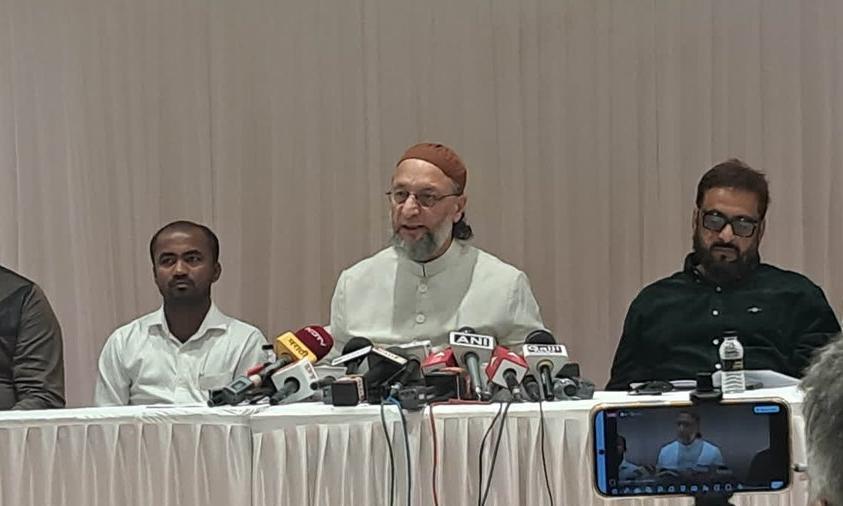
The two leaders are expected to announce the alliance at a joint press conference at Lucknow’s Dayal Paradise Hotel on Thursday afternoon. The name of the proposed front and its seat-sharing arrangement are also likely to be announced.
According to sources, the AIMIM may contest 40-45 seats with substantial Muslim populations, while the Azad Samaj Party could field candidates in most of the remaining constituencies under the proposed arrangement.
The alliance seeks to build a political platform around Dalits and Muslims, who together account for approximately 40 per cent of Uttar Pradesh’s population. Dalits constitute around 21 per cent and Muslims about 19 per cent.
Around 41 Assembly constituencies are estimated to have a combined Dalit-Muslim electorate exceeding 50 per cent.
The proposed alliance comes amid efforts by Azad to expand his party’s support among Dalits, particularly as the Bahujan Samaj Party (BSP) faces challenges in retaining its traditional support base.
The AIMIM contested the 2017 and 2022 Uttar Pradesh Assembly elections but failed to win a seat. Owaisi had earlier explored an electoral understanding with the Samajwadi Party, but the discussions did not result in an alliance.
Political observers said the proposed tie-up could introduce a new element into the electoral contest, particularly in constituencies where Dalit and Muslim voters constitute a substantial proportion of the electorate.
The Samajwadi Party, led by Akhilesh Yadav, has been seeking to consolidate backward classes, Dalits and minorities through its PDA (Pichhda, Dalit, Alpsankhyak) political formula.
The proposed third front would offer another political platform targeting some of these groups.
However, analysts said the alliance’s electoral significance would depend on the final seat-sharing arrangement, selection of candidates and its ability to secure voter support.
The two parties are expected to provide further details of their electoral strategy at Thursday’s announcement.
Disclaimer : This story is auto aggregated by a computer programme and has not been created or edited by DOWNTHENEWS. Publisher: deccanchronicle.com