
In his defence of e-bikes, Nigel Gladstone makes an obvious factual error (“Moral panic peddled about e-bikes is just recycled guff” May 20). He says that e-bikes “require no fuel”, when, as is obvious from their name, they consume electricity. Their manufacture also consumes more raw material than an ordinary push-bike, including rare minerals used in their batteries. Therefore, substituting an e-bike for an ordinary bicycle is a net loss for the environment. He also says that e-bikes “improve your health”. The truth is that riding an ordinary bicycle would improve your health more. Support for e-bikes assumes they are replacing motor vehicles, but as someone who spends two or three hours a day around shared pathways, my impression is that most e-bikes are used for recreation by people who appear able to ride ordinary bicycles. So for the environment and for the health of the user, e-bikes are a mixed blessing – and that is before you start to consider the risks to users and pedestrians, and the anti-social uses to which many e-bikes are put. John Croker, Woonona
We don’t have a share bike problem, we have a people problem (Letters, May 20). If users showed even a modicum of decency when riding the bikes and parking them when finished, the problems would largely disappear. They provide a valuable community service. Remember the old expression “Don’t blame the tools for bad outcomes”? I would add “blame the tools that use them”. Educate the users and then police them. In time, the problems will vanish and the cheap, convenient means of transport will remain. Rod Cunich, Vaucluse
Let’s call out the real share bike problem (“Sydney should make share e-bikes work this time around”, May 20). It’s not the local council, state government or the share bike companies, it’s us, the users. We leave the bikes in dangerous places, in front of crossings, walkways, railway stations and cafes. We can’t even operate the bike stand we are that stupid, and bikes are left lying on the ground. We leave all sorts of rubbish in the basket. The concept of e-bikes is fabulous, the user a disgrace. Take responsibility, if not, fine the last user five times the ride fee. Kevin Jurd, Potts Point
Who was the crazy public servant who decided that share bikes can be dumped anywhere convenient to the rider? It should not be councils’ responsibility to look after these abandoned bikes. It is not too late – designated drop-off points must be created and the responsibility for it should be with the share bike company. Genevieve Milton, Dulwich Hill
The Lime bike has replaced the ubiquitous bin chicken as the newest thing to hate, as they lazily loiter around our stations, high streets and back lanes. In the middle of the night they appear at my front gate, sometimes with a few mates, lost in the suburbs. They sometimes gather in neat rows but are easily pushed over and stay prone for weeks. I secretly harbour a desire to see them put through a crusher, packaged and sent back to their US owner. Come back bin chickens, all is forgiven. Brian Thornton, Stanmore
No parking
Car parking requirements for new units must not be dropped (“Suburban paradise paved with pricey parking lots”, May 20). The Grattan Institute’s proposal is yet another attack on Australians’ quality of life, an attempt to put more money in the hands of property developers. As density increases in our cities, more and more people have no option but to live in an apartment. Anyone who needs to carry equipment for their job, or hobby, or wants to travel anywhere that is not right in the middle of an urban hub, needs a car. I spent much of my life travelling only via public transport and it is so limiting. If getting where you want to go is even possible, public transport often takes two or three times longer than driving. Developers won’t include parking spaces unless required to, which will only lead to drivers being forced to rent spots they can’t really afford. Let people have lives. We need more parking, not less. Thomas Walder, Cherrybrook
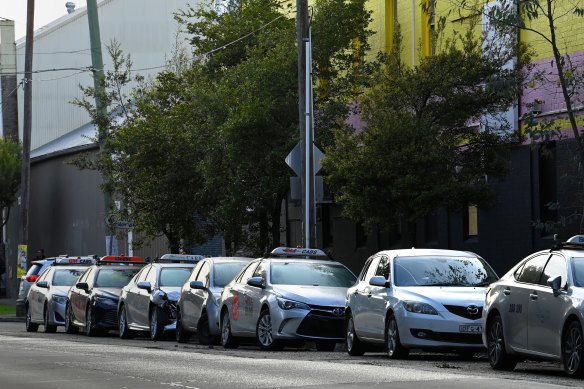
The Grattan Institute’s analysis to reduce onsite parking in unit blocks to increase more home construction sounds sensible, until you apply the reality test. How many of us have spent time in the suburbs fruitlessly trying to find a street parking spot close to high-rise units to either walk into the nearby business district or visit family or friends? It’s a real problem. If you reduce or eliminate car spaces within unit blocks, the result will simply be even worse parking congestion in the street. Peter Baker, Blacktown
It’s obvious that legal requirements for developers to provide car parking spaces makes housing more expensive. But the Grattan Institute tells us that many of these parking places are never actually used, so its innovative solutions have to be welcomed. Any rules that discourage people from owning their own car in already crowded streets is well worth consideration. Greg Baker, Fitzroy Falls
Stuck in Bondi
It’s probably just as well that local residents want “more bars and restaurants to revive Oxford Street Mall” because they won’t be going anywhere else very fast (“What 3000 more homes around Bondi Junction could look like”, May 20). The streets into and around Bondi Junction are already clogged, the trains are full, the station fully stretched despite being just 46 years old (try waiting to go up the single escalator when trains have just pulled in). Add another 3000 homes, with their 6000-plus cars, and they create an urban transport nightmare. Who comes up with these plans? Ah yes, public servants in their glass and steel towers. Only they could come up with phrases like “place-based outcomes”, “activated streets” and “the counterfactual isn’t less housing”. They probably have PhDs – but in creative writing, not urban planning. Farewell Bondi Junction, it was nice knowing you. Patrick McGrath, Potts Point
Hot air
How does Santos chief executive Kevin Gallagher expect us to swallow his big, scary pill about a collapse in the gas industry because 20 per cent of our gas is to be reserved for – wait for it – us (“Gas giant warns Labor on risk of ‘Argentina-style’ industry collapse”, May 20). There are three big problems with that pill, Kev mate. Firstly, if slightly reduced profits on one fifth of your product range equals collapse, you do not have a sustainable business model, or industry. Secondly, Santos’ record of truth telling is about as patchy as the Pilliga’s pockmarked landscape. Thirdly, and this must really hurt, remember that the governments of Australia are not your wholly owned subsidiaries, but elected sovereign entities tasked by us to represent the will of us, the people. Ouch! Dick Clarke, Elanora Heights

Sanctioned self-harm
Tim Moss describes the so-called Enhanced Games in Las Vegas this coming weekend as “the brainchild” of Australian lawyer and entrepreneur Aaron D’Souza (“Enhanced Games is a marketing ploy for billionaires to sell branded peptides”, May 20). Given that participating athletes are using performance-enhancing drugs known to have negative health effects, and hence are destroying their bodies for short-term recognition for themselves and for the financial benefit of entrepreneurs, and given also that these “games” may encourage young viewers to do likewise, I suggest that the adjective “Machiavellian” needs to precede the noun “brainchild”. It is a case of profit over principle, gambling with people’s health and lives in the gambling capital of the world. Paul Casey, Callala Bay
CGT changes fair
Economists have long known that returns on assets and equities are typically 5 to 10 per cent per annum. Salaries, in contrast, only increase by about 3 per cent per annum. So irrespective of the tax treatment, those owning assets and equities grow their assets annually at a much faster rate. Providing a further 50 per cent tax discount on earnings from assets and equities simply increases inequality in the community, which is at an all-time high in Australia (“Labor in overdrive to rewrite CGT narrative amid ‘incorrect’ meme war”, May 20). If you want a fairer and more equal Australia, tax earnings from assets and equities at the same rate as salaries, or more. Emeritus Professor Branko Celler, UNSW
I am not convinced that capital gains deserve more favourable treatment than other forms of income, such as wages and profits (Letters, May 20). The campaign against these long-overdue reforms is simply a push to grant a small, wealthy group of speculators preferential treatment over the hard-working majority. Denis Goodwin, Dee Why
If I make a profit of $100,000 selling shares or a business, why do I pay tax only on $50,000? I do not get this discount if I earn it as wages. With the income tax threshold, I would pay tax on $78,000. Albo is right to end this unfair tax lurk for capital gains. Doug Jarvis, Malua Bay
Supporting start-ups
The tax discussion on start-ups provides a timely segue for us to rethink how we finance this key sector of innovation and growth (“Millennial entrepreneurs unite against Albanese’s tax overhaul”, May 20). The sector already suffers from underinvestment in high-risk start-up innovations. Currently, government support typically takes the form of grants, resulting in a 100 per cent loss to the budget (much greater than the loss of any tax revenue). As an alternative, governments should consider Revenue-Contingent Loans (RCLs) as a sustainable alternative. By linking loan repayments strictly to annual business revenue, RCLs provide vital default protection and revenue smoothing for start-ups, while recycling recovered funds to finance future innovations. Effectively, it’s like HECS for start-ups, where governments share in the risk and the reward. Innovative sectors deserve some more innovative funding ideas. So says this Boomer! Chris Andrew, Turramurra
I fail to see the argument in favour of special treatment for capital gain from “start-ups”. Profit should be taxed whether it comes from an established business or whether it comes from the establishment and rapid sale of a “start-up”. Businesses generally have a significant range of tax deductions available to them that are not available to wage and salary earners. The special pleading really comes down to an ideological belief that investors are inherently more worthy than workers, who actually produce the wealth. Paul Pearce, Bronte
Broadcasters take a stand
The refusal by the ABC and SBS to elevate the International Holocaust Remembrance Alliance (IHRA) “working definition” of antisemitism to some special status preserves moral clarity in the fight against this oldest of hatreds and also mitigates the grave threat that would pose to editorial independence, freedom of speech and social cohesion (“ABC, SBS reject federal government, special envoy’s definition of antisemitism”, May 19). Hopefully governments, universities and other institutions will take a similarly principled stand. The IHRA definition can be used in particular circumstances, but that should not be to exclusion of other reputable expert working tools, such as the Jerusalem Declaration, the Nexus Document or the definition developed after careful consideration by 39 Australian universities. Robin Margo, Newtown

Your correspondent Bruce Hall is wrong about the IHRA definition of antisemitism (Letters, May 20). Only two of the IHRA examples of antisemitism allude to criticism of Israel. The first states that denying the Jewish people a right to self-determination by claiming the state of Israel is a racist endeavour is antisemitic. The second identifies antisemitism in applying double standards, requiring of Israel behaviour not demanded of any other democratic nation. Criticism of Israeli policy sits outside both definitions, and your correspondent should not conflate them. Importantly, about 50 per cent of Israelis criticise their own government. As the forthcoming elections may show, an even greater proportion criticises Prime Minister Benjamin Netanyahu. John Kempler, Rose Bay
Wednesday’s letters about antisemitism raise a number of questions. Tmne Blair says that the ABC and SBS should accept the definition of antisemitism as determined by Jewish people. The obvious question is, which Jewish people? Considering that many Jews here and around the world do not agree with Special Envoy to Combat Antisemitism Jillian Segal on the subject, I think it would be wise for our media and all of us to think more deeply about the nuances involved. In addition, Jamie Hyams raises a disingenuous distraction. He correctly identifies Israel as an ethno-theocracy, but omits any reference to the inherent problem of Israel’s dual system of laws for Jewish and non-Jewish people. However, the strongest criticism of the Israeli state is over allegations of disproportionate and unlawful attacks on, and imprisonment and torture of, Palestinian civilians, health care and aid workers and journalists, some of whom are Australian citizens, the deliberate withholding of food, water and other resources, as well as unlawful confiscation of property. I would not describe this criticism as antisemitic. Nell Knight, Avoca Beach
If a panel of international experts proposes a working document helping to understand antisemitism, of course it seems appropriate to reject it if we don’t like it. If a panel of (self-identified) international experts proposes that Israel has perpetrated genocide in Gaza, we must accept it because, after all, they have identified themselves as experts. John Ziegler, Bellevue Hill
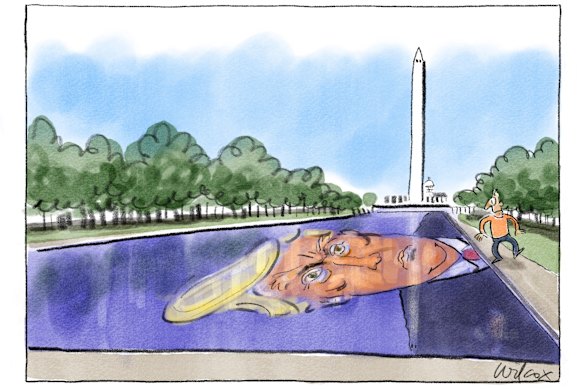
Pool renovation
Don’t sugarcoat death
Thank you, Barbara Rogers, for addressing an expression I continually cringe at (Letters, May 20). Why do we say someone “passed away”, like it’s going to be more palatable? When our 26-year-old son died almost six years ago, there were no words to describe it other than death or dying. I don’t understand why we can’t say what happened. The thought of him “passing away” brings no comfort and is a euphemism at a time when reality must be faced. Let’s reclaim the correct language when dealing with death. Gail Lloyd, Cambewarra
- To submit a letter to the Sydney Morning Herald, email letters@smh.com.au. Click here for tips on how to submit letters.
- The Opinion newsletter is a weekly wrap of views that will challenge, champion and inform. Sign up here.
Disclaimer : This story is auto aggregated by a computer programme and has not been created or edited by DOWNTHENEWS. Publisher: www.smh.com.au