

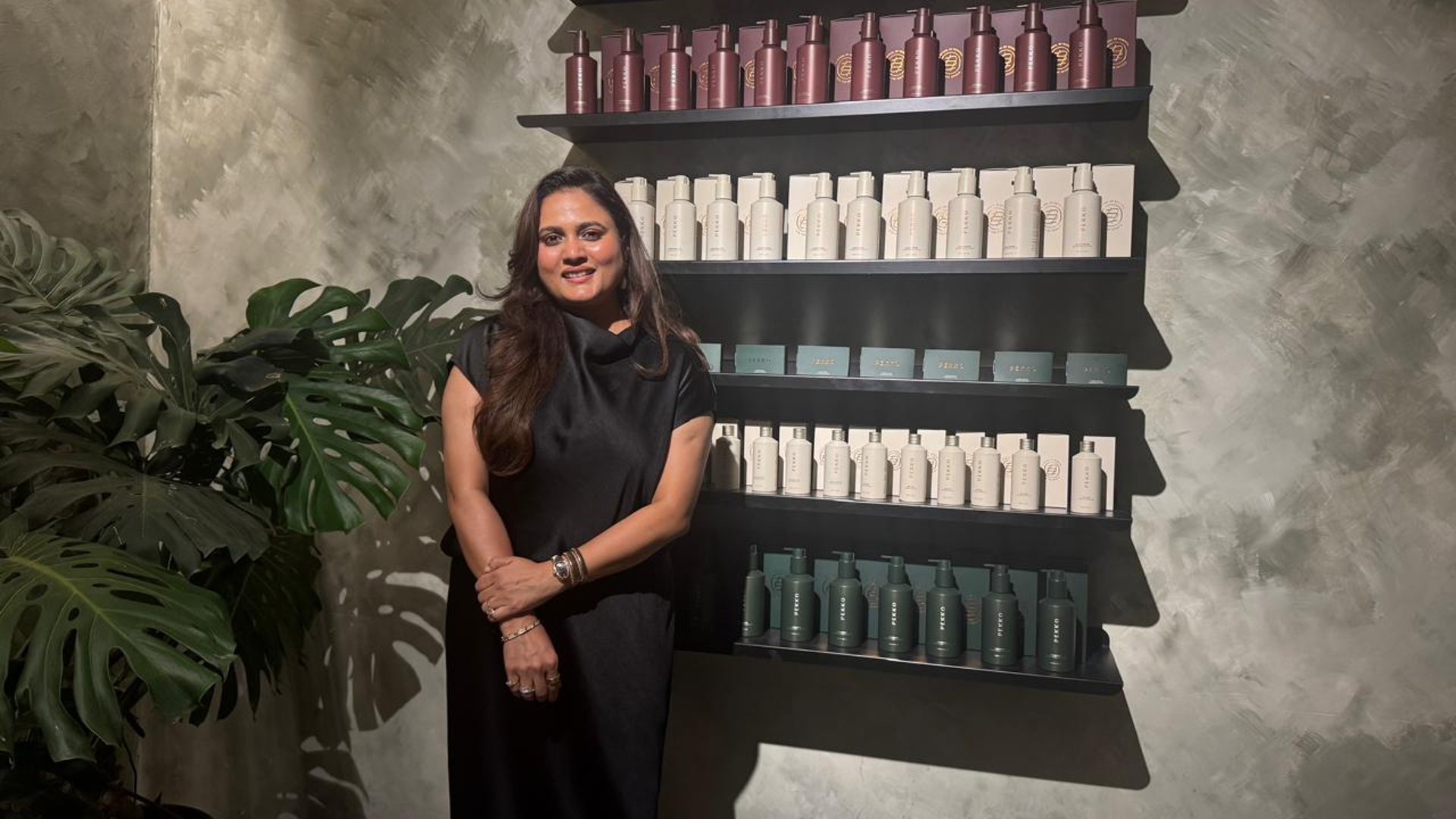
What happens when two friends who love travelling, discovering new products and bringing home little pieces of the places they visit decide they want something that feels closer to home?
Silki Agrawal, Co-founder of Pekko.
For Silki Agrawal and Ekta, it began with a fairly simple frustration. They would travel, browse stores and bring home products they loved, only to realise that many of them did not quite speak to their own tastes or the way they wanted to experience self-care.
“We have studied and worked together and travelled a lot,” says Silki Agrawal, co-founder, Pekko. “We were actually like consumers ourselves. We always looked out for the confectionery stores or Indian products and stuff.”
The two were particularly drawn to products that could turn an everyday routine into something pleasurable. But carrying home bottles of body creams and other personal-care products was hardly practical.
“We always sort of felt, why do we not have something similar to our taste? Because genuinely, it’s very difficult to carry huge bottles of body cream. But we were so obsessed that we would actually do it.”
That conversation became more serious around Holi in March 2024. What Silki and Ekta wanted was not another generic personal-care brand, but something designed, considered and contemporary, while still having a connection to India.
And then there was tea.
For Indians, tea is rarely just a beverage. It is the morning cup, the afternoon pause, the conversation with a friend, the welcome offered to a guest and sometimes simply the five minutes we claim for ourselves. For Pekko, it became the starting point for exploring an Indian ingredient through a modern beauty lens.
“Tea is part of Indian culture. And we all know it as chai,” Silki says. “But we know the West has already explored a lot of antioxidants from India. There is a lot of art in this, dark chai and all that. But none of the Indian brands have done it as yet.”
The founders wanted to explore tea beyond its familiar place in the Indian kitchen and bring its properties into beauty and personal care.
“We wanted to bring it to the audience that there are a lot of wonderful antioxidants from the tea which we have extracted. You can put it in beauty care as well,” she says.
It was an idea that allowed Pekko to take something deeply familiar and look at it differently. Tea could be an ingredient, but it could also become part of the emotional language of the brand.
“We were very eager, but didn’t want to make it a fake. We wanted to create this whole bath and very ritualistic sort of design,” Silki says.
That ritual is important to Pekko. The product has to work, but it should also create a moment of pleasure. The fragrance, texture, packaging and even the way the product comes out of the bottle are part of the experience.
“The moment you feel amazing when you are using that product should make you feel happy because of the effect on your wellbeing. All of those things came together.”
The search for the right formulation brought Silki and Ekta to Ally Matthan, a trained perfumer from ISIPCA, the French school specialising in perfume, cosmetics and food flavouring, affiliated with the Osmothèque. What began as a consultation soon became a deeper collaboration.
“Silki and Ekta were very clear that they were not interested in a shower gel or a hand wash. They were like ‘we have points of tension in the day and we find that moment of literally a pause when we are alone’,” Ally says.
That thought became central to the fragrance experience.
“So you are washing your hands alone, there is a moment that is yours. And in that moment you can either choose to embrace, feel good about it, or you can choose to let go. And so two fragrances were created to address either embrace or to let go. And that’s the whole idea of sensorial experience,” adds Ally.
Tea, therefore, is not treated simply as a fashionable ingredient. It sits within a larger idea of ritual, pause and wellbeing. The product asks you to reconsider something you may already do every day.
That same attention to detail went into the physical product. Silki and Ekta spent almost a year finding manufacturers, developing the formulation and working through the design.
“We knew that when we create a brand, the way the ergonomics has to be in line, the way it dispenses, it shouldn’t wobble,” Silki says.
The packaging follows the same philosophy. Minimal, tactile and inspired by nature, it is designed to make the everyday object feel considered without turning it into something precious or impractical.
That distinction matters because Pekko is deliberately positioning itself in the space between mass-market personal care and unaffordable luxury.
“We were very sure that good design doesn’t have to become very expensive. It should be accessible,” Silki says. For the founders, premium does not have to mean exclusive. It can mean good ingredients, thoughtful design, a pleasing fragrance and the simple pleasure of using something that has been made with care.
“We were very certain that we want more and more people to experience this. Whether it’s the touch of the product, or just how it was designed, making them feel good about it,” says Silki.
Even the name brings the story back to tea. Pekoe, written P-E-K-O-E, refers to a grade or type of tea. Pekko is a shorter, more playful interpretation of the word, chosen because it was easy to remember and connected naturally to the collection’s tea inspiration.
In that sense, the brand has come full circle. Two friends who travelled the world looking for products they loved began wondering why they could not find something that felt closer to their own tastes. They found the answer not by reproducing what already existed, but by looking at something deeply Indian through a different lens.
Tea became the bridge.
It connects the ingredient to the formulation, the fragrance to the ritual and the ritual to a distinctly Indian understanding of taking a moment for yourself.
And that is Pekko’s most interesting proposition. Luxury does not have to be reserved for special occasions or hidden behind a high price tag. Sometimes it can be as uncomplicated as washing your hands, catching the fragrance in the air and allowing yourself a few quiet seconds before returning to the day.
Disclaimer : This story is auto aggregated by a computer programme and has not been created or edited by DOWNTHENEWS. Publisher: deccanchronicle.com







