TEHRAN- The Saudi’s senior security and military officials’ visit to Tehran, accompanied by their transregional partners, reveals a bitter truth: the Arab capitals of the Persian Gulf which at the outset of the war encouraged the US to confront Iran decisively due to their optimistic calculations, now find themselves as hostages of the geopolitics of the battleground. A war that was launched with the expectation of a swift victory has now exceeded the diplomatic capacity of the Persian Gulf Cooperation Council (PGCC), forcing these states to turn to various coalitions and other regional powers in an effort to manage the crisis and contain the fire burning their critical infrastructure.
This situation vividly illustrates a fundamental principle of political economy and risk management, i.e., whenever a strategic opportunity is pursued without a careful assessment of uncertainties, it turns from a potential gain into a devastating threat.
Before the conflicts and hostilities, some regional governments were trying to avert a catastrophe through diplomatic channels. Yet once the war started, the greed to defeat Iran overtook. Reports from intelligence and news sources indicated that Arab capitals had privately called for military operations to continue until a decisive outcome was achieved. They believed that an early ceasefire would leave Tehran in a stronger position, overlooking the fact that supporting Iran’s weakening does not necessarily mean being able to control the consequences of war or protect vital infrastructure from harm.
The principal miscalculation of these governments was their failure to distinguish between “weakening Iran’s conventional military capabilities” and “eliminating Iran’s asymmetric response capability.” Large militaries can bomb conventional infrastructures, but if the other side retains its drone and missile capabilities, as well as the ability to disrupt maritime chokepoints, the desired outcome will remain elusive. The course of this war has demonstrated that even the US is highly vulnerable to these Iranian military dynamics. The destruction of and damage to dozens of US fighter jets, drones, and logistical facilities across the region, along with CENTCOM’s need to relocate support facilities to more distant locations, testify to these limitations.
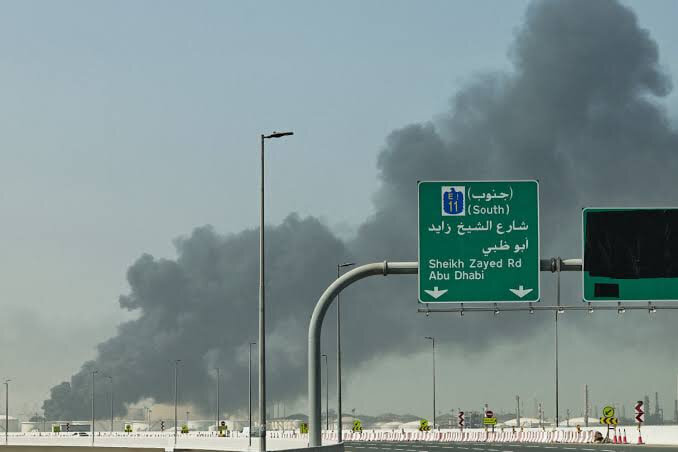
Once the US security umbrella in the region failed, the side effects of the war on some of the world’s most economically exposed states became inevitable. Decades of efforts to transform the Persian Gulf into an “island of stability for the global economy” were undermined by extensive attacks on ports, major energy facilities in Qatar and the United Arab Emirates, Kuwaiti refineries, and Saudi pipelines and airports.
The development models and economic transformation plans of these states depend heavily on uninterrupted oil revenues and the continued flow of international investment, which is highly sensitive to risk. When fears of war increase investment risks and drain the region’s sovereign wealth funds, the scale of damage and destruction represents only a small part of the broader impact of the current crisis.
The geography of the Strait of Hormuz and its surrounding waters is such that neither the US nor the regional states can guarantee the complete security of energy lines without Iran’s cooperation and meaningful participation. Alternative routes are costly, lack sufficient capacity to replace the Strait entirely, and are themselves vulnerable to threats.
Arab governments succeeded in lobbying Washington into entering the war. Now, however, as the crisis has escalated into an intense confrontation among the principal actors, regional governments no longer possess the capacity to resolve it.
Currently, the Persian Gulf capitals have transformed from behind-the-scenes advocates of military action into geopolitical captives. They have no sufficient leverage over the US government; moreover, Tehran neither trusts them nor overlooks their past wrongdoing. Recent diplomatic efforts, including complex consultations with actors such as Turkey and Pakistan to establish channels of communication with Iran, provide clear evidence of this desperation and sense of helplessness.
The bitter experience of this war has demonstrated that security in the Persian Gulf is indivisible: a fire ignited by flawed calculations has inflicted its consequences on the economies of those who supported the war and those who opposed it simultaneously. The essential lesson is that sustainable security in the region can only be achieved by establishing credible channels of communication with Iran and developing indigenous political, security, and economic mechanisms through which neighboring states can protect one another’s critical infrastructure.
Mehdi Zolfaghari is associate professor in the Department of Asian Studies at Allameh Tabataba’i University
Disclaimer : This story is auto aggregated by a computer programme and has not been created or edited by DOWNTHENEWS. Publisher: tehrantimes.com