
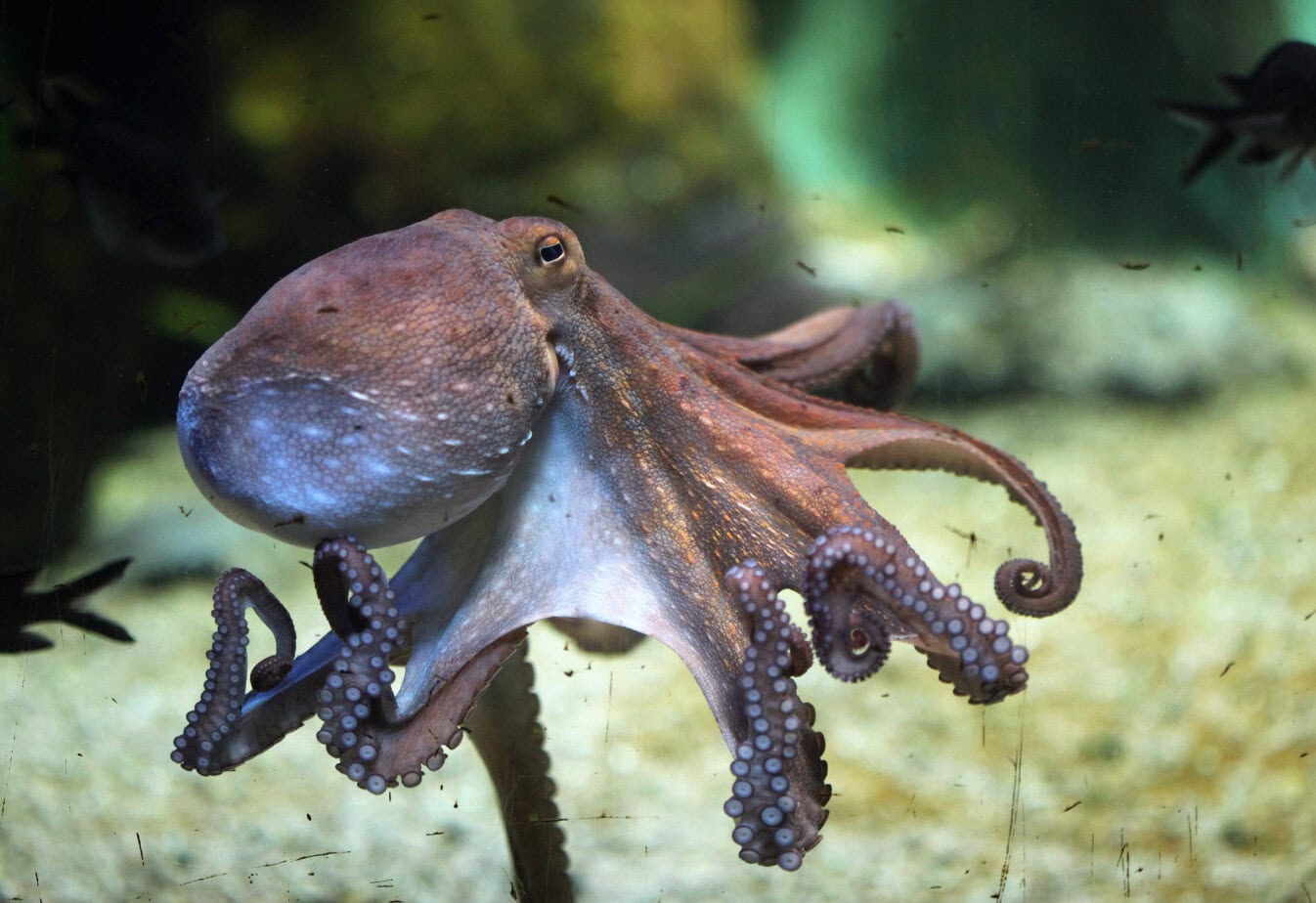
Plans to build a commercial octopus farm in Gran Canaria, part of Spain’s Canary Islands, have been withdrawn.
Spanish seafood company Nueva Pescanova wanted to produce around one million octopuses each year for human consumption.
The project first came to light in 2023 after planning documents were made public. It quickly drew criticism from scientists, conservationists and animal welfare organisations around the world.
Animal welfare experts warned that keeping large numbers of octopuses in crowded tanks could lead to stress, aggression and even cannibalism. They also questioned how the animals would be slaughtered. There is currently no internationally recognised method for killing octopuses on a commercial scale.
Octopuses live solitary lives and are known for their intelligence and curiosity. Research has shown they can solve puzzles, use tools and recognise individual people. Scientists have also found evidence that octopuses can experience pain, distress and pleasure.
Environmental groups raised additional concerns because octopuses are carnivores. Farming them would require large amounts of feed made from wild-caught fish, putting extra pressure on already stressed marine ecosystems.
Campaign against the project
Several animal welfare organisations, including Eurogroup for Animals, Compassion in World Farming, AnimaNaturalis, Intercids and the Aquatic Life Institute, campaigned against the proposal over the past three years.
They submitted scientific evidence to policymakers, launched public campaigns and argued that octopus farming posed serious animal welfare and environmental risks.
The debate also spread beyond Europe. In recent years, several states in the United States, including California and Washington, have introduced laws banning commercial octopus farming before the industry becomes established.
Calls for an EU-wide ban
Although the Gran Canaria project has been withdrawn, campaigners say the issue is not over.
Other companies are still exploring the possibility of farming octopuses. Animal welfare groups are calling on the European Union to introduce a ban on commercial octopus farming across all member states.
They argue that stopping future projects would provide long-term protection for one of the ocean’s most intelligent animals.
Support The Animal Reader
Most animal suffering never makes the news. When there is a flood, an earthquake, or a wildfire, we read about the people who were hurt. We almost never hear about the animals. How many were injured or lost their home. How many died. It is as if they do not exist.
The danger of leaving animals out of our daily news is that we slowly create a world where people forget we share this planet with them. And when people forget, they stop caring.
We already see this happening in the way animals are treated in our food systems, how they are used in scientific testing, and how they are kept in cages for human entertainment. More recently, we see it in the growing number of people sharing videos on social media while hurting animals, as if their lives mean nothing.
Animals need people to keep them in the news. That is why I started The Animal Reader. If you believe animals deserve a place in our daily news, please consider supporting this work.
Thank you,
Prya Bisambhar
Disclaimer : This story is auto aggregated by a computer programme and has not been created or edited by DOWNTHENEWS. Publisher: theanimalreader.com






