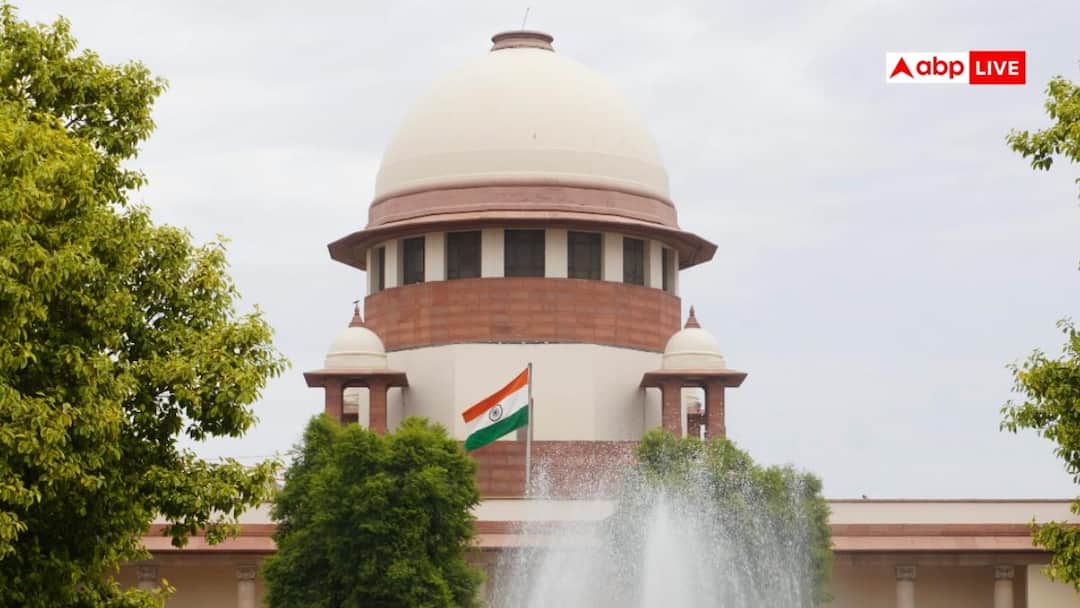
- Supreme Court establishes safeguards against POCSO misuse in custody disputes.
- Police must engage child experts before arresting accused parents.
- Special Courts also require expert input for direct POCSO complaints.
- This prevents false accusations causing trauma to families.
The Supreme Court has issued safeguards against the possible misuse of the Protection of Children from Sexual Offences (POCSO) Act in matrimonial and child custody disputes, directing police not to act in haste and arrest an accused parent or family member living with the child when the parents are involved in a matrimonial dispute.
A bench of Justices J.B. Pardiwala and K.V. Viswanathan said the safeguards would apply when a POCSO offence is alleged against a parent or another family member living under the same roof as the child and a matrimonial dispute exists between the child’s parents. The police officer receiving the complaint must verify whether such a dispute exists.
The court also directed investigating officers or Special Juvenile Police Units to engage an expert in child and adolescent psychiatry or clinical psychology, in consultation with the District Child Protection Unit (DCPU), or the District Legal Services Authority where a DCPU is unavailable. The expert’s assessment is intended to assist the investigating agency in deciding whether there is sufficient reason to arrest the accused under Section 35 of the Bharatiya Nagarik Suraksha Sanhita (BNSS).
Supreme Court On POCSO Cases In Matrimonial Disputes
The case arose from a prolonged custody dispute between estranged parents. The mother had lodged a POCSO FIR against the father concerning their minor daughter. The Supreme Court had directed a detailed investigation, following which the CBI found the allegations against the father to be baseless. The court concluded that the FIR had been registered to create a basis for restoring custody to the mother and quashed the proceedings.
The Supreme Court said allegations of sexual abuse made by one parent against another during a bitter custody dispute can cause trauma to the child and damage the parent-child relationship. It also noted that a false accusation can cause lasting harm to the accused parent even after exoneration. The court stressed that the POCSO Act is meant to protect children and that safeguards against misuse cannot dilute the law’s protective purpose.
The court said the safeguards would operate only when two conditions are met: the accused is a parent or family member living under the same roof as the child, and a matrimonial dispute exists between the child’s parents. It further said the police must exercise the statutory power of arrest under Section 35 of the BNSS carefully rather than treating registration of an FIR as an automatic ground for arrest.
Child Psychology Assessment Before Arrest
The investigating officer or Special Juvenile Police Unit must engage a child and adolescent psychiatry or clinical psychology expert in consultation with the DCPU or DLSA. The expert should ordinarily be selected from the register maintained by the DCPU under Rule 5(1) of the POCSO Rules, 2020. In exceptional cases where the material is already clear, the investigating officer may dispense with the expert’s involvement, but must record reasons in writing.
The evaluation must be conducted independently and without influence from either the parent or investigating authorities. The expert will submit a report to the investigating officer or the Special Juvenile Police Unit. The assessment must also comply with the child-friendly safeguards under the POCSO Act and Rules and must not subject the child to pressure, discomfort or repeated harassment.
The expert’s report will not by itself determine whether an arrest is made. The investigating officer will consider the report along with other relevant evidence and circumstances before deciding whether there is a “reason to believe” that the accused committed the offence. The investigation will otherwise continue according to law.
Safeguard For Direct POCSO Complaints Before Special Courts
The Supreme Court also addressed complaints filed directly before Special Courts under Section 33 of the POCSO Act. It said such complaints should not automatically result in cognisance or summons. The Special Court must apply its mind to the allegations and determine whether there is a prima facie case before proceeding against the accused.
Where the threshold conditions relating to a matrimonial dispute are met, the Special Court should involve an expert in child and adolescent psychiatry or clinical psychology before deciding whether to take cognisance and issue summons. The court must consider the expert’s report along with the other relevant circumstances. In exceptional cases where the material is already clear, the Special Court may dispense with the expert’s involvement, but must record reasons for doing so.
The Supreme Court clarified that the safeguards will apply to POCSO cases arising from FIRs where investigation is still pending as of the date of the judgment. For private complaints under Section 33 of the POCSO Act, the safeguards will apply where summons had not been issued as of September 24, 2026.
The court also directed that its judgment be sent to the Registrar Generals of all High Courts, which will circulate it to criminal courts. Copies will also be sent to the Chief Secretaries of all states and Union Territories for onward transmission to every police station.
Disclaimer : This story is auto aggregated by a computer programme and has not been created or edited by DOWNTHENEWS. Publisher: abplive.com