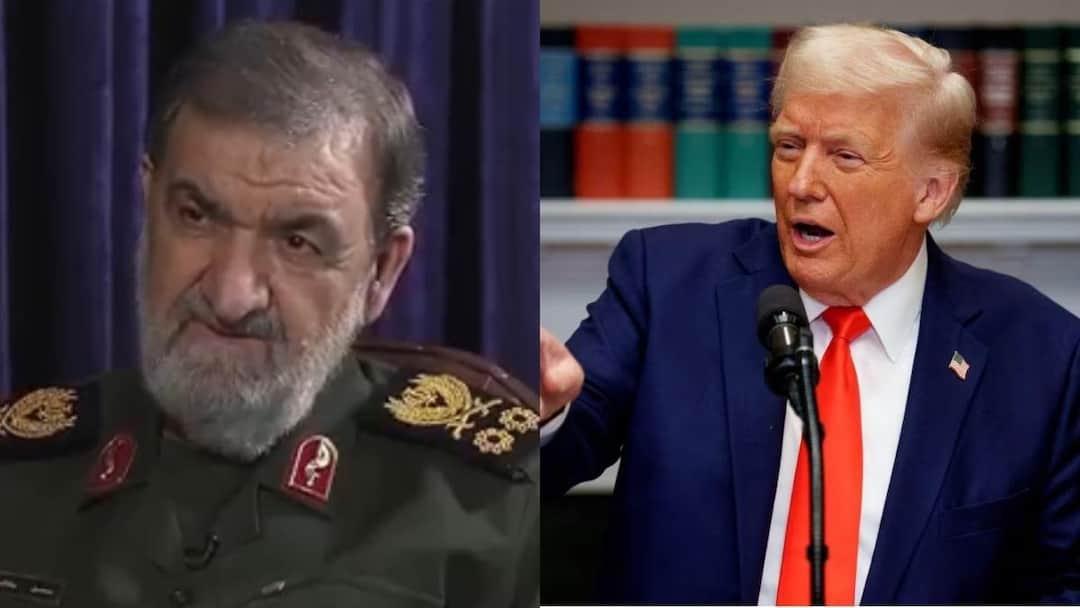
- Iran delivered conditions to US via Qatar, awaiting response.
- Demands include ending war, releasing funds, lifting blockade.
- Iran ties Hormuz Strait opening to US commitments.
Iran’s security chief Mohsen Rezaei has outlined Tehran’s latest conditions for resuming negotiations with the United States and ending the ongoing war, saying the demands have been conveyed to Washington through Qatari mediators.
In an exclusive interview with Al Jazeera on Saturday, Rezaei said Tehran was awaiting US President Donald Trump’s response. He also warned that Iran was now more prepared for a prolonged conflict than it was during the initial phase of the war, which began after US-Israeli strikes on Iran in late February.
“We will confront America with greater force, and with more numerous and more painful strikes,” Rezaei said.
The latest demands come after a June 17 US-Iran memorandum of understanding expired last month, with efforts by Qatar and Pakistan to revive negotiations continuing.
Also Read: Ukraine Launches Biggest Drone Attack On Russia, Over 1,000 Drones Used; 2 Killed
What Are Iran’s Conditions To End The War?
Rezaei said Tehran wants:
- An end to the war on all fronts, including Lebanon.
- The release of Iran’s frozen funds running into billions of dollars.
- An end to the US naval blockade of Iranian ports.
- An end to US interference in Iran’s internal affairs.
- An end to US cooperation with what Tehran calls the “opponents of our revolution”.
- An end to all US attacks on Iranian territory.
Rezaei said the conditions were in Washington’s interest and warned that US threats would not force Tehran to back down.
“We are prepared for a decisive war,” he said.
In a separate post on X, Rezaei said Iran had announced seven conditions for starting negotiations with Washington, describing Tehran’s message as “clear and unambiguous”. The security chief said Iran was waiting for the US to accept what Tehran considers its rights and conditions.
Iran Links Hormuz Opening To US Commitments
Iranian Parliament Speaker Mohammad Bagher Ghalibaf also reiterated Tehran’s position on the Strait of Hormuz, saying the strategic waterway would remain closed until the US fulfils its commitments.
“Until these conditions are met, the legitimate rights of the Iranian nation are recognised, and American commitments are fulfilled, there will be no opening for a return to the previous state of negotiations or for the reopening of the Strait of Hormuz,” Ghalibaf said.
Rezaei has previously said Iran came close to reaching an agreement with Oman over Hormuz, but that the proposed deal was shelved. He also said any new agreement would require a dispute-resolution mechanism.
How Do The New Conditions Differ From June MoU?
Iran’s latest demands largely overlap with conditions outlined in the June memorandum. That agreement included an end to the war on all fronts, including Lebanon, respect for sovereignty and non-interference in internal affairs, an end to the naval blockade and the release of Iran’s frozen funds.
The June MoU also envisaged a $300 billion US-backed reconstruction plan. It included commitments concerning Iran’s nuclear programme and the reopening of the Strait of Hormuz for safe passage of vessels, along with provisions related to Iranian crude oil exports, sanctions and the deployment of additional US forces in the region.
Rezaei did not mention war reparations in his latest list of demands, despite Tehran having previously sought compensation from Washington.
According to Adel Abdel Ghafar, a senior fellow focusing on the Middle East at the Australian Strategic Policy Institute, the substance of Iran’s demands has changed little. He told Al Jazeera that the main difference was the timing and the channel through which Tehran delivered them.
Rezaei Rejects US Claim Over Hormuz Strike
Rezaei rejected the US accusation that Iran violated the June MoU by attacking an oil tanker in the Strait of Hormuz.
He said Iran’s actions came only after US attacks on Bandar Abbas and an Iranian surveillance platform. Rezaei also said the MoU required disputes to be taken to a committee agreed upon by Ghalibaf, Iran’s chief negotiator, and US Vice President JD Vance, which he claimed Washington had unilaterally withdrawn from.
Rezaei also said Iran had not decided to withdraw from the Nuclear Non-Proliferation Treaty, despite saying the US and Israeli strikes could push Tehran towards such a step. He maintained that Iran’s nuclear doctrine had not changed.
Iran Signals Diplomacy, Warns Of War
Rezaei’s remarks reflect Tehran’s continued combination of diplomatic messaging and warnings of further military action.
While Iran has conveyed conditions for restarting negotiations, Rezaei also warned that Tehran was prepared for a “decisive war” if Washington rejected its demands.
The latest developments come as regional tensions remain high and efforts by mediators to bring the US and Iran back to negotiations continue.
Disclaimer : This story is auto aggregated by a computer programme and has not been created or edited by DOWNTHENEWS. Publisher: abplive.com