Rolls-Royce and BAE Systems are expecting higher profits as governments around the world boost their defence spending.
Both companies lifted their earnings guidance on Thursday morning, citing commitments from governments to increase investment in defence systems.
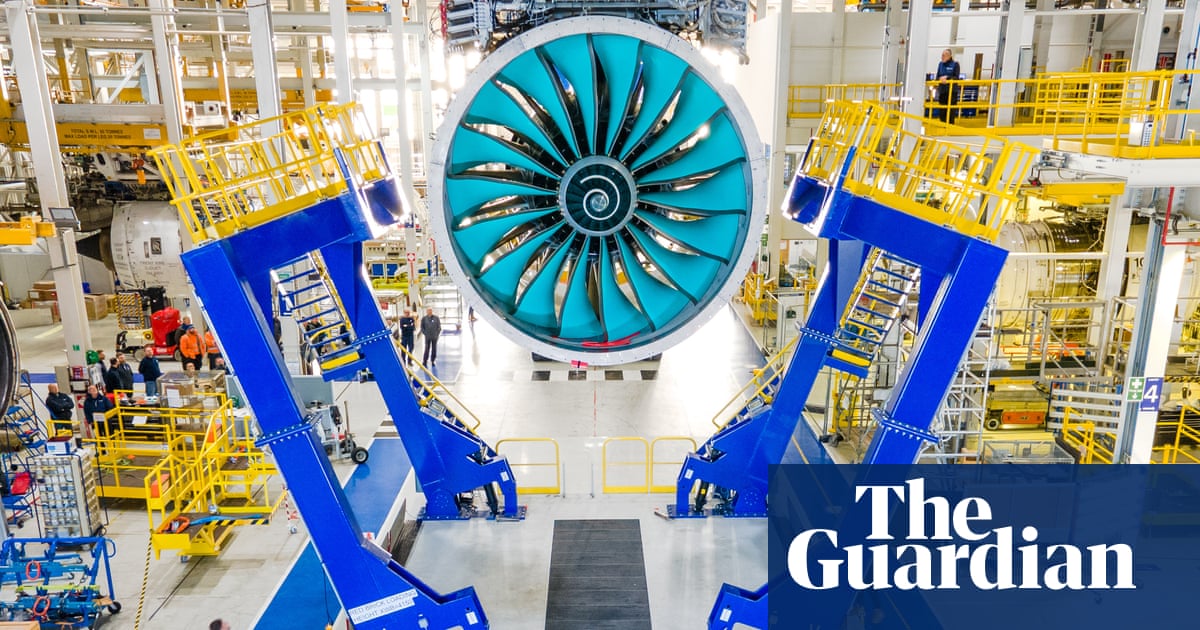
Rolls-Royce makes jet engines for combat planes and commercial aircraft, turbines for ships and submarines, and small nuclear power plants. It lifted its forecast for underlying operating profit this year to £4.7bn-£4.9bn, up from previous guidance of £4bn-£4.2bn. It also increased its free cashflow forecast from £3.6bn-£3.8bn to £3.8bn-£4bn.
Rolls-Royce has benefited from the jump in defence spending since Russia’s full-scale invasion of Ukraine in 2022, while its power generation unit has experienced increased demand from datacentres used by AI companies.
At the same time, revenues have soared in its engines business for civilian passenger jets as long-haul flights have recovered after the pandemic.
The company told shareholders it should benefit from the commitments made at the recent Nato summit, including for Saab GlobalEye, an airborne early warning system, and MQ-4C Triton, a high-altitude aerial surveillance system. Both use Rolls-Royce engines.
Tufan Erginbilgiç, who took over as chief executive of Rolls-Royce in 2023, said the “transformation” of the company was continuing to produce results. He said the company was still trying to calibrate how big the market could be for gas turbines for datacentres in the US, but that it had already secured future orders.
On defence, Erginbilgiç said “I feel a lot better” on the visibility of orders after the UK belatedly published its defence investment plan. The plan confirmed spending on the Tempest fighter jet until 2030, and also added £5bn in spending for autonomous weapons.
Weapons manufacturers are starting to test large jet-powered drones to fly as “loyal wingmen” alongside crewed fighter jets. Rolls-Royce is developing the engine for the Brontanax drone revealed by BAE Systems last week.
“We always had world-leading capability in autonomous but the market didn’t exist,” said Erginbilgiç. Now that the larger drones are starting development, “we are the obvious company to build that,” he said, also citing work with the US on uncrewed fuel tankers and Germany on its own loyal wingman.
Rolls-Royce’s share price rose by 5%, leading the FTSE 100, while BAE Systems gained 2%.
BAE Systems reported that sustained increases in defence budgets around the world meant it had upgraded its profit forecasts. It now expects earnings to rise by 10% to 12%, slightly higher than the 9% to 11% estimate it had previously given.
BAE makes a large proportion of the UK’s weapons, from tanks and fighter jets to munitions. It has benefited from demand in the US, which had raised weapons spending even before its war on Iran, and other export allies of the UK including several countries in the Gulf.
BAE cited a contract to provide Turkey with training, support equipment and services for 20 Typhoon aircraft and a deal with the US to quadruple production and accelerate delivery of the infrared seeker for the Terminal High Altitude Area Defense (Thaad) interceptor missile. It also has a £5.9bn contract with the British government to complete a nuclear deterrent submarine, HMS Dreadnought.
Charles Woodburn, BAE’s chief executive, said: “The global threat picture remains highly volatile and governments are responding with sustained increases in their defence budgets.
“The combination of our proven execution, diverse geographic footprint and continued investment in our technology and facilities, alongside our healthy order backlog and growing opportunities across our markets, positions us to keep delivering long-term growth.”
Disclaimer : This story is auto aggregated by a computer programme and has not been created or edited by DOWNTHENEWS. Publisher: theguardian.com