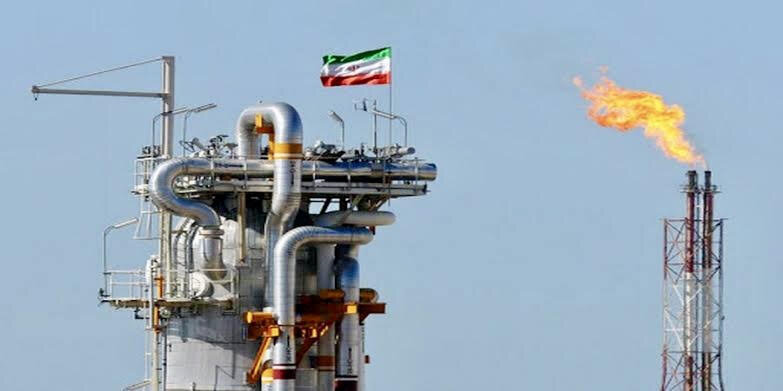
TEHRAN- The proposed package of 117 technological projects for the oil and gas industry, prepared with the direct cooperation of 42 entities, was reviewed at a meeting of the Special Headquarters for Technology Development chaired by Mohammad Reza Aref, First Vice President.
According to IRNA, at the meeting of the Special Headquarters for Technology Development, held under the chairmanship of the First Vice President, various proposed packages for applying new technologies in the oil and gas industry were reviewed.
These proposed packages include 117 projects prepared with the direct cooperation of 42 entities, and they pursue enhancing the resilience of the oil and gas industry, inter-sectoral coordination, support and facilitation for the private sector, prioritizing projects emphasized by upstream documents, developing dual-use technologies, and penetrating and expanding the application of driving technologies.
Enhancing oil and gas production, completing the value chain of the refining industry and resolving the gasoline and diesel imbalance, regenerating and upgrading the petrochemical industry, and increasing energy productivity in the production, transmission, distribution, and consumption chain are among the priorities of the oil and gas industry’s technological projects.
By supplying a modern drilling fleet and services and equipment related to oil well exploitation, an increase in crude oil production by at least 250,000 barrels per day has been targeted.
Increasing the country’s foreign exchange revenues by $5 billion, increasing the efficiency of oil fields, and diversifying and applying new production technologies are among the other goals of these projects.
In the South Pars pressure-boosting project, various contracts have also been concluded to begin the design and development of various turbines and the construction, installation, and commissioning of various in-well and wellhead compressors, and their implementation has begun.
One of these projects, which is due to be inaugurated by the Fajr Decade, will use the latest technologies for deploying pressure-boosting turbines for offshore and onshore platforms—a technology that had previously been in the possession of only five countries.
According to the presented plan, with the implementation of these projects over 40 years, surplus gas production equivalent to $500 billion from the pressure-boosting plan will be secured, and the stability of daily production of more than 700 million cubic meters of gas from the South Pars field will be maintained.
Maintaining the capacity of the electricity generation network and gasoline produced from liquids, and preventing an increase in energy imbalance, are among the other goals of these projects.
Using new technologies to facilitate the implementation of onshore flare management projects, as well as implementing surface storage projects for natural gas, was another part of the programs presented at this meeting.
With the implementation of these two plans, annual gas supply will increase by 8 billion cubic meters, non-oil exports will be supported by $1 billion, and the stability of the gas distribution network in the cold season will also increase.
In this regard, for the first time in the country, flare gases have been pre-sold after refining through the conclusion of a contract.
Also, the project to convert flare gas into value-added products has begun with the cooperation of the petrochemical industry and knowledge-based companies.
In line with improving the quality of heavy refinery residues and producing petroleum products with higher added value, various projects with high physical progress are underway in the country’s refineries, the realization of which will lead to the desulfurization of fuel oil.
For the first time, Group III base oil has also been produced in the country, and with the expansion of its production, imports of this product will decrease. Also, by the end of the Seventh Development Plan, fuel oil production will decrease by 49 million liters, and the quality of this product will also improve.
With the implementation of energy productivity plans in the production, transmission, distribution, and consumption chain, it will be possible to generate 800 to 1,600 megawatts of electricity at natural gas pressure boosting stations.
These plans will also make possible annual savings of 1.5 billion cubic meters of natural gas at gas pressure boosting stations and 2 billion cubic meters of gas at South Pars refineries.
To achieve these goals, projects including heat and waste energy recovery in natural gas and steam pressure boosting and reduction stations, and heat recovery from South Pars gas refineries, have been placed on the agenda.
Also, the implementation of projects in some provinces, including Yazd, has begun as a pilot, the result of which has been a 31 percent reduction in gas consumption in the residential sector.
At the Special Headquarters for Technology Development, emphasis was also placed on regenerating and upgrading the petrochemical industry and purposefully completing the chain of this industry using emerging technologies.
Various projects have been approved in this field, the implementation of which will help rebuild the petrochemical industry units damaged in the Ramadan War, prevent the closure of downstream complementary industries, reduce imports of petrochemical products worth $500 million annually, supply 530,000 tons of raw materials needed by the country’s complementary industries annually, and increase foreign exchange revenues from exports.
At the meeting, the First Vice President, thanking those who prepared the plans for applying new technologies in the oil and gas industry, said: There is sufficient capacity in the country to use new technologies in various sectors, including the oil and gas industry.
Aref added: The oil and gas industry has always benefited from elite, committed, and educated personnel, and relying on this same human resource, the enemy failed to achieve its goals in the two recent wars.
Referring to the level of energy consumption in the country, he said: In Iran, energy is consumed 3.8 times the world average, but whenever saving is discussed, the responsibility is placed solely on the people, while the government also has a duty to carry out its responsibilities in this area.
The First Vice President emphasized: We must prepare a comprehensive package on saving energy consumption and preserving national wealth.
Aref added: We must reduce energy consumption through culturalization, introducing successful examples of saving in various provinces, using the language of art, especially cinema, and attracting public participation, because imposing fines alone does not help reduce consumption.
Emphasizing the economic effects of technology development in the oil and gas industry, the First Vice President said: Increasing productivity in the oil and gas industry through the use of new technologies helps increase national wealth and destroy the poverty line, and causes the government to be freed from embarrassment before the people.
He emphasized: Oil and gas industry projects should not be pursued merely as an organizational duty; rather, they should be viewed as a national commitment.
Aref said in conclusion: We must achieve complete self-sufficiency in the oil and gas industry by using university capacities and the help of the private sector.
EF/MA
Disclaimer : This story is auto aggregated by a computer programme and has not been created or edited by DOWNTHENEWS. Publisher: tehrantimes.com