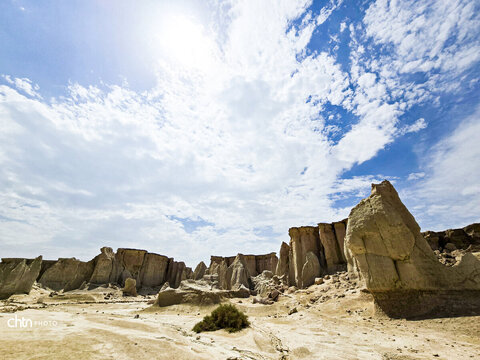
TEHRAN – The manager of the UNESCO Global Geopark on Iran’s Qeshm Island has said new digital monitoring and management systems will be introduced to strengthen protection of the island’s geological heritage and expand the use of advanced technologies across the geopark.
Sajjad Ashgarf, manager of the UNESCO Global Geopark, on Monday said the initiative is part of a broader “smart conservation” approach aimed at improving the long-term protection of Qeshm’s geosites through digital documentation, environmental monitoring and technology-based management tools.
“The development of monitoring systems, digital documentation and the use of modern technologies are among the main priorities for the sustainable protection of Qeshm Island’s geological heritage,” Ashgarf said.
He said the geopark, the first UNESCO Global Geopark in West Aisa, has the capacity to become a regional center for geotourism and earth sciences education, with technology playing a central role in achieving that goal.
Among the projects under development is an enhanced conservation program for the Namakdan Salt Dome and Cave, one of Qeshm’s most significant geosites. Ashgarf said authorities plan to expand natural hazard monitoring systems and introduce multilingual audio guides at the site.
The measures are intended to improve visitor experiences while reducing physical interventions and potential damage to the natural attraction, he said.
Ashgarf said additional initiatives include the deployment of smart environmental monitoring systems, production of multilingual digital content, development of virtual reality-based tours, creation of a visitor guide application and establishment of electronic communication platforms for geopark volunteers and partners.
He also announced plans to introduce management dashboards and expand the use of Geographic Information System (GIS) technologies and spatial data in planning and operational processes.
According to Ashgarf, the smart conservation strategy is designed to support sustainable management practices, improve tourism services and strengthen protection of the island’s natural heritage.
Located in the Persian Gulf, Qeshm Island covers more than 1,400 square kilometers and is home to a range of geological, ecological and cultural attractions. The island’s UNESCO-listed geopark forms part of the Zagros mountain belt and contains geological formations dating from the Late Precambrian to Cambrian periods.
AM
Disclaimer : This story is auto aggregated by a computer programme and has not been created or edited by DOWNTHENEWS. Publisher: tehrantimes.com