Imagine disposing of your deceased pet dog or cat by throwing their body into your red bin. It would be a disrespectful and uncaring way to treat an animal. Yet, it seems we have racing industry figures who think that dropping a dead Melbourne Cup entrant into a skip bin is appropriate (“Racing NSW under fire as dead horse found in bin”, November 18). So You Are was recently whipped as it was forced to run at Flemington for our entertainment. This poor horse was then treated like uneaten dinner. The racing industry is appalling, uncaring and deaf. The problem is that it’s also legal. David Bartlett, Leichhardt
Sport of kings? No, thanks. Nick Andrews, Bellevue Hill
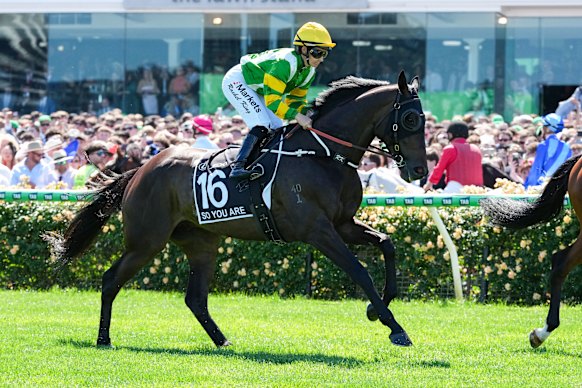
It is no use Racing NSW complaining about the disposal of racehorse So You Are’s body and suggesting the horse’s sordid fate was an aberration. Far from being a one-off incident, it must be a cheap and nasty solution to a common problem. For heaven’s sake, Cleanaway has established procedures for receiving and burying dead horses. (Once-valued but now useless greyhounds are probably treated the same way?) So please spare us the crocodile tears. Lin Sinton, Killarney Heights
What is more distressing and unacceptable than what happens to dead horses is what happens to living ones. Horses used for racing routinely sustain serious injuries and die both on and off the track. They are victims of an industry rife with drug abuse and race-fixing. Horses weigh about 500 kilograms, are supported by ankles the size of a human’s, and are whipped and forced to run around tracks that are often made of hard-packed dirt at speeds of more than 50km/h – all while carrying riders on their backs. Horse racing is about one thing: greed, which often drives trainers, owners and jockeys to do whatever it takes to win. So You Are’s trainer wrote that “he deserved to be treated with dignity and respect after his death”. But there is precious little dignity or respect for live horses. Please don’t support horse racing – you’ll be gambling with a horse’s life. Dr Desmond Bellamy, special projects co-ordinator, PETA Australia
Is listening so hard?
I recently had to see a specialist about some health issues (“Sara’s terrifying drug reaction just ‘pre-wedding jitters’”, November 18). After waiting some time to see him, I was looking forward to getting some answers and had made notes of questions I wanted to ask. As a retired allied health professional, I knew that my time would be limited, so I was prepared to make sure I didn’t waste any of his time. However, it was clear from the moment I walked into his consulting room that he had already concluded I was wasting his time. He bombarded me with questions before I had even sat down and at times it almost felt like I was having to defend why I was there. I left his surgery feeling angry and frustrated and wondered whether it would have been different if I had been a male. Earlier this week, I had to see another specialist, who was everything the first one should have been. His first question after I sat down was “How can I help you today?” … and he listened, and we talked, and he answered my questions. That’s all I wanted. Jane Cullinan, Berkeley Vale
We need immigrants
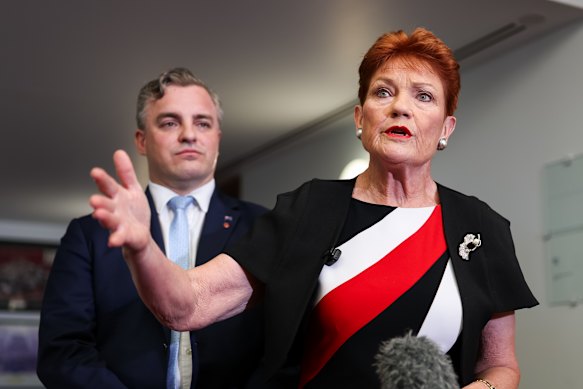
If Pauline Hanson thinks Australia’s economy is in trouble now, her migration policies look like a blueprint for making it considerably worse. Paul Sakkal’s article (“Hanson: We’ll stop parent visas, slash refugee intake”, November 18) exposes the extraordinary contradiction at the heart of One Nation’s economic agenda. Living in Tamworth, I know just how important migrants are to regional communities. My own doctor is Filipino. Migrant nurses care for patients in our hospitals, aged-care workers look after our elderly, overseas workers help keep our farms productive, and migrants contribute enormously to our hospitality industry and local businesses. These are people making an invaluable contribution to our communities and economy. Yet Hanson proposes three years of negative net migration, a 90 per cent reduction in refugee places and the abolition of parent visas. At a time when regional Australia is already struggling to attract workers, how does making that task harder improve our economy? One Nation promises economic relief, but its uncosted proposals raise the prospect of labour shortages, weaker growth and greater pressure on essential services. Denise McHugh, Tamworth
The cruelty of these proposals chills the soul. Rosa Saladino, Glebe
Laying foundations
I read the article on special religious education by Christopher Harris (“Sydney schools where only a few students attend religion classes”, November 18) and found the usual arguments from the usual people in the usual upper north shore, eastern suburbs and inner west schools – that religion is a waste of valuable teaching time and lay volunteers are unqualified, backed up by the Atheist Foundation, a highly professional body of believers. You might well argue, as many students do, that compulsory sport, supervised largely by non-sport teachers, is a waste of time that would be better spent on maths and science, or that manual subjects such as textiles or wood technics, which are useful to some but not to other students who are just racing to university entrance, are a waste. However, we have a good tradition of a rounded educational experience, aimed at producing young people with some values, as well as skills, to take them forward into a challenging world. Religious faith is a gift from God, but some knowledge of its history and importance in the development of Western civilisation is a foundation of huge value, however rudimentary that knowledge may be. School scripture lessons were all I had as a child, but they gave me enough knowledge to pursue religious history at Sydney University, while my personal faith came much later in life. Vivienne Parsons, Thornleigh
Jenny Leong is correct, the issue is “not about being pro or anti-religion”. The issue is students being “barred from doing classwork” in school hours. It’s not just scripture classes, it’s also ethics classes, irrespective of scripture. What’s next? Pens down, orchestra is rehearsing? Robyn Bernstein, Annandale
A Harrods comparison
The decline and closure of the once highly esteemed and venerable David Jones is, in my humble opinion, the equivalent of the still highly esteemed and venerable London department store Harrods burning to the ground (“DJs suppliers remain in the dark on payment”, November 18). Rose Lysnar, Windsor (Qld)
A white 007 … yawn
Yet another white James Bond is so old hat (“Pattinson cast as next James Bond”, November 18). Edgy and charismatic Idris Elba or Omar Sy have the right fit to be a credible black James Bond. Steve Ngeow, Chatswood
I trust the new 007 is practising to perfection his eyebrow-raising technique and witty one-liners. Ellie Hallett, Toowoomba (Qld)
We got a good laugh from Jo Stubbings’ article (“Why the new Bond sucks and makes my blood run cold”, November 18). Our thoughts are, if a Bond character is to return to life as a vampire, why not the late Sir Christopher Lee? He was nearly six-and-a-half feet tall in the old language, with razor sharp teeth, brooding looks and (as Count Dracula) piercing red-rimmed eyes. His bio even says he is a step-cousin to Ian Fleming. Just one problem, however. His bio also shows he was married to just one person in his life, hardly befitting of a Bond-like character. Sue and John Lenehan, Gordon
Tap is on, but the plug is still out
Ross Gittins’ critique of Labor’s approach to climate change is spot-on. While the Albanese government is doing some good things, such as encouraging increased use of renewable power, at the same time it is allowing companies to further exploit and flog off our abundant fossil fuels (“PM hedging his bets on fossil fuels”, November 18). The government’s only justification for doing this is the so-called “drug dealers’ defence”, which says that if we do not sell it, someone else will. The trouble is that Woodside’s Scarborough gas project began operation this year but is scheduled to last into the 2050s, which is beyond when we have planned to reach net zero. The approved North West Shelf project will last into the 2070s. So, one has to ask how our government plans to cope with such emissions other than by using technology such as carbon capture and storage, whose track record at Barrow Island has fallen short. Peter Nash, Fairlight
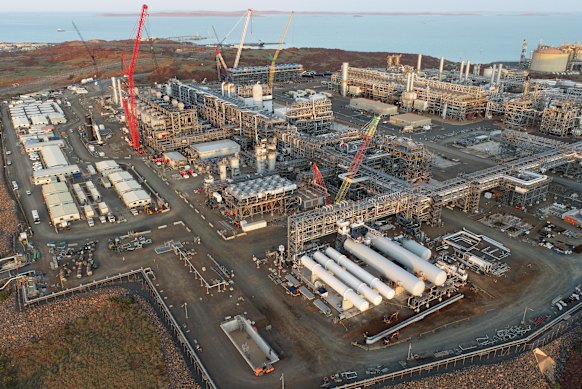
Thanks, Ross Gittins, for seizing on the Albanese government’s hypocrisy. Nicki Hutley’s statement says it all: “Building new renewables while approving new oil and gas is like filling the bath with the plug pulled out”.
Zeny Giles, New Lambton
Like Ross Gittins, I’m tired of Anthony Albanese straddling the fence on climate change. Labor’s renewable energy story is impressive and our uptake of rooftop solar and batteries is world-leading. But the Climate Council counts 39 new coal, oil and gas developments approved since 2022 and, thanks to our vast fossil fuel exports, Australia’s total climate pollution is trending upwards. Leadership means choosing a side. When will Albanese get off the fence and stand on the side of science and humanity? Sharee McCammon, Pelverata (Tas)
The article by Ross Gittins highlights a dilemma for voters. The Labor Party is busy at both federal and state level approving more coal exports; the Coalition is set to remove ambition to reduce climate change; One Nation is as uninterested in our climate as possible. I value my right to vote, and I would like to be able to vote for someone who would curb more coal mining. I don’t seem to have much choice. Jennifer Blackman, Wentworthville
Job cuts unjustifiable
It’s not as if the four big banks or Bunnings are going broke, so why is there a splash of redundancies before Christmas (“Bunnings axes 350 tech jobs in AI-driven push offshore”, smh.com.au, November 17)? It’s not that the jobs have disappeared, it’s just that it’s cheaper for them to be performed elsewhere by those who will work for less with worse conditions, and even less job security. All businesses need to restructure occasionally – it’s a part of their evolution. But surely there is a reasonable expectation that those who have to lose their jobs should be retained and retrained wherever possible. It may not always be the cheapest solution, but it is the most appropriate both from a human and a moral perspective. Jon Blackwell, Avoca Beach
Given trends in banks (“Westpac’s rolling job cuts near 300 positions as banks swing axe”, smh.com.au, November 17), hardware chains and airlines, why does the government not have an effective ban on the export of jobs to other nations? It’s one thing to limit immigration. It’s another to follow a narrow economic determinism and export skilled professions to another country where “the same” job can be done for less. And so on and so on until the workers are paid in bread and water and charity. What earthly reason can justify the offshore outsourcing of local work? None. It’s much the same as getting “cheap” trains, ferries and cars from “over the moon and far away”. Tariffs might be a bad thing on imports, but I reckon a 40 per cent tariff on the export of jobs that are done well in Australia would fix it. And it’s not just the highly irritating devolving of all human function to useless auto-answer trees via AI, or call centres elsewhere. The de-Australianising of reality will end badly. Ivan Head, Burradoo
Minns move a mis-step
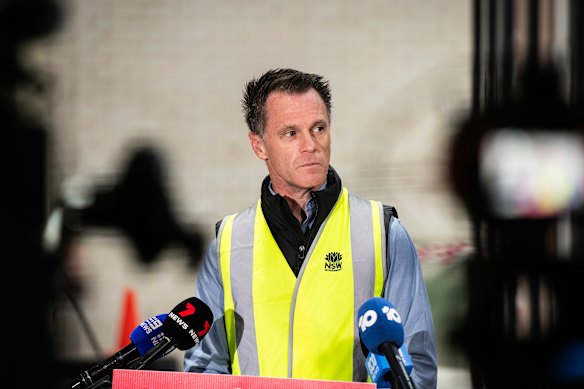
Premier Chris Minns is using executive powers to delay the start of real estate reforms that parliament had passed, citing backlash in his electorate (“Underquoting U-turn reflects badly on Minns”, November 18). This is a dangerous precedent and bypasses overarching checks and balances in our democracy. Considering the manner in which Minns has pushed through other laws, he could have gone back to parliament to amend the reforms, even with only a few sitting days left. Maybe an election is just around the corner. Michael Blissenden, Castle Hill
And there I was, beginning to lose my faith in humanity when a bunch of real estate agents suddenly came forward, at great risk to their own self-interest, to voice an altruistic concern that legislative reforms to prevent underquoting might adversely affect prospective purchasers. Now, once again, all seems right with the world (“A win for dodgy real estate agents”, November 18). Ross Duncan, Potts Point
Not being a “lactating parent” or a parent of an 11-year-old boy with an unregistered e-bike or an underquoting real estate agent or a pub owner/club director with pokies or a coal miner wanting extensions, I wait anxiously for an offer from Minns to make me vote for him next March. Come on! Dierk Mohr, South Turramurra
Chris Minns is the best Liberal premier ever supplied by the Labor Party. If I were a conservative voter, I would have no qualms voting Labor next year. Graham Lawson, Birchgrove
Just ask AI
Perhaps Ann O’Leary and Jeff Bleich (“Media giants join forces in quest for AI regulation”, November 18) can ask their relative AI models how to compensate the owners of material they use to train these models. After all, I have been told by AI owners that AI will solve climate change, work medical miracles and turn the world into a nirvana, so surely AI can solve this simple problem. Brenton McGeachie, Hackett (ACT)
Truth to tell
Cricket Australia’s open forum will require of the participants a deep respect for each other’s perceptions and memories (“CA announces truth forum for Sandpapergate”, smh.com.au, November 18). Even more important, its success will depend upon a readiness to forgive and be forgiven.
Mark Porter, New Lambton
Thanks for laughs, Lyn
I have just stopped laughing long enough to write that Lyn Savage of Coogee (Letters, November 18) deserves the title of Letter Writer of the Year for today’s missive. Priceless! Helen Lewin, Tumbi Umbi
Redfern’s full CV
William Redfern, with a suburb named after him (Letters, November 18), was a convict and a mutineer into the bargain, not a mere clockmaker. Barry Lamb, Eastwood
- To submit a letter to the Sydney Morning Herald, email letters@smh.com.au. Click here for tips on how to submit letters.
- The Opinion newsletter is a weekly wrap of views that will challenge, champion and inform. Sign up here.
Disclaimer : This story is auto aggregated by a computer programme and has not been created or edited by DOWNTHENEWS. Publisher: www.smh.com.au