In Assam, elephants are more than a part of the landscape. They are deeply woven into the region’s cultural memory, traditions and everyday life. Over generations, the relationship between people and elephants has been shaped by familiarity, respect and an understanding of the responsibility that comes with caring for these magnificent animals. At the heart of this relationship are the mahouts and caregivers, whose lives often revolve around understanding and responding to the needs of elephants with patience, commitment and compassion.
The story of Raja, a young elephant calf born on 2 October 2026 at Gogamukh, Assam, brings this responsibility into sharp focus. His first few hours of life were marked by an unfortunate accident. His young and frightened mother kicked him, resulting in a complete fracture of his femur. He also missed receiving colostrum, the essential first milk that provides newborns with vital immunity.
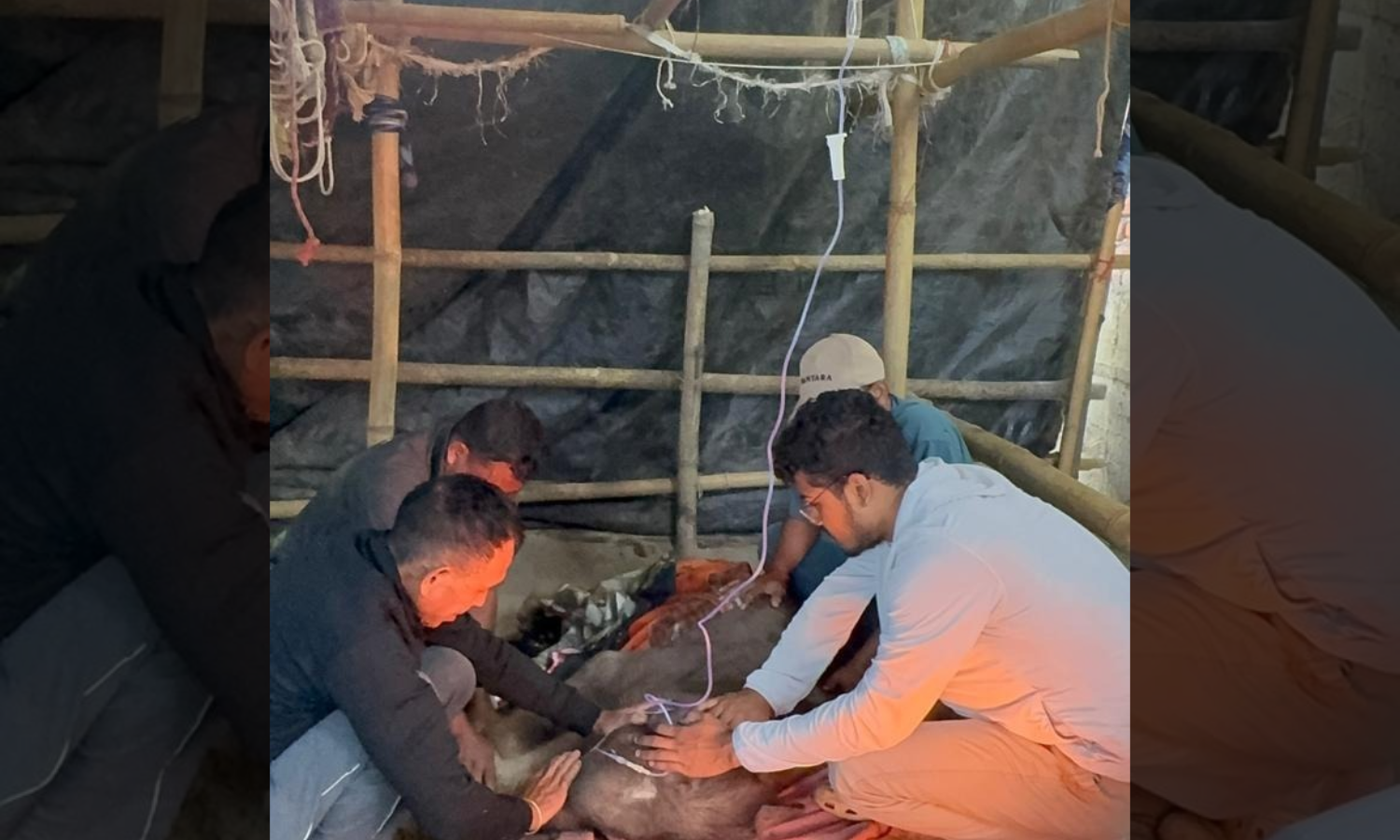
Since birth, Raja has faced several serious medical complications, including an infection, repeated episodes of severe blood-sugar fluctuations, liver stress, pressure sores, and an umbilical hernia. His condition remains fragile, requiring intensive veterinary intervention and round-the-clock attention. Behind every stage of Raja’s treatment has been a dedicated 11-member team at Pohumara, comprising three veterinarians, two paravets, five mahouts, and one supervisor.
Since 8 October, the team has worked tirelessly to stabilise his condition and support his recovery. While veterinary expertise has been central to his treatment, the contribution of the mahouts and caregivers has been equally important. Looking after a vulnerable calf requires more than medical intervention; it calls for familiarity with his behaviour, an understanding of his needs and the patience to respond to even the smallest changes in his condition.
Raja’s treatment involves close coordination between the veterinary professionals and his caregivers. Alongside medical procedures and clinical assessments, his feeding, movement and comfort need to be carefully managed. This constant coordination ensures that his treatment is supported by attentive, individualised care throughout the day.
Given that Raja was born in captivity and the severity of his fracture could leave him with a permanent deformity, he will require lifelong care. His journey is therefore not simply about treating an injury or overcoming an immediate medical crisis. It is about ensuring that an animal with complex, long-term needs receives the protection, attention and specialised care necessary throughout his life.
Raja’s story also forms part of a larger picture of elephant rescue and rehabilitation in Assam in 2026. From Maniki and Joymoti to the Tezpur tusker and now Raja, each case reflects the different circumstances in which elephants require human intervention. While some need urgent medical attention following injury or illness, others require sustained rehabilitation and specialised support. Together, these cases underline the importance of trained personnel, veterinary expertise and dedicated infrastructure in responding to elephants in distress.
Beyond medical facilities and logistical efforts, however, it is important to recognise the people who make such care possible. Mahouts and caregivers develop relationships with elephants through years of observation and daily interaction. They often recognise subtle changes in appetite, movement, or behaviour before they become more apparent. This familiarity, combined with their experience and instinct, becomes particularly valuable when caring for animals that cannot communicate their discomfort in words.
In Assam, where elephants hold a special place in the region’s identity, protecting them is a shared responsibility. It calls for the collective contribution of veterinary professionals, mahouts, caregivers, field staff, conservationists, and local communities. Each plays a distinct role in ensuring that elephants receive the attention and protection they need, particularly in vulnerable circumstances.
For the 11-member team at Pohumara, caring for Raja has meant long hours, difficult decisions and an unwavering commitment to a fragile young life. Their work is a reminder that rescue and rehabilitation are not defined by a single medical intervention but by the people who remain dedicated to an animal’s well-being through every stage of its journey.
Ultimately, the bond between Assam and its elephants is sustained not only through tradition, but also through the everyday acts of care that protect these animals when they are most vulnerable. Raja’s journey stands as a testament to the people who continue to uphold that responsibility, often away from the spotlight.
Disclaimer : This story is auto aggregated by a computer programme and has not been created or edited by DOWNTHENEWS. Publisher: deccanchronicle.com