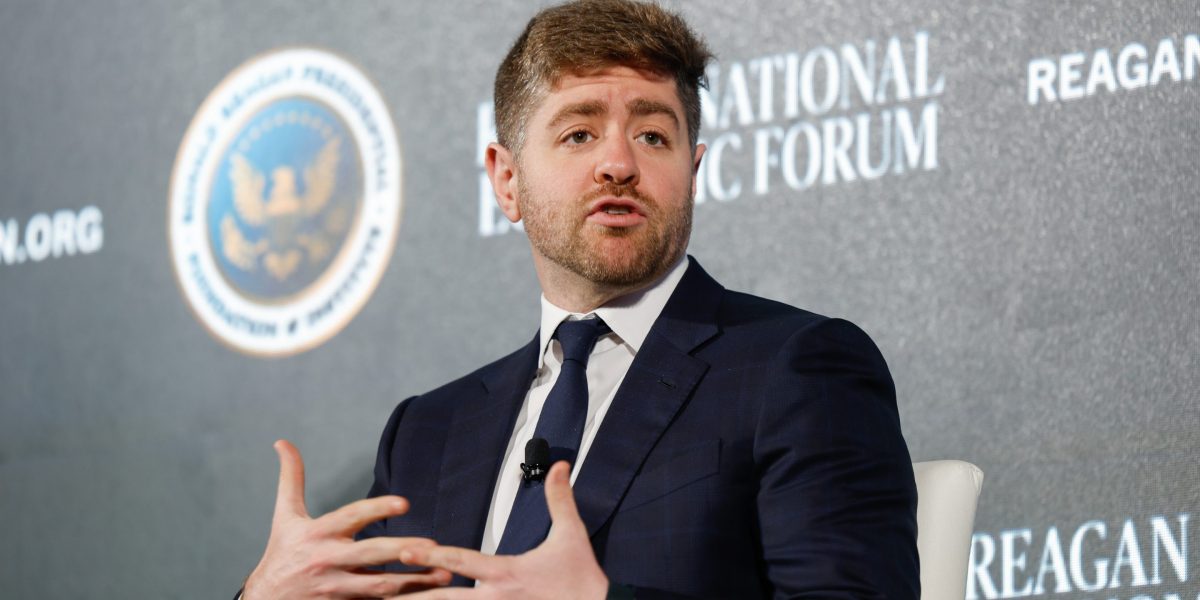
The most valuable hires, according to Ramp cofounder and CEO Eric Glyman, aren’t the ones with the lengthiest or most impressive résumés. They’re the ones not even in the job market yet.
Glyman’s hiring philosophy runs against the standard corporate playbook of a litany of credentials, crazy connections, and elite college degrees. He’s after what he calls a “spike,” or exceptional drive.
“I’m less interested in what is the résumé,” he said on David Senra’s podcast in an episode published Sunday. “I’m far more interested in proof of work.”
Senra’s podcast counts Jeff Bezos, Shopify CEO Tobi Lütke, and Coinbase CEO Brian Armstrong among its listeners, according to reporting from Fortune’s Lily Mae Lazarus, and has become something of an obsession among the world’s most powerful CEOs. Ramp is now Senra’s largest advertiser and is a corporate card and expense-management startup that automates business spending. Ramp serves 70,000 customers, crossed $1 billion in annualized revenue, and is currently valued at $44 billion.
Why Ramp’s Eric Glyman hires for ‘proof of work’ over résumés
Glyman said “proof of work” tends to show up early and in unexpected places.
On the podcast, he described an entire community of Ramp engineers whom the company found because, as teenagers, they had poured 80 or 100 hours a week into Minecraft. Some of them built private servers so entertaining that other kids flocked to play. One even paid his way through college—which cost hundreds of thousands of dollars—by turning that obsession into a small business before he was old enough to drive, said Glyman, who’s worth nearly $2 billion, according to Forbes.
Traditional hiring filters, Glyman said, would have screened those candidates out for not having a college degree or a well-rounded profile. Instead, they had an obsessive focus and the technical chops to push the software well past what it was built to do.
That drive has become so important, in fact, Ramp’s hiring process now consciously hunts for that signal. They scan places like GitHub or “bizarre fringe communities,” Glyman said, looking for people. The company also leans heavily on referrals from people with what he called “asymmetric information” about who a candidate really is. Even a grueling 15-hour interview loop, he argued, tells you less than two business days of actually working alongside someone.
Ramp’s decision to focus on younger talent is also economical. Glyman likened top early-career candidates to a mispricing in the market. By a student’s junior-year summer, or after five years on the job, that talent is “priced in,” and Ramp finds itself bidding against quant firms and AI labs paying top dollar.
But if they were to catch that same candidate as a freshman—before there’s a résumé to bid on—then the math changes. He also argued it builds loyalty.
“You can find signs of incredible aptitude, drive, and potential for performance early on, and start to build an affinity,” he said. “So we try to find those folks and give them a lot more responsibility.”
Glyman also looks for motivation when hiring
The billionaire Ramp CEO said there’s another important characteristic that matters when hiring: motivation. He said he spends a considerable amount of time trying to understand what a candidate actually wants over the next five, 10, 15 years independent of working at his company specifically. He also evaluates whether that ambition genuinely overlaps with what Ramp is trying to do.
“If there isn’t a clear sign of evidence of why they might want the same thing and how it can connect, don’t worry about it,” he said. “Don’t waste your time.”
Glyman’s hiring strategy echoes Elon Musk and other execs
Glyman’s philosophy about hiring matches other top CEOs. Elon Musk, for example, has said much the same thing repeatedly.
“I agree with Elon’s philosophy of trying to find really smart people, in part because it allows you to find maybe something like a mispricing in the market,” Glyman said.
In a joint podcast episode with Stripe cofounder John Collison and podcaster Dwarkesh Patel, Musk said his aspirational advice on hiring is: “Don’t look at the résumé,” and that he asks his staff for bullet points on “evidence of exceptional ability.” Musk also weighs a candidate’s talent, drive, and trustworthiness, adding that “goodness of heart is important.”
“I underweighted that at one point,” Musk continued. “So, are they a good person? Trustworthy? Smart and talented and hardworking?”
Kurt Alexander, president of Omni Hotels & Resorts, also told Fortune’s Preston Fore he screens candidates with a deliberately disarming question: “What are some of the rough edges in your personality?” He argued this can reveal more than a polished résumé ever could.
“Hard work beats talent when talent doesn’t work hard,” he continued. “But if talent works hard, talent wins.”
Disclaimer : This story is auto aggregated by a computer programme and has not been created or edited by DOWNTHENEWS. Publisher: fortune.com