Quick Take: Ranabaali starts on a promising note but loses steam, eventually falling into a predictable template.
In 1878, Rayalaseema, in present-day Andhra Pradesh, faces a crisis of epic proportions: a devastating famine that will result in deaths on an industrial scale. Against this backdrop rises Singanamala Bobbili Ranabaali, a young, muscular and agile local hero who rides his majestic horse with the bearing of a supreme overlord. He and his cohorts clash head-on with Commissioner Sir Theodore Hector (Arnold Vosloo), a ruthless official who imposes harsh tax targets despite the drought.
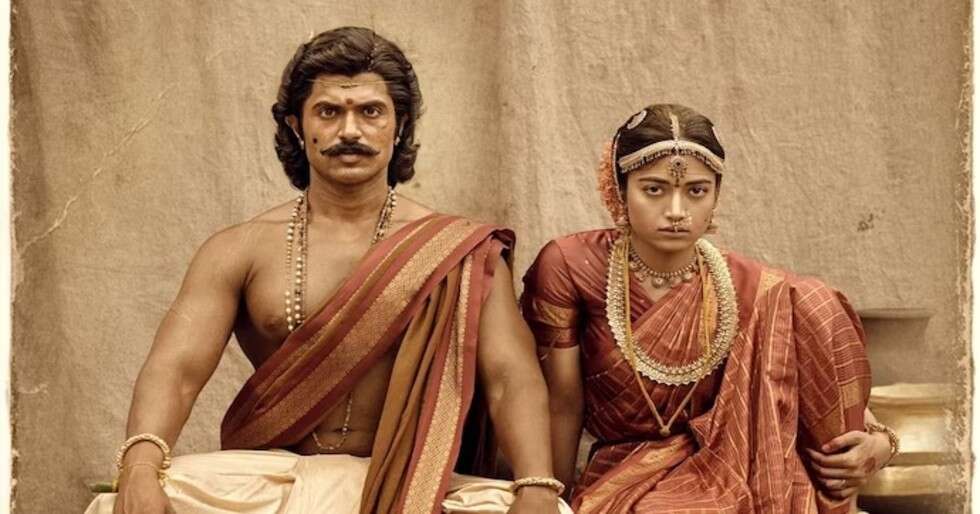
Vijay Deverakonda’s titular character appears born of the gods but raised in the mud. He looks like someone who has put in the hard work, and his rooted physicality helps elevate the character. Vijay lets grace emerge from the ease of his movements. Rashmika Mandanna’s Jayamma keeps him human. Her warmth and assertiveness stem from the same source: she sees people clearly. While he is still and weighty, she is expressive and grounded in the immediate. Sadly, the actors playing the British characters fail to match their intensity, leaving the hero-antagonist clashes feeling barren at times.
For all its creative liberties, Ranabaali comes across as a well-researched tale. Writer-director Rahul Sankrityan has demonstrated a keen interest in history before, as his politically charged and socially polarising Shyam Singha Roy showed. Here, he avoids the low-hanging fruit. Yes, the film indulges in hero worship, but it is not as compulsively clichéd as some films set in British India. Sye Raa Narasimha Reddy (2019), for instance, was more sweeping and less specific in its approach.
Ranabaali handles its visual style and central themes with confidence, capturing the stark realities of starvation, merciless killings and the emaciated bodies documented in accounts of the era. The British colonisers are shown partying, oblivious to the suffering around them. They are tone-deaf, power-hungry and manipulative. While the British possess tactical superiority, the native tribe has the advantage of knowing the local terrain. The protagonist moves between rage and muted shock as he witnesses the unspeakable suffering around him. He rarely sheds a tear; when he does, it hints at an intolerable tragedy. He is destined to become a saviour, even as his days are numbered — a harmless spoiler, given that this is revealed at the outset.
The film uses visual and folkloric devices to build Ranabaali’s mythology. Its religious themes and imagery are hardly novel, but neither do they overstay their welcome. The action sequences are not unnecessarily prolonged, and the choreography avoids the disorienting cuts and jarring movements that often plague the genre.
The Ajay-Atul duo’s background score is functional. Shivam Rao Nagasani’s production design, however, towers above the other major departments, with the cinematography particularly failing to match its impact.
The second half is where the film begins to falter, falling into a predictable template. Ranabaali repeatedly twirls his moustache (not every time, but you get the point), while colonial officials continue to inflict pain on Indian subjects. The narrative devolves into a repetitive ritual of familiar confrontations as the original ideas drawn from lesser-known pages of history begin to dry up. The clashes between victims and perpetrators merely go through the motions, failing to generate sustained dramatic tension. The British officers, meanwhile, feel interchangeable, trapped in the same rigid mould.
Ranabaali’s emotional life remains understated to the point of detachment. He lacks the vulnerability one might expect from someone who has witnessed such extreme suffering, both directly and indirectly. A crucial scene involving a British officer, Jayamma and Rajamma (Easwari Rao), Ranabaali’s mother, plays out like a conventional gangster-movie trope in which the antagonist confronts the hero’s family.
Another key episode wears its Kantara influence so openly that its mythological flourishes feel less like an organic culmination and more like an echo of Rishab Shetty’s film.
The film also remains firmly rooted in the past. During pre-release interviews, the makers highlighted how impoverished Indians today continue to suffer from bloated stomachs due to the genetic fallout of colonial-era famines. A film so invested in historical realities ought to demonstrate a stronger inclination towards contemporary relevance. The connection is raised, but the narrative does little to explore it meaningfully.
On the whole, Ranabaali impresses with Vijay Deverakonda’s physicality and its unflinching portrayal of colonial-era suffering. However, its second half succumbs to repetitive confrontations and indistinguishable British antagonists, ultimately weakening the emotional impact of a story with considerable potential.
Also Read: Rajinikanth’s Blessings Boost Rashmika Mandanna’s MS Subbulakshmi Biopic
Disclaimer : This story is auto aggregated by a computer programme and has not been created or edited by DOWNTHENEWS. Publisher: filmfare.com