HYDERABAD: What happens when mathematics meets music? What does cryptocurrency have to do with philosophy? And where do neuroscience and philosophy overlap?
These are the kinds of questions explored by The Renaissance Club, a Hyderabad group that brings together people interested in subjects beyond their professions and, particularly, in the intersections between different fields.
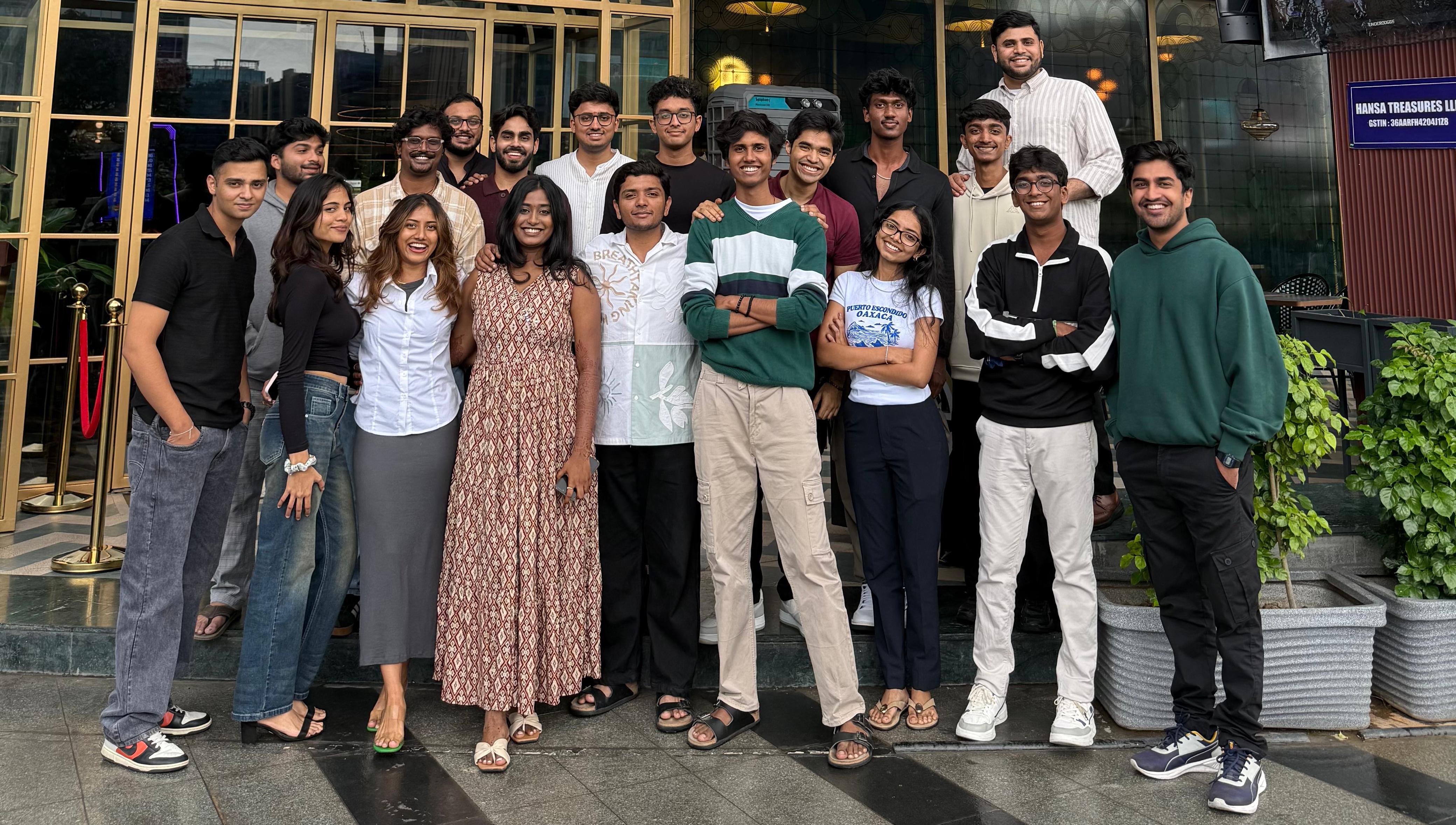
The club was started by Sai Ganesh Pulipaka, 24, Sai Karthikeya Pulipaka, 23, and Yuktha Surampally, 23. Allu Nanda Kishore, 21, joined later. The founders, cousins and college friends, came together around a shared interest in exploring different subjects and having conversations that move beyond one area of knowledge.
The idea took shape at a time when artificial intelligence and social media are increasingly shaping how people interact and consume information. “With AI right now and social media also raging at its peak, we wanted to create a meaningful space,” Ganesh said. They chose to make it a club rather than simply another community. “We wanted to create a meaningful club for polymaths, people who are interested in multiple things and in the intersection of multiple things,” he added.
Karthikeya, his cousin, says the club is as much about the format of the conversation as the subjects themselves. Its sessions are not conventional talks where an expert speaks while others listen. “Our conversations are always open‑ended. There is nobody giving a lecture,” he said.
Subjects are deliberately chosen to bring different disciplines together. One session explored mathematics and music, another looked at cryptocurrency and philosophy, while a three‑week programme examined neuroscience and philosophy. The founders believe such combinations can offer perspectives that may not emerge when subjects are explored separately. “That is where true innovation lies — exploring two or more things at once can open up your mind to so many more possibilities and give people a greater sense of purpose,” Ganesh said.
That cross‑disciplinary approach is reflected in the club’s name. Drawing inspiration from the Renaissance period and its tradition of engaging with several areas of knowledge, the founders want to build a similar culture of exchange in Hyderabad. “We wanted to build that culture in Hyderabad, especially the 15th‑century Renaissance culture, where there were lots of conversations among people from different backgrounds,” Ganesh said.
The invite‑only format is deliberate. The founders believe limiting the size of the club “gives the conversations greater value and encourages members to make the time for them.” When access is limited, they say, people are morelikely to turn up, stay engaged and give the discussion their attention rather than treating it as another event they can casually skip.
The club currently has close to 60 members, keeping the core group small even as selected conversations are opened to a wider audience. For the founders, that distinction allows them to retain the intimacy and commitment of a club while still giving curious outsiders a chance to experience its discussions.
The club works through two formats. Its exclusive, invite‑only meetups are reserved for members, while some conversations are opened to outsiders. “The neuroscience and philosophy programme called ‘Human Behaviour’ was one such open session, allowing people who were simply curious about the subject to join,” Karthikeya said.
The founders say the two formats are meant to accommodate both people who are already exploring several interests and those who are simply looking for an opportunity to start.
For Karthikeya, that openness is important because participants do not have to be experts in the subject under discussion. They can enter with questions, observations or an interest in understanding something outside their usual field. “The idea of a polymath, therefore, is not limited to someone with formal expertise across several disciplines. It can also describe someone who is willing to keep learning beyond what they do professionally,” he explained.
For the young founders, the aim is to create a space where such connections can be explored without a fixed agenda or predetermined conclusion. “That’ll open up your mind to so many more possibilities,” Ganesh said.
And for a club built around curiosity, sometimes the most useful part of the conversation may simply be discovering a connection that participants had not thought about before.
Disclaimer : This story is auto aggregated by a computer programme and has not been created or edited by DOWNTHENEWS. Publisher: deccanchronicle.com