
Rental searches for pet friendly properties drop after law change
-
Published
Rightmove searches for rental properties that allow pets have plummeted since law changes gave renters more rights.
Following the introduction of the new rules, pet searches dropped by more than 50% in May and June compared with a year earlier.
Landlords in England cannot unreasonably refuse pets in their properties under changes made in May in the Renters’ Rights Act.
But agents say some renters wrongly believe permission to have a pet is guaranteed, and landlords say some homes remain unsuitable for multiple pets or large dogs.
“Landlords must consider requests fairly and cannot unreasonably refuse them, but they can still decline where there is a valid reason,” said Megan Eighteen, immediate past president of lettings agents trade body ARLA Propertymark.
She said there was plenty of “potential for misunderstanding”, among tenants about pet-friendly properties.
Power shift over pets
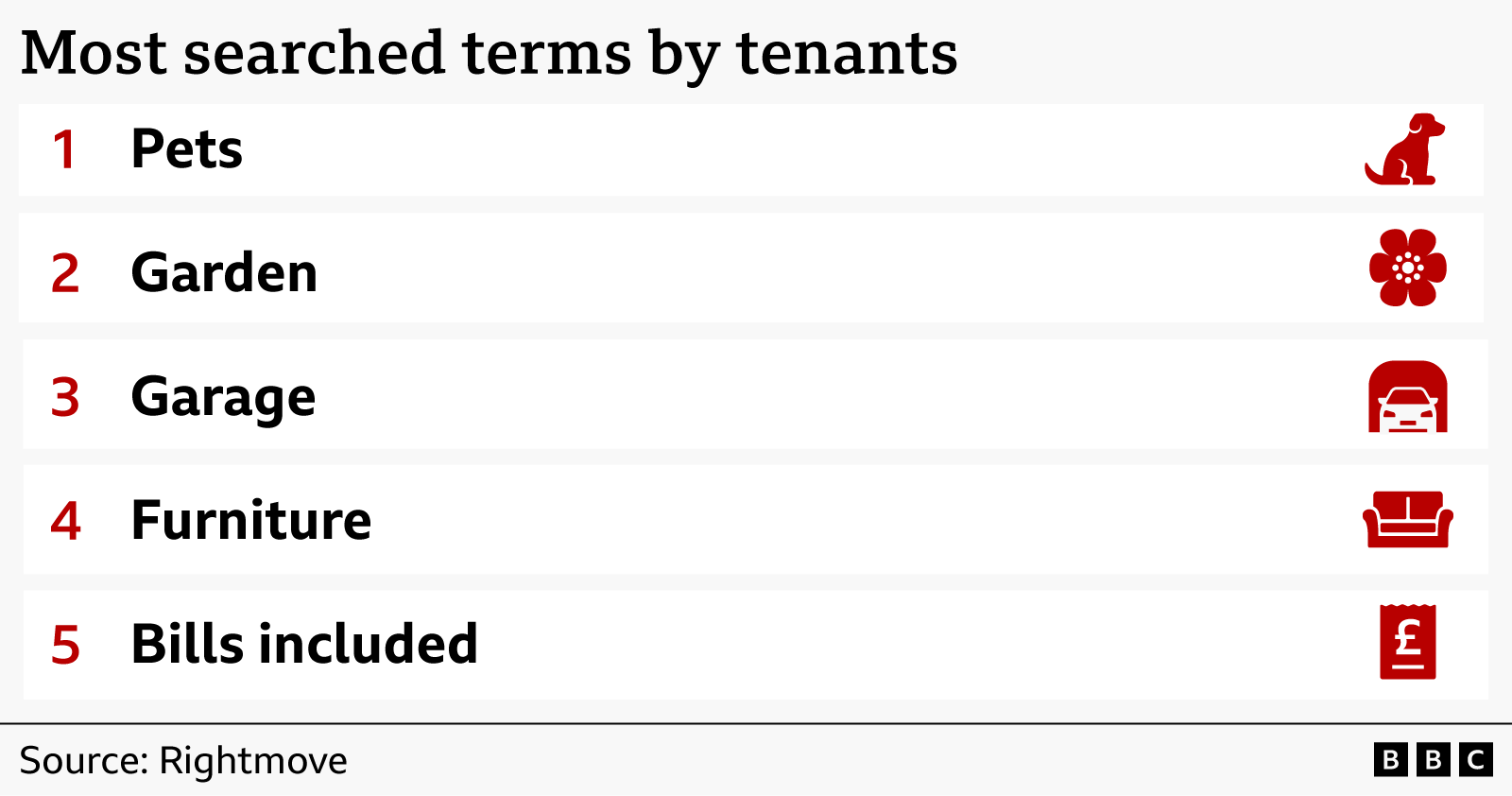
The Rightmove data suggests that fewer tenants are proactively filtering for pet-friendly properties when searching for a home. While pets remain the most common searched-for term overall – ahead of gardens, garages and furnishings, the lead at the top is shrinking.
Renter searches for properties that allow pets fell by 54% in May and 52% in June compared with the same months a year earlier, according to the figures shared with the BBC. Falls had accelerated through this year, as the changes got closer and were then introduced.
Marc von Grundherr, director of agency Benham and Reeves, said some tenants have only disclosed a pet after signing their tenancy agreement, while others have been discovered during property inspections.
“The reality is that tenants now understand the balance of power has shifted. Landlords can no longer rely on a blanket ‘no pets’ policy to deter applications and should instead expect conversations around pet ownership to arise much later in the letting process,” he said.
Now, in England, landlords may still be able to refuse a pet if another tenant has an allergy, the property is too small for a large pet or several pets, the pet is illegal, or the landlord is a leaseholder and the freeholder does not allow pets.
Before the rules changed, Eve Williamson had to give up her American Bulldog, Khan, or face eviction from her home – despite having previously had a dog in the property.
The 41-year-old former hairdresser, from London, described the experience as awful, especially as Khan had brought comfort while she gave full-time care to her mum.
“Life can get tough, but pets bring unconditional love,” she said. “They’re family.”
 Image source, Eve Williamson
Khan has since been happily re-homed, and Eve said she was delighted with the law change.
Katie Smith, 29, from Swindon, has two cats – Pumpkin and Pippin – in her rental home.
The new mum said the family had shared “wonderful moments” with pets, which would also teach children about life and death.
But she said the choice of places to rent still dropped sharply on property portals when pets were part of the equation.
“Landlords should give them a chance,” she said.
Yet, even under the new rules, landlords were finding excuses to refuse potential tenants with pets, according to Russell Hunt, founder of Pets Lets, which matches clients with pet-friendly rentals.
 Image source, Russell Hunt
He lives with a Basset Beagle cross, called Biscuit, and his three teenagers, who he jokes are more disruptive than the dog.
He said pet CVs should be used and landlords should consider the circumstances more carefully, such as older dogs being calmer and sleeping more, rather than simply ruling out tenants with large or multiple pets.
Cost to landlords
Representatives for landlords say they understand the importance of companionship that pets offer to tenants, but they can still face costly damage.
“Many landlords have legitimate concerns about the risk that some irresponsible pet owners pose to rental properties, or that some owners may try to keep pets in properties that are not appropriate for animals,” said Chris Norris, chief policy officer at the National Residential Landlords Association.
He said that landlords faced issues including:
-
No power to compel tenants to take out insurance
-
No legal right to request an additional deposit
-
A burden of costs should a pet cause damage to a property
Lesley Horton, the UK’s chief property ombudsman said that landlords should not be levying pet surcharges as this fell outside permitted fees for issues such as late payments or lost key replacements.
However, a landlord could make deductions from the tenancy deposit at the end of the tenancy for proven pet-related damage.
Additional reporting by Kris Bramwell.

Get in touch
Are you affected by the issues raised in this story?
-
-
Published30 April

-
Disclaimer : This story is auto aggregated by a computer programme and has not been created or edited by DOWNTHENEWS. Publisher: BBC