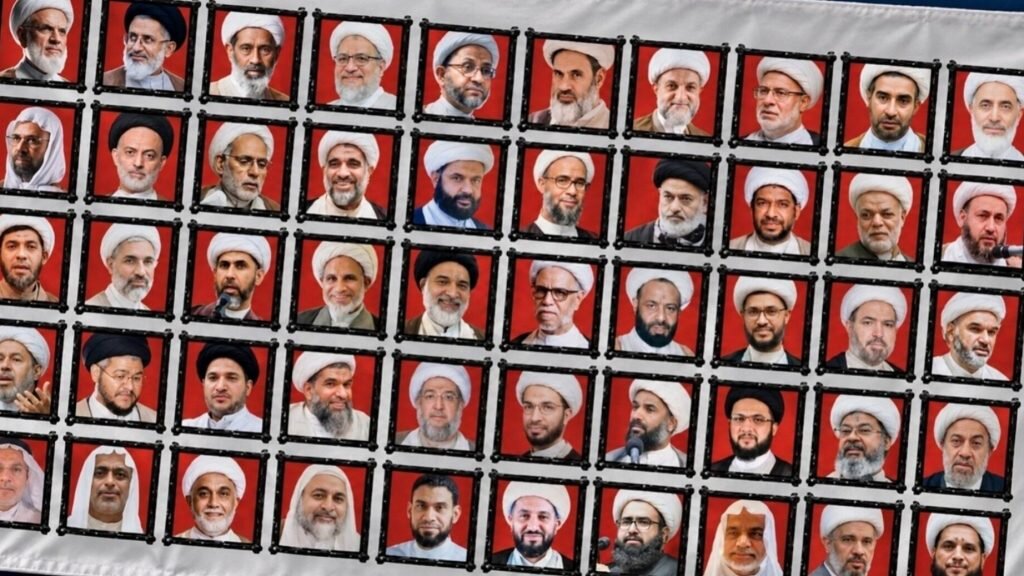
BEIRUT — Bahrain has witnessed a major escalation in its campaign against Shiite religious authorities, as the ruling Al Khalifa regime handed life imprisonment sentences to the majority of Shiite scholars prosecuted in a mass trial on November 16, including those tried in absentia and those who appeared before the court.
Some other defendants received 15-year prison sentences.
The verdicts against Ayatollah Sheikh Isa Qassim, Bahrain’s foremost Shiite religious authority, and dozens of prominent scholars and activists mark a grave escalation in a campaign that opposition groups describe as systematic sectarian persecution.
The proceedings were initially scheduled for November 22 but were abruptly brought forward to November 16, following US Secretary of State Marco Rubio’s inflammatory remarks claiming that Shiite clerics in Iran are the cause of problems in the region.
The timing has further raised serious concerns about Washington’s political influence and the implicit green light its hostile rhetoric may have provided to repressive Persian Gulf monarchies.
Undoubtedly, the escalation cannot be separated from the wider US-Israeli confrontation with Iran and the resistance bloc.
Washington’s repeated hostility toward independent Shiite religious authority has helped create a political climate in which they increasingly portrayed as security threats.
The targeting of Bahrain’s Shiite scholars is not an isolated judicial development; it follows years of arrests, arbitrary detention, citizenship revocations, restrictions on religious freedom, and politically motivated prosecutions documented by opposition groups and human rights organizations.
Shiite scholars have historically played a central role in Bahrain’s religious, intellectual, educational, and social life; their work extends beyond jurisprudence and theology to include family welfare, education, poverty, economic justice, corruption, social cohesion, and national identity.
Their independent influence has increasingly challenged the ruling establishment’s attempts to control public discourse and political consciousness.
The betrayal of the reform promises associated with the 2001 National Action Charter marked a turning point.
Many religious scholars had encouraged participation in the referendum, hoping for constitutional reform, an elected government, independent judicial system, and equal citizenship.
Instead, constitutional arrangements were altered, political power remained concentrated within the ruling establishment, and prominent advocates of reform faced growing surveillance, restrictions, and imprisonment.
The systematic repression has intensified amid Bahrain’s normalization of relations with Israel and expanding security cooperation with Washington.
Shiite scholars have repeatedly criticized foreign military influence, normalization policies, and efforts to marginalize Bahrain’s Islamic and Arab identity.
Their religious institutions—including seminaries, Hussainiyas, Ja’fari endowments, Friday sermons, charitable organizations, and religious educational centers—remain essential pillars of communal life.
Opposition voices stress that targeting these institutions alongside prominent clerics reflects a broader attempt to reshape Bahrain’s demographic, religious, and political landscape.
Bahrain’s alignment with US regional priorities has raised serious questions about its political independence. Its position during the November 13 UN Security Council session further highlighted its alignment with Washington, while Iranian representative Gholam Ali Khoshroo confirmed that Iranian actions targeted hostile American interests and military infrastructure in Bahrain rather than genuinely sovereign Bahraini positions.
The latest sentences, therefore, carry implications extending beyond Bahrain’s borders.
They raise urgent questions about religious freedom, sectarian discrimination, political legitimacy, and the protection of independent religious authority throughout the region.
Disclaimer : This story is auto aggregated by a computer programme and has not been created or edited by DOWNTHENEWS. Publisher: tehrantimes.com