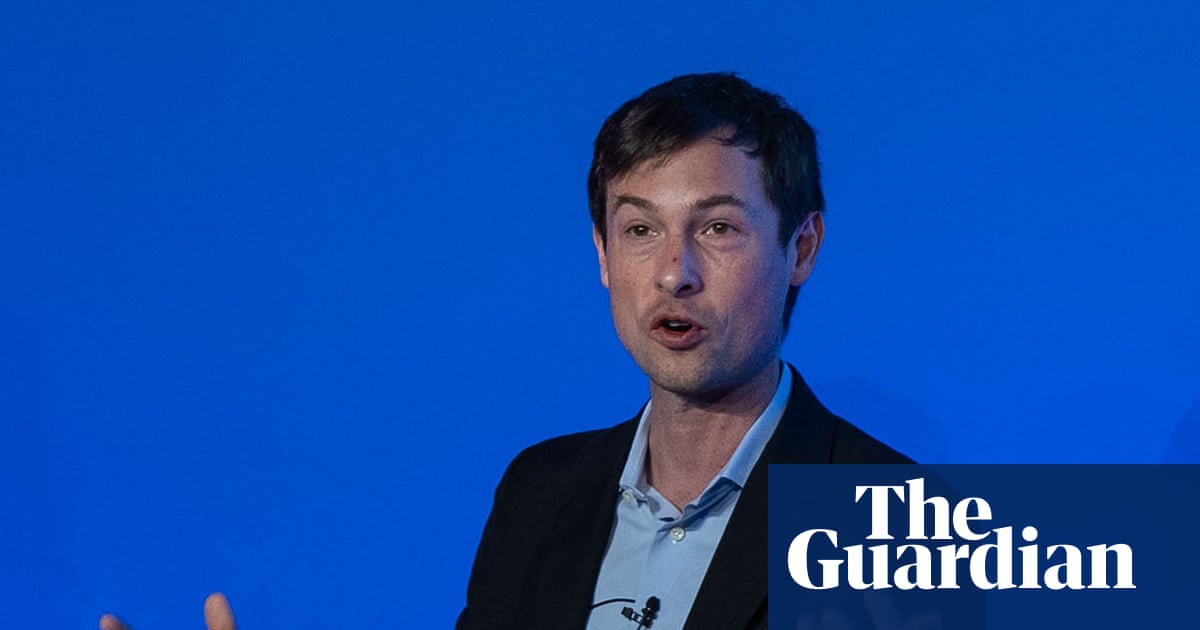
“I saw my dad have cancer when I was a kid, and unfortunately that happens far too often. And that really motivated me to try to transform outcomes for other people out there.”
Reed Jobs is talking about the death of his father, the Apple co-founder Steve Jobs, to a rare form of pancreatic cancer in 2011 at the age of 56, the experience that underlines his mission to make cancer a non-lethal, treatable disease.
Now, the 34-year-old runs an oncology-focused venture capital fund that manages more than $1bn in assets, and is in the UK looking for investment opportunities.
The San Francisco-based venture, called Yosemite, has already invested in about 20 healthcare startups, including Tune Therapeutics, Azalea Therapeutics, Chai Discovery and Sage Care in the US and some companies in the UK that have not been publicly announced, with a focus on gene therapy, cancer vaccines, radiopharmaceuticals and artificial intelligence.
“As a firm, we invest in companies internationally, and we would love to look at opportunities in the UK,” Jobs says, speaking on the sidelines of a life sciences conference in London hosted by the British not-for-profit group LifeArc. “We’re here to meet with pharmaceutical partners and academics.”
Yosemite receives investment from LifeArc, which focuses on rare diseases and was set up in 2000 as part of the UK’s Medical Research Council. It also has partnerships with Oxford and Cambridge universities, where it has provided philanthropic grants. “Research here is world class,” Jobs says.
Named after the national park in California where his parents married in 1991, Yosemite has a for-profit venture that invests in healthcare companies, and a donor-advised fund (with money given by benefactors) that awards grants to scientists doing early research.
Jobs, who did an internship in oncology at Stanford University aged 15 and later began pre-medical studies there before switching to history, says he chose to focus on cancer because of his personal experience. On top of losing his father, a close friend died in adulthood from leukemia.
The venture was spun off in 2023 from Emerson Collective, a philanthropic and investment group founded by his mother, Laurene Powell Jobs, where Reed worked as managing director of health.
Yosemite is backed by the US biotech company Amgen, Massachussetts Institute of Technology, Memorial Sloan Kettering Cancer Center in New York and the billionaire investor John Doerr after a fundraiser earlier this year.
Jobs hopes that within his lifetime, cancer will shift from being an “end-stage disease” to an illness that is diagnosed early, monitored and treated, similar to advances made with HIV and cardiovascular disease.
“Today far too many cancers are either diagnosed incidentally, because there’s no good early biomarker, or only diagnosed once they are metastatic and extremely advanced,” he adds.
“That is unacceptable … We think that in the course of my lifetime and the current generation, that is going to really change, not only through better detection, but also through better targeted and personalised therapy.”
In recent years, medications that harness the body’s immune system to fight tumours have started to transform cancer care. “Immunotherapy is an area that we’re extremely active in,” says Jobs. “It’s one of the areas I think is going to have the most promise for patients in the next couple of decades.”
He notes that 20% of cancers are classified as rare. Another conference speaker, Lone Friis, who runs the C-Further paediatric oncology programme at LifeArc, says that while childhood cancers are rare, with 4,000 new cases diagnosed every year in the UK, cancer is still the leading cause of death by disease in children, and treatments are limited.
While up to 150 new treatments such as immunotherapies have been developed for adults, there have been only eight new medications targeted at children in the last two decades. “We need to do better,” says Friis.
Disclaimer : This story is auto aggregated by a computer programme and has not been created or edited by DOWNTHENEWS. Publisher: theguardian.com