
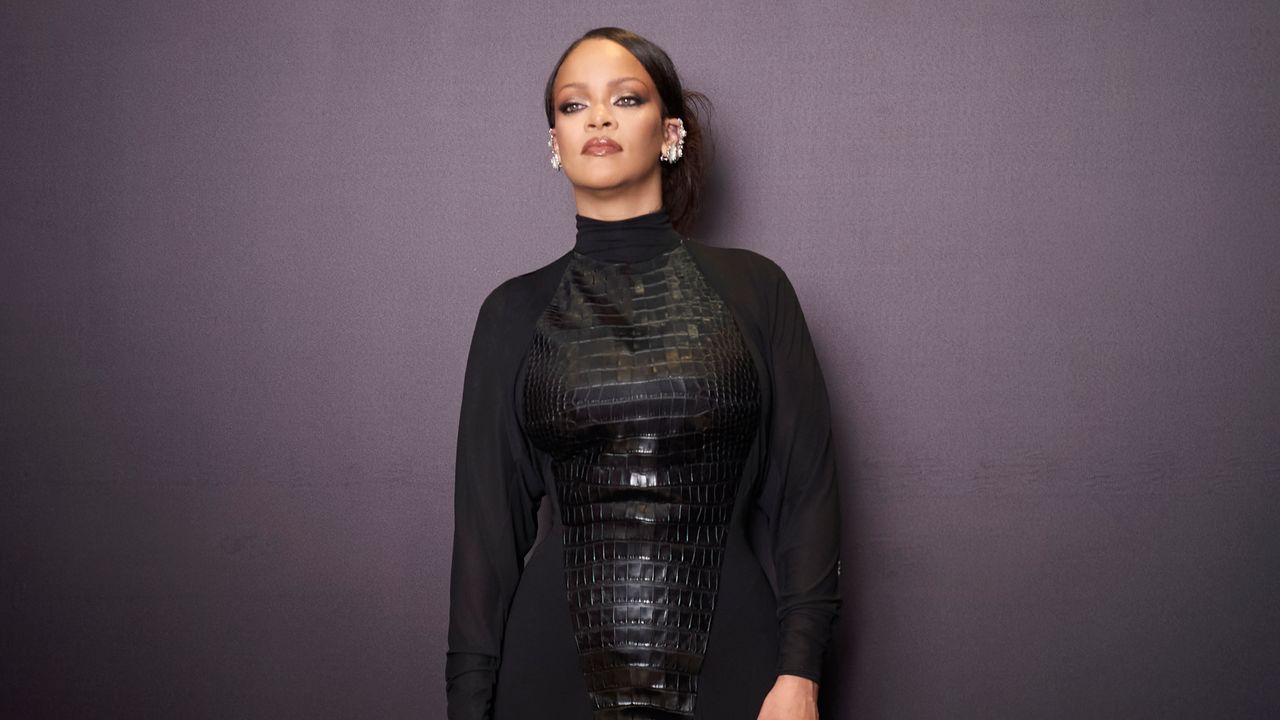
What became clear was that she was not moving through a checklist. When she started filming with creators, she turned it into a true collaboration. She reworked a take mid-shot, offered a suggestion, tried Bharatanatyam with Nejm, creator and Vogue India Forces of Fashion 2025 model of the year.
Since its 2017 launch, Fenty Beauty has built much of its identity around a practical question: who has the beauty industry forgotten to account for?
Here, in Mumbai, that question became literal. When someone mentioned struggling to find their foundation match, she took it personally, calling out shade numbers to her team, testing options and correcting her application as she went. “No one is looking ashy or orange on my watch,” she said, half-joking, fully committed.
It was the line I kept returning to: funny, practical and impossible to separate from the brand’s founding promise. Inclusivity, here, was not a sentence in a press note but a woman who understood what seeing your undertone and skin tone on a shade card can mean for someone who had been overlooked for far too long.
Later, when we met, Gloss Bomb felt like the easiest place to begin. It was one of Fenty Beauty’s first products and for many former matte-lip loyalists, the product that made shine feel persuasive again. She laughed and took the joke seriously enough to answer it.
“I never thought of me launching my gloss as a relaunch of lip gloss or like a resurgence of this product in this particular industry,” she said. “Gloss has always been a product that I’ve enjoyed. It’s always been an experience for me, whether it’s the smell, the taste, the volume of the shine.”
If gloss was where Fenty Beauty became tactile, Rihanna’s larger preoccupation was visibility: who got it, who was denied it and what women had to do before their ideas were taken seriously. “Women just want to be seen,” she said. “It’s as simple as that. We just want to be seen, to be known, to be heard. We want our visions and ideas to mean something.”
She stayed with the thought. Women, she said, wanted their voice to carry importance. Too often, they coexisted inside a world that wanted their ideas, labour, emotional fluency and vision, while still treating those contributions as secondary. “There’s so much more that women can do, what we can contribute,” she said. “I love it when our ‘stupid’ ideas come into perspective and they mean something.”
Disclaimer : This story is auto aggregated by a computer programme and has not been created or edited by DOWNTHENEWS. Publisher: vogue.in



