Bengaluru: Karnataka has urged the Centre to review the implementation of its E20 petrol programme after independent tests found ethanol content exceeding the prescribed 20 per cent in 11 of 14 samples collected across the State, with one sample recording as much as 31.2 per cent.
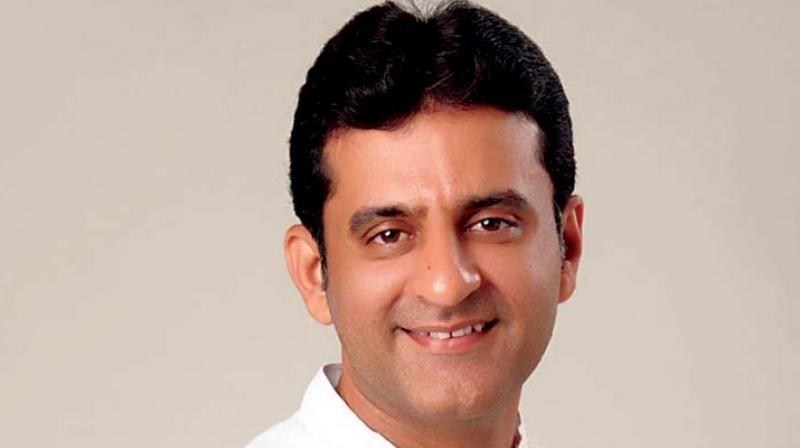
In a letter to Union Petroleum and Natural Gas Minister Hardeep Singh Puri, Karnataka Food, Civil Supplies and Legal Metrology Minister Rizwan Arshad has sought the display of ethanol content at petrol pumps and its inclusion in fuel bills. He has also called for the availability of E10 and ethanol-free petrol alongside E20, independent testing of fuel samples and a compensation fund for consumers whose vehicles suffer damage due to excess ethanol.
“The Government of Karnataka is not against the Ethanol Blending Programme but against over-blending. The programme cannot come at the cost of the citizens. A transition of this scale needs the whole ecosystem to be ready, including fuel infrastructure and ethanol-compliant vehicles, and that transition takes time,” he said.
The State ordered inspections to verify fuel quality and quantity following complaints from motorists about poor mileage, engine problems, damage to older vehicles and short delivery at petrol pumps, he said.
“In September 2026, State officers inspected 63 retail outlets across districts, covering outlets of IOCL, BPCL, HPCL and MRPL. As a first step, and in good faith, the samples were sent through the OMCs’ State Level Coordinator to the designated laboratories of the three public sector OMCs. Of the 63 samples, only 42 reports have been received so far, and not one of them reports the percentage of ethanol content in the sample,” the letter narrates.
The oil marketing companies had maintained that Research Octane Number (RON) was the parameter for compliance. However, the State pointed out that the relevant Indian Standard also required measurement of ethanol content in blended petrol. The remaining 21 reports were yet to be received, it said.
Not satisfied with the reports, the State collected fresh samples and sent them to independent laboratories accredited by the National Accreditation Board for Testing and Calibration Laboratories (NABL). Of the 14 samples tested, 11 contained more than 20 per cent ethanol. The variation across the samples ranged from 13.5 per cent to 31.2 per cent, according to the letter.
Arshad said the oil marketing companies had questioned the sampling procedure and the density recorded by the State. He rejected their objections, maintaining that authorised officers had followed the prescribed procedure, sealed counterpart samples and recorded the density at the outlets in the presence of dealers and other representatives. The density readings reported by the laboratories matched those recorded during collection, he said.
The minister also raised concerns over the ethanol content in premium petrol, which is sold at higher prices.
“Premium high-speed petrol, which consumers buy at nearly Rs 120 to Rs 140 per litre precisely because it is marketed as a superior fuel, was also found to carry a high percentage of ethanol. The common man, practically, is left with no real option,” he pointed.
The letter also narrates about changes in the rules governing the verification of fuel dispensing units. A Central notification issued in December 2025 extended the mandatory verification interval for petrol and diesel dispensers from 12 months to 24 months. Another notification issued in May 2026 allowed private Government Approved Test Centres to verify the dispensers, a function previously performed by government inspectors.
A statewide survey by the Legal Metrology Department covered 805 of Karnataka’s 5,946 fuel outlets. Of the 3,071 nozzles checked, 2,618 showed deviations from their rated accuracy, while 768 outlets required recalibration. The department booked 101 outlets for dispensing fuel beyond the maximum permissible error and collected fines of Rs 6.66 lakh, the letter said.
Arshad said the findings showed that even the existing annual verification cycle was necessary to ensure accurate dispensing. Karnataka had therefore decided to continue annual checks by government inspectors and had written separately to Union Consumer Affairs Minister Pralhad Joshi seeking reconsideration of the two notifications.
Disclaimer : This story is auto aggregated by a computer programme and has not been created or edited by DOWNTHENEWS. Publisher: deccanchronicle.com