Rory McIlroy had won, and then he felt lost.
After his victory at last year’s Masters, he started to wonder: What’s next? Long had he wanted to win at Augusta National, and especially so since winning the 2014 Open Championship, which left him only a green jacket away from the career grand slam. But then he succeeded.
And his question became a theme at tournament press conferences.
Said McIlroy at last year’s RBC Canadian Open, played two months after the Masters: “Yeah, I don’t know if I’m chasing anything. I would certainly say that the last few weeks I’ve had a couple weeks off, and going and grinding on the range for three or four hours every day is maybe a little tougher than it used to be. You have this event in your life that you’ve worked towards and it happens, sometimes it’s hard to find the motivation to get back on the horse and go again.”
Said McIlroy at last year’s U.S. Open, a week after the Canadian: “Look, you dream about the final putt going in at the Masters, but you don’t think about what comes next. I think I’ve always been a player that struggles to play after a big event, after I win whatever tournament. I always struggle to show up with motivation the next week because you’ve just accomplished something and you want to enjoy it and you want to sort of relish the fact that you’ve achieved a goal. I think chasing a certain goal for the better part of a decade and a half, I think I’m allowed a little bit of time to relax a little bit.”
Eventually, he reset. We started to hear about other goals. Winning last year’s Ryder Cup (which he did). Winning last year’s season points race on the DP World Tour (which he did). Winning the other three majors again, which would give his caddie, Harry Diamond, his own career grand slam. In January, he also talked about winning an Olympic gold medal, an Open Championship at St. Andrews, and a U.S Open “at one of those like old, traditional golf courses whether it’s Shinnecock this year or Winged Foot or Pebble Beach, Merion.”
“I’m sure if I were to achieve those things, which geez, I hope that I do, I’d probably give you more stuff in four years’ time,” he said. “I think when you’re a competitive person, that’s just the way you’re wired and sort of the way we operate.”
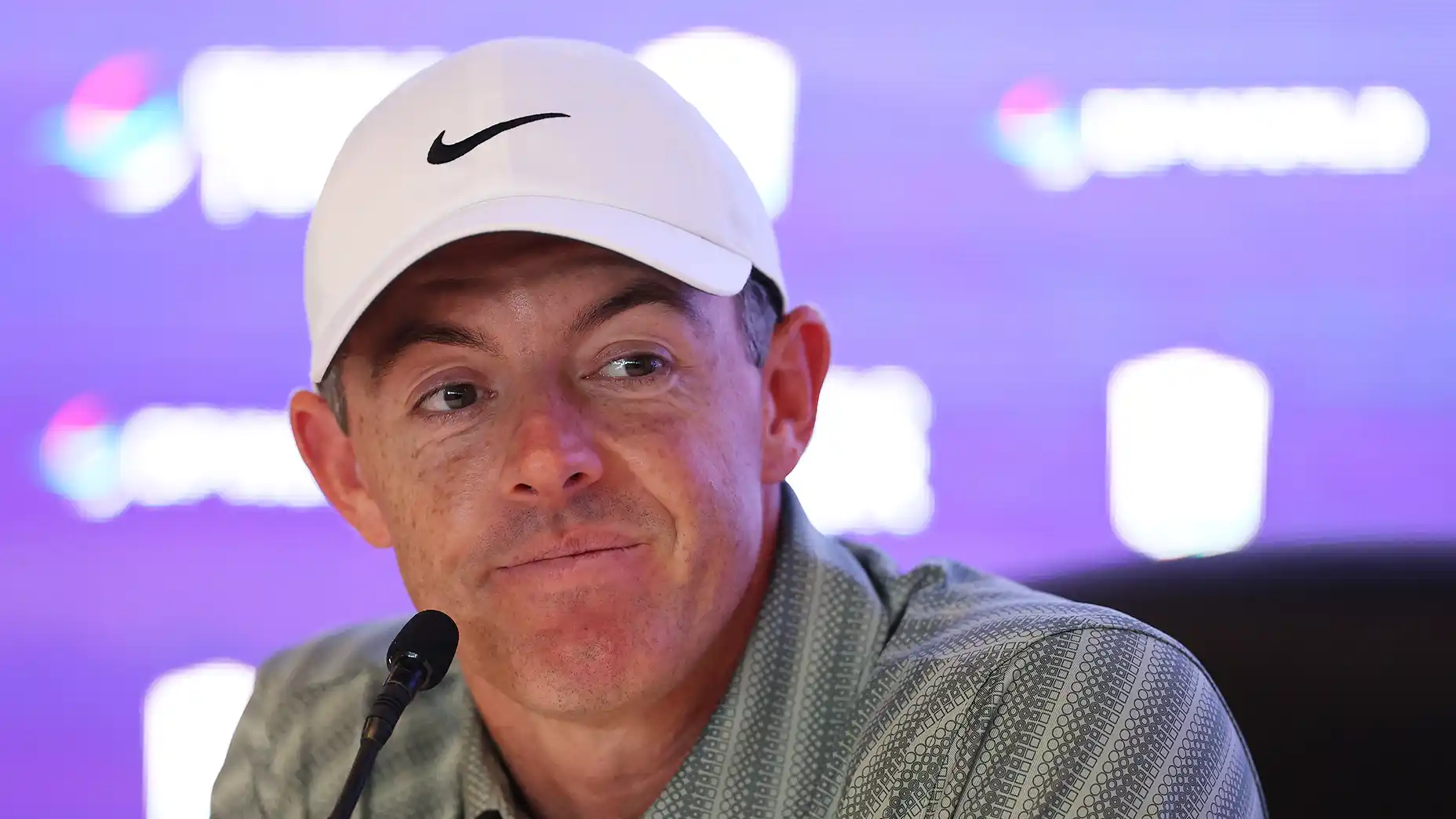
Tuesday, ahead of this week’s DP World Tour Championship, McIlroy said his public displays of intention were part of a bigger plan, though.
The goal is to win, of course.
But the thought is he also wants to be a man of his word.
“About resetting goals, I think you almost have to have, not like amnesia, but you have to be able to forget the good and the bad, especially bad but also the good. Once you win something, yes, you can celebrate and you can reflect on it a little bit, but you have to keep moving forward and thinking about what’s next.
“I’ve openly said that I struggled with that, especially after the ’25 Masters because that’s all I really wanted to do in golf for the last decade, and I did it. And then you have to — and it takes a while. Some people, it comes very naturally that they are able to just move on to the next thing and go for that.
“I sometimes have struggled with it over the years and I think that’s why I have been very open about trying to read cycles and trying to move on and trying to accomplish different things. Because by saying it out loud and by saying it to you guys, you’re saying it, and putting it into the public forum, I’m holding myself accountable to then go and do it.
“It’s OK to have these secret goals and to keep things in, but if you say it out loud and you put it into the public domain, you’d better follow through. It’s a way to keep myself accountable.”
Tuesday, McIlroy was also asked another mental game-based question, in light of pro Frank Kennedy being disqualified for “serious misconduct after causing deliberate damage to the course” during DP World Tour Qualifying School. A reporter wondered whether McIlroy had his own “issues with anger managed” and how he dealt with them.
In response, McIlroy said he’s had his “moments.”
“I would say since having Harry on the bag, like going back to just Harry, I’ll never get angry at him because he’s my best friend and he’s only doing his best out there and whatever, and it’s just not worth it,” he said. “It’s not worth to get angry because I would never want anything to get in the way of our friendship to start with.
“But I think that’s what probably keeps me the most calm on the golf course is, like, it’s just not worth it. And yeah, I think nearly 20 years into a career, you learn to take the rough with the smooth and know that there’s going to be highs and lows, and as long as you expect those things to happen, then you can deal with them the right way.”
<figure class="youtube-facade" data-content="
“>
Disclaimer : This story is auto aggregated by a computer programme and has not been created or edited by DOWNTHENEWS. Publisher: golf.com