Feeling battered by the world? Andrew Sean Greer makes the case for the forgotten art of the charm novel.
You know where you’d rather be right now? Not doomscrolling. Not checking your bank balance. Not staring at the group chat you’ve ignored for so long that it’s now easier to just never open it again.
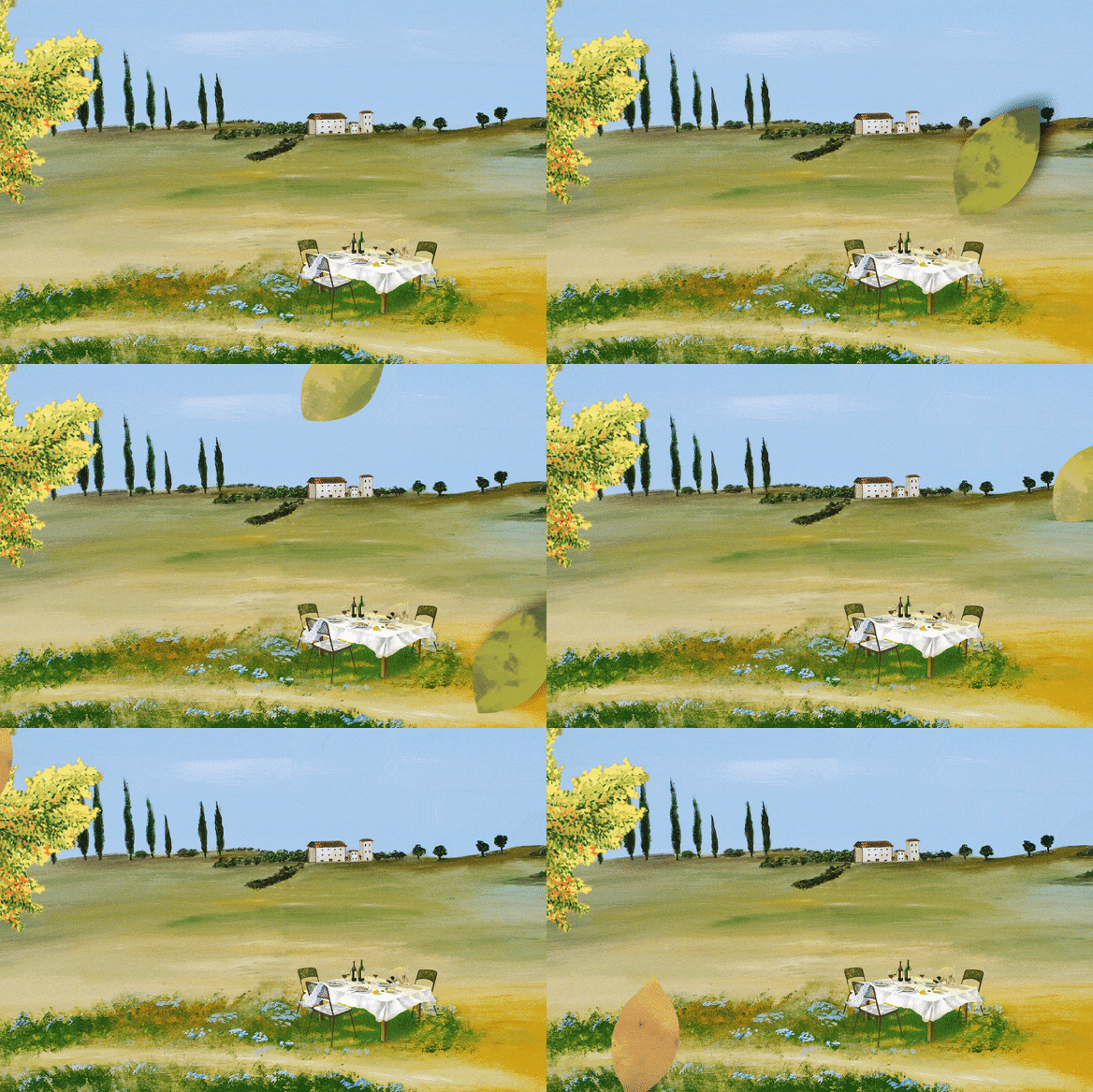
You’d rather be in a stone villa in the Tuscan hills, drinking a glass of chianti beneath ivy-dappled light, gazing across vineyards and olive groves as an eccentric aristocrat tells stories of disastrous love affairs.
Luckily, that’s exactly where Andrew Sean Greer wants to take you. The Pulitzer Prize-winner’s new novel, Villa Coco, is the literary equivalent of being wrapped in a big warm hug and told, “There, there, rest now, little one”.
At a time when so many contemporary novels seem to speak in the internet’s house style – ironic, cynical, exhausted, distracted – Villa Coco offers a reprieve of humour and delight that feels almost radical. Or, at least, welcome.
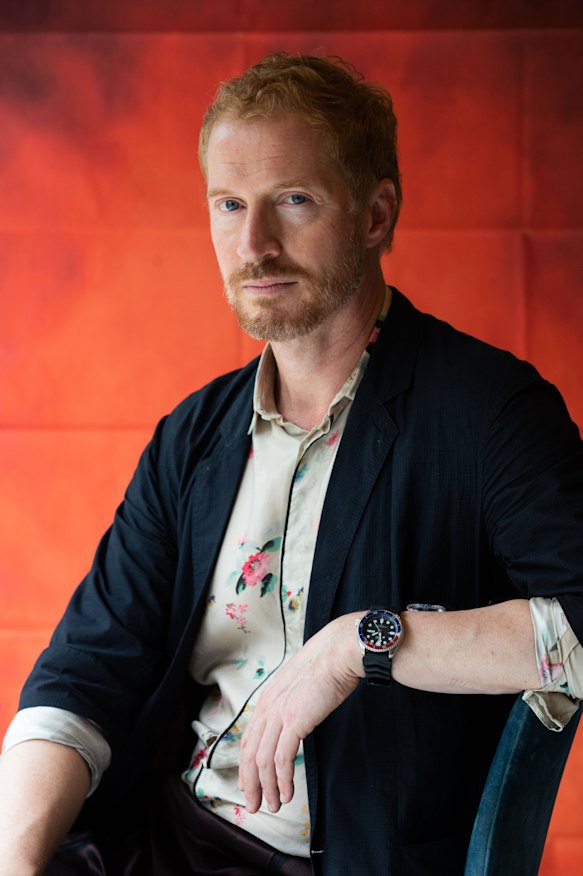
Which is precisely the point. Greer wanted to write the sort of story readers could disappear into; a world they would not want to leave. A novel, he says, filled with sunlight.
“I thought about wanting readers to remember what it’s like to have a delightful reading experience rather than just an important one,” Greer, 55, says. “It is, of course, great to re-read War and Peace but sometimes you want to be just charmed for days and released from the cares of your own life and of the world.”
In Villa Coco a fresh American graduate with a degree in archives and record management – who is “in no way prepared for the crucial final exam of Real Life” – has decided it’s time to get serious. When his college adviser suggests he reply to a job ad from an Italian baroness seeking someone to catalogue books, artworks and antiques, he thinks: “What could be more serious than Europe?”
He heads to the Tuscan hills to assist the wonderfully unpredictable 92-year-old Baronessa Lisbetta – known to all as Coco – who promptly nicknames him Giovedi (Thursday) because he is to be her “man Friday”. While he tries heroically to discover what he is there to catalogue, Coco has absolutely no interest in being organised. Instead, he stumbles into her world of schemes, enchantments and adventures with a logic all its own (for example: one must never, under any circumstances, put a hat on a bed).
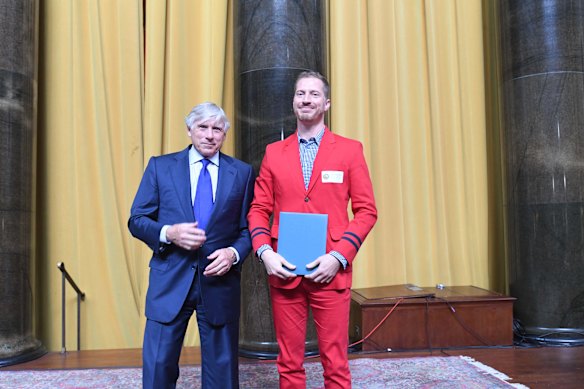
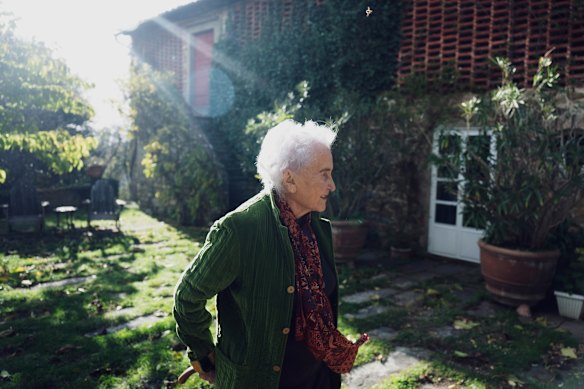
Coco is based on a real, larger-than-life character. Greer first met Baronessa Beatrice Monti della Corte in 2005 when she invited him to stay at her famed Tuscan writers’ retreat Santa Maddalena, which has welcomed Zadie Smith, Sally Rooney and Teju Cole among its guests. Greer arrived as a rising literary star after publishing his first two novels, feeling “more than a bit fraudulent”, and returned over the next two decades to write. He eventually became the first director of the retreat’s foundation, a role he held from 2016 to 2018. The young Greer was enchanted by the Baronessa, Italian culture and the world of art, literature and history she inhabited. “I realised the depth of my ignorance. I realised the very narrow American world I lived in, and that I had to open myself to all of those things,” he says.
While Greer kept the real writers he met out of the novel, Villa Coco is full of unexpected experiences borrowed from his years in Tuscany. Among them was an encounter with a princess who informed him she couldn’t understand his American dialect because she spoke only “the King’s English”. The pair were forced into a sort of accidental translation exercise, despite both technically speaking English. The Baronessa recently celebrated her 100th birthday, and Greer now splits his time between Venice and San Francisco.
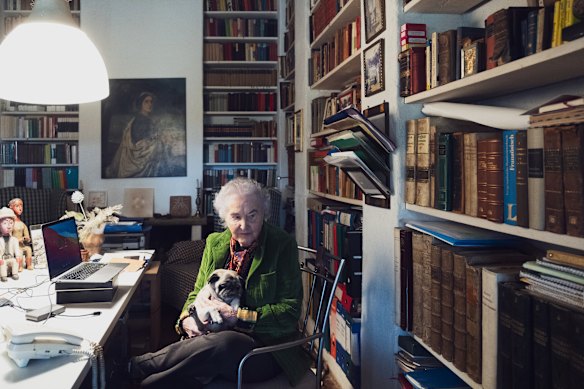
“It is very tempting to try to talk about Beatrice in terms of this book, and she is a more extraordinary character than I could ever hope to capture in a novel,” he says. “So the character of the Baroness in the novel is mostly the sense of comedy that I learned from her and a sense of lightness, despite someone now 100 years old, who’s lived through war and difficulty and, you know, personal trials.”
It’s also the lesson at the warm and fuzzy heart of Villa Coco. The real and fictional baronesses share the same superpower: knowing how to transform life’s messiest moments into excellent dinner-party conversation. Heartbreak, loss and disaster are merely stories that haven’t been properly edited yet.
The real-life muse’s response to her fictional counterpart is perfectly Villa Coco. “I think the one thing she said was, ‘Where did you get this Coco? Who is this Coco?’”
Where did Villa Coco come from? From a reader’s complaint, really. Greer had spent the past few years yearning for novels that could offer “a funny story and a sense of hope”, that were a “a balm to the soul”. The literary comfort food he had in mind belonged to the classic “charm novel”, the masters of which include Nancy Mitford and Gerald Durrell.
“They’re children’s books for adults in the sense that they’re delightful from beginning to end, even though they deal with serious things about death and grief and the passage of time. But they can, like the Baroness who taught me that, make a funny story out of them. And I find that those are the books that we really go back to, or I go back to, year after year,” Greer says.
Greer couldn’t find the sort of novel he wanted to read, so he did what novelists do: he wrote it himself. Of all the books he’s written, Villa Coco arrived the quickest. That lightness is a marked shift from the younger Greer, who he says spent much of his early career trying to establish himself as a Serious Literary Novelist (capital letters very much intended).
“You would not crack a smile in my first books,” he says. “I think, for me, it was not caring any more about that gravitas and realising that there is a way to get serious material through what’s actually a little harder, which is comedy.”
The turning point was his fifth novel Less, his bittersweet comedy of errors about Arthur Less, a novelist who accepts a string of literary invitations around the world, largely because attending his ex-boyfriend’s wedding is unbearable. The book won the 2018 Pulitzer Prize for fiction and became a breakout hit. Fellow novelist Michael Chabon offered Greer some sage advice: “Now you can write anything you want, and you don’t have to worry about it.”
Greer took him at his word. “So the first book I wrote was a sequel to Less, even though my agent said no sequels,” he says. “And then I thought, ‘I’m going to write the lightest possible novel I can because that is the book I wish were on my shelf’.”
‘I thought, “I’m going to write the lightest possible novel I can because that is the book I wish were on my shelf”.’Andrew Sean Greer
Which is not to say Villa Coco is some kind of sickening sugar rush – the literary equivalent of knocking back too many limoncellos Under the Tuscan Sun. The jokes work because Greer doesn’t lose sight of the harder stuff; his characters are not protected from disappointment. Greer says humour isn’t a way around serious subjects but another route into them.
“That’s what I’ve learned is the difficult thing. In a more serious book you could have pages and pages and pages about death. But in a comedy say, you talk about it once perfectly, and that’s actually, not harder, but a different technique.”
What, then, would Greer say to the younger version of himself arriving at Santa Maddalena for the very first time?
“I would say: you brought the wrong suit.”
As does his protagonist in Villa Coco, Greer arrived in Tuscany for the peak of a sweltering July with a heavy, black wool suit.
“I thought, ‘oh, I’m sure I’ll dress up now’,” Greer says. “But yes, you dress up all the time here. I did go to a funeral for a very famous artist but I needed some more suits.”
Another lesson learnt.
Villa Coco by Andrew Sean Greer is published on Tuesday by Sceptre ($35).
Disclaimer : This story is auto aggregated by a computer programme and has not been created or edited by DOWNTHENEWS. Publisher: www.smh.com.au