The baby was born in Cyprus in 2024, to a 24-year-old surrogate mother the court later dubbed “Ms Compton”.
The birth certificate was issued by the Turkish Republic of Northern Cyprus, and it listed the biological father, who was one half of the Queensland couple who commissioned the pregnancy, as the legal father.
But it listed Ms Compton, the woman who gestated and gave birth to the baby, as the mother, even though the baby was born from a donor egg.
That’s where the trouble began.
A Family Court judgment handed down in 2025 later tried to untangle the mess of the baby’s unclear parentage. Ms Compton, the surrogate, had renounced all claims on the child, so the child was effectively motherless.
The Lloyds, who were the “commissioning parents”, in the language of surrogacy law, and who were caring for the baby, wanted to commence stepparent adoption by Mrs Lloyd, so she could become the baby’s legal mother.
But the court took a dim view of the Lloyds – it said there was insufficient evidence to give them standing to apply to be the child’s legal parents.
Most egregious, in the court’s eyes, was the couple’s admission they had entered into a commercial surrogacy arrangement, which is a criminal offence in Queensland – carrying a penalty of up to three years’ imprisonment.
The court dismissed the Lloyds’ application, and referred the case to the Director of Public Prosecutions to consider whether criminal charges should be pursued.
The decision does not record what became of the baby.
To many people involved in the world of surrogacy – lawyers, parents, surrogates and activists – the case of Lloyd and Compton is a perfect illustration of why Australia’s surrogacy laws are not fit for purpose.
They say the criminalisation of commercial surrogacy leads to uncertainty, exploitation and heartache.
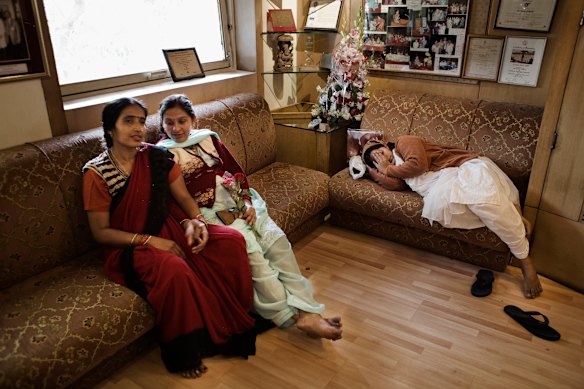
But critics, including the high authority of the UN Special Rapporteur on Violence against Women and Girls, believe surrogacy is by nature exploitative and should be outlawed altogether, across the globe.
She is among those who believe the practice is not fair to the babies, who are taken from their gestational mother soon after birth, and are not usually breastfed.
At the extremes of the debate, there are groups like Abolish Surrogacy Australia (ABSA), which calls surrogacy “legalised human trafficking” and “a state-sanctioned baby trade”.
At present, surrogacy in Australia is governed by a hodgepodge of inconsistent state laws and legal black holes which can create uncertain parentage, such as in the case of Lloyd and Compton.
This vague legal environment can lead to the exploitation of vulnerable foreign women who work as surrogates in countries where the practice is poorly regulated.
And it empowers predatory behaviour by some third-party intermediaries who capitalise on the desperate desires of Australian parents to have a baby.
Says Sarah Jefford, a surrogacy lawyer who was herself a surrogate: “Our surrogacy laws are largely mired in the past and have not kept up with increasing demand.”
Into this ethical and legal fray comes the Australian Law Reform Commission, which has been tasked with reviewing Australian surrogacy laws, policies and practices.
It was due to hand down its recommendations by July 29; that deadline was recently extended to September 11.
The new regulatory framework will ideally give clarity to hopeful parents. It could also turbocharge the number of surrogate births that happen on Australian soil.
“Surrogacy is a really complex issue because we are always balancing two major ethical obligations,” says Evie Kendal, associate professor of health promotion at Swinburne University. “One is the autonomy of women to use their body to decide if they want to help others have a child. The other is the risk of exploitation, that those women will be taken advantage of.”
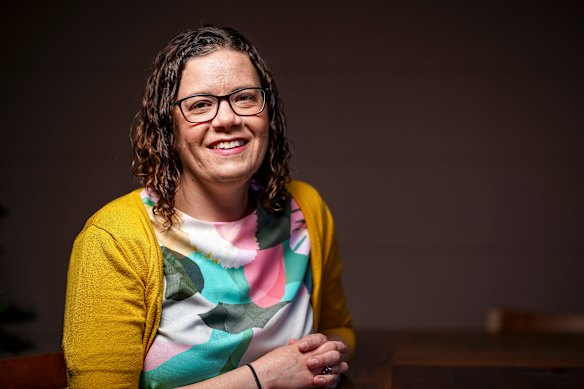
Kendal is a bio-ethicist who works in reproductive technology. She says that, historically, the ban on commercial surrogacy has been seen as the best way to prevent coercion, or a lack of meaningful consent, for the surrogate.
But it is widely expected that the ALRC will recommend changing Australian laws to allow some form of compensation for domestic surrogate mothers. “Everyone else in this situation is getting paid by the commissioning parents,” she says. “Doctors, lawyers, the IVF clinic, genetic testers. The only person not receiving money is the surrogate.”
According to a discussion paper published by the ALRC in 2025, surrogacy is still a rare practice in Australia, but it is growing, and as it grows, the legal and ethical challenges become more pointed.
While it is difficult to know the exact number of Australian parents who have babies via surrogate, the ALRC says that in 2020 about 75 children were born through domestic surrogacy (which accounts for 20 per cent of surrogacies), and 275 children were born via overseas surrogacy (which accounts for the remaining 80 per cent of surrogate births).
By 2023-24, the number of children born via overseas surrogacies was estimated to be 361.
In 2025, in an article published in the Law Society Journal, Jefford said there were 150 Australian surrogate births a year.
Gestational surrogacy – where IVF technology is used to implant a fertilised egg – is the most common form of surrogacy, which means there is usually no genetic link between the baby and the woman carrying him or her.
For Sarah Starkey, 41, carrying her own baby was not possible.
“I have had Crohn’s disease since I was 13 years of age,” she tells me from her home in Adelaide. Due to extensive bowel surgeries that caused adhesions and scarring, Starkey is unable to carry a pregnancy to term, a fact she learned very late, after three miscarriages, at 38 years old.
“It was overwhelming,” she says of being told by her doctor that she was unable to gestate her own baby.
From a standing start, Sarah and her husband Tom set about finding a surrogate to carry their baby. Sarah had a social media following from posting about her illness, and her IVF journey thus far. She and Tom put out a series of Instagram videos saying they were looking for a surrogate.
Luckily, the videos went viral and the story was picked up by their local paper, The Advertiser.
From there, a friend of a friend, Emily, saw the story and messaged Sarah. “She had completed her family and didn’t want more children of her own, but always wanted to do surrogacy and loved being pregnant,” says Sarah. “I went to meet her for dinner, and we hit it off. I had this really good feeling about her … I can’t explain it.”
The Starkeys reached an agreement with Emily, and she was implanted with an embryo created from Sarah’s egg and Tom’s sperm. Says Sarah: “We had really open conversations about what pregnancy would look like, what involvement we would have and when we agreed, we got legal advice.”
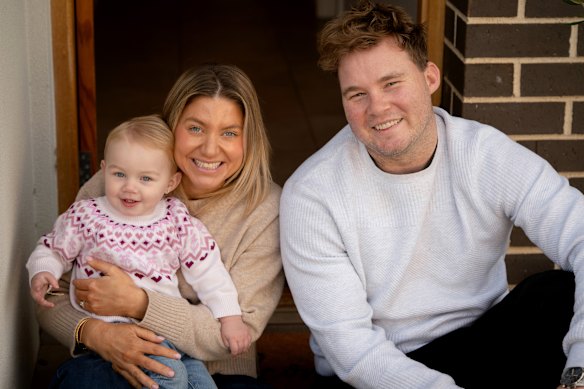
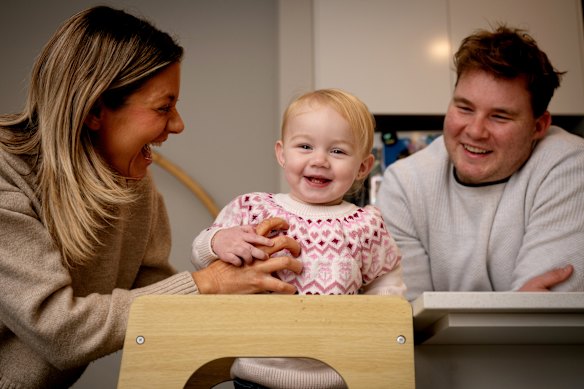
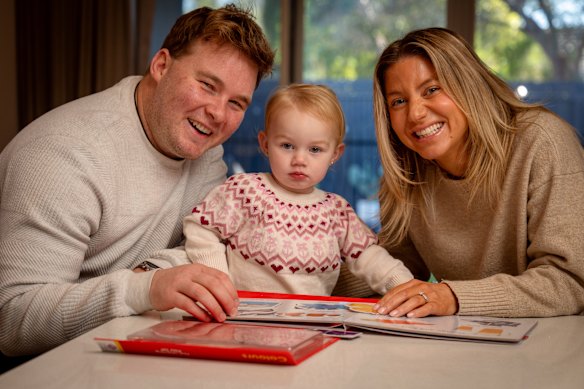
Savannah is now 18 months old, and she couldn’t be more loved. Sarah sends pictures of Savannah to Emily most days, and they catch up every couple of months.
But the legal system was slow catching up to reality. It took five months, through the South Australian Children’s Court, to obtain a legal order stating Sarah was Savannah’s mother.
Then the Starkeys were able to apply to have Savannah’s birth certificate changed so that it showed Sarah, not her surrogate carrier Emily, as her legal mother. “The fact that I wasn’t her legal parent, it sort of plays on your mind a little bit,” says Sarah.
Sarah contributed a submission to the ALRC inquiry, detailing her own experience with the surrogacy process. Her main hope is that the commission’s recommendations will streamline the process of assigning legal parentage. She would also like to see a Medicare rebate for IVF embryo transfers to surrogates.
While it is yet to hand down its findings, the ALRC’s 2025 discussion paper is clear that one of the chief aims of a new regulatory system would be to divert would-be parents from seeking surrogacy overseas.
Under its “ideas for reform”, the ALRC flags that current laws “unnecessarily prohibit the extent to which surrogates can be reimbursed, resulting in surrogates being unable to fully recover financial and non-financial costs and losses”.
“This,” the paper’s authors note, “likely contributes to the lack of surrogates available in Australia”, which in turn leads to an over-reliance on surrogacy arrangements overseas, which can be “unregulated and exploitative and create other harms”.
Another risk is that “intended parents may not be recognised as the child’s legal parents when they return to Australia”, which was the case with the Lloyds.
The ALRC also points out that the judicial process for intended parents to become the child’s legal parents is “expensive, time-consuming and stressful” and the current legislative model, which relies on criminal sanctions to ensure compliance, is ineffective.
“The ALRC is of the view that Australia’s existing surrogacy regulatory regime does not adequately meet its policy intent and is confusing, restrictive and not fit for purpose.”
So what might the commission suggest to remedy the inadequate legal environment? According to the discussion paper, key reform proposals include a nationally consistent set of laws to govern surrogacy, legalising coverage of surrogates’ costs and losses and establishing a network where surrogates and hopeful parents can connect with each other (at present it is illegal to advertise).
Other proposals include access to Medicare-subsidised fertility treatment, an easier administrative pathway for intended parents to become the legal parents of their surrogate-born baby, and the establishment of a national regulator to ensure compliance.
It is also proposed that criminal sanctions would be replaced with a civil penalty regime. Information about surrogate birth would be “flagged as an addendum” to the baby’s birth certificate, as well as being made available via a surrogacy register.
But if the commission does propose financial recompense for surrogacy, and a liberalisation of laws around procuring babies from overseas, it will find itself in opposition to powerful international forces moving in the opposite direction.
In 2024, Italy passed legislation designating surrogacy as a “universal crime”, and exposing Italian citizens to prosecution if they engage in surrogacy abroad. Compensated surrogacy is illegal or restricted in much of Europe. Also in 2024, Pope Francis called the practice of surrogacy “despicable” and “a grave violation of the dignity of the woman and the child”. He called for a universal ban on the practice.

And then there was the bombshell 2025 report from United Nations Special Rapporteur on violence against women and girls, Reem Alsalem. It does not pull punches, describing surrogacy as “a system of exploitation and commodification of women and children”.
The report, which was tabled to the UN General Assembly in July 2025, found that international surrogacy was increasing worldwide, with the global surrogacy market projected to reach $99.75 billion by 2033.
But of all this money, surrogates receive “only a small fraction”, according to the report, “with the majority of the payment going to intermediaries”.
Countries such as Australia and India permit only altruistic surrogacy, and other states such as Georgia, Israel, the Russian Federation and Ukraine, permit commercial surrogacy. But the majority of countries don’t regulate it at all.
Even where the practice is regulated, the report found it was insufficient to combat the exploitation of women because “forum shopping” has emerged “whereby commissioning parents seek the least restrictive and least expensive locations to recruit surrogate mothers”.

Globally, surrogate mothers, who are often described as “service providers”, are often migrant women, and they usually come from lower-income backgrounds, with “less social status compared with the commissioning parents”.
In the worst cases, migrant women may be targeted and transferred to other countries for the purposes of impregnation and childbirth.
In 2025, the New York Times magazine published a harrowing investigation into one such “baby-factory” operation in Georgia, where Thai women were allegedly trafficked and effectively imprisoned while gestating babies for foreign couples, while being subjected to medical malpractice and physical cruelty.
“Surrogate mothers are often trapped in unequal power dynamics with doctors and agency personnel and have described feeling powerless and being treated ‘like a cow’,” it reads.
In Cambodia, reports have emerged of women being forced to give birth in handcuffs.
Then there are the rights of the child. According to the Special Rapporteur’s report, children born via surrogacy are often cherished by the commissioning parents, but, she says, “from birth they experience immediate separation from the woman who carried them … a process that can be emotionally and developmentally significant”.
“Individuals with disrupted development of secure attachment are at higher risk of developing mental disorders,” the report continues.
Babies born via surrogate can’t be breastfed, and have a lower mean gestational age at delivery.
Moreover, contractual arrangements “risk treating the child as a passive object of an agreement between adults, or as a commodity”.
Importantly, the report notes there is limited research on the long-term emotional wellbeing of children born through surrogacy.
As Kendal says, with some understatement: “There’s lots of very strong views when it comes to surrogacy.”
“Having children and building a family are such cherished goals, and you don’t want to confuse that with something transactional.”
But, Kendal says, she would “caution against the assumption that the gestational bond is superior to other forms of bond”.
“We don’t say that men can’t bond with their children,” she says.
“We have adoption, kinship care … there are lots of ways to bond with a child that have nothing to do with gestation.”
As for the UN Special Rapporteur’s recommendation of a global ban, Kendal says it’s unlikely to be successful.
“Often if you drive things underground, you just make them worse. That’s one of the priorities of the law reform – to see if we can achieve less exploitation overseas.”
If the ALRC decides to recommend monetary compensation for surrogates, Kendal says a national regulated body could set the rates payable. “There are a lot of concerns that if we pay for something, we devalue it,” she says. “We do not allow buying and selling of human tissue … we want to show respect that these things should not be traded on a market.”
As such, a compensated surrogacy mode would make it “clear that we are compensating time and effort”.
“You are not buying someone’s body, and it is not the guarantee of a baby,” she says.
Jefford, the current president of the Association of Fertility and Surrogacy Professionals, has “high hopes for some change” ahead of the publication of the ALRC report recommendations. “We want a well-regulated industry, allowing for services to operate ethically, with codes of conduct and licensing requirements,” she says.
Eight years ago, she also gave birth, as a surrogate, to a little girl, an experience she describes as “a highlight of my life”.
Through her legal practice, Jefford has seen how difficult it is for intended parents who have a baby via surrogate to become the baby’s legal parents.
“A big ticket item for parties is the current process for parentage,” she says. “It’s a clunky system.”
“We would like an automatic recognition of the intended parents from birth.”
Most parents tell their children they were born via surrogate, and it is lovingly worked into the story of their family. But at present, children have no right to know, and the legal registration system is inconsistent.
“In Victoria and Queensland, you can access that information once you turn 18,” says Jefford. “But you need to know there is the information to ask for.”
A helpful ALRC recommendation would be for a national register of all surrogate births, Jefford says, as well as a National Commission for surrogacy, that would regulate the industry and watch for abuses.
As for compensating surrogates, Jefford believes it should be allowed. “We have this idea that she [the surrogate] should do everything for free, and everyone else should be paid,” she says. “If someone goes down the mines, they get compensated for their work … we can do something about the overseas exploitation by making it easier to do in Australia.”
Jefford says there is a cohort of women in Australia who are deterred from surrogacy because of the financial risk involved. Compensation would fix that.
“It could be about $500 a week, assuming most surrogates are holding down jobs for at least part of the pregnancy. So that’s about $26,000 for the pregnancy.”
The amount would preferably be capped to prevent bidding wars. “I don’t want to be the person who picks the number,” Jefford says.
She notes that when she has asked people on her social media platforms what the compensation should be, “a lot of the blokes say $5-10K and the women say they would do it for $2K”.
Last year Sarah Starkey wrote a children’s book about surrogacy called The Belly that Brought Me Home, and she reads it to Savannah so she understands the circumstances of her birth.
“As soon as she is able to understand more, we will tell her everything,” Starkey says. “There is nothing we will hold back.”
“Tom and I are both grateful for our surrogate, Emily, every day,” Starkey says. “She has given us the gift of becoming parents and Savannah wouldn’t be here without her.”
Start the day with a summary of the day’s most important and interesting stories, analysis and insights. Sign up for our Morning Edition newsletter.
Disclaimer : This story is auto aggregated by a computer programme and has not been created or edited by DOWNTHENEWS. Publisher: www.smh.com.au