
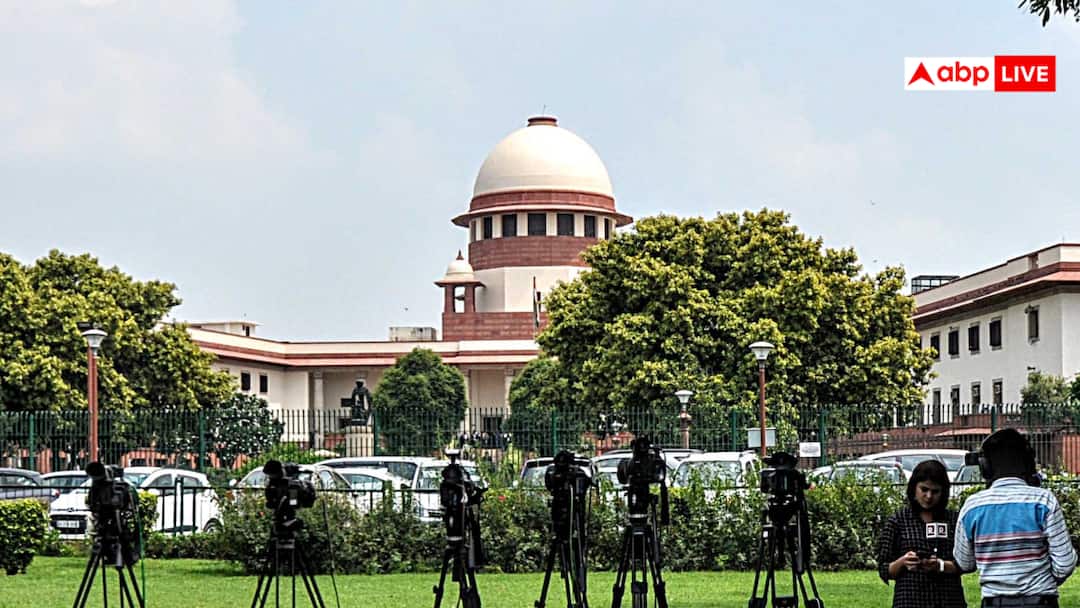
- Judges differed; Chief Justice to form five-judge bench.
The Supreme Court on Wednesday delivered a split verdict on whether petitions challenging the law governing the appointment of the Chief Election Commissioner and Election Commissioners should be referred to a larger bench. A two-judge bench of Justices Dipankar Datta and Satish Chandra Sharma differed on the immediate course of action. The matter will now go before the Chief Justice for administrative directions, with the issue headed towards a five-judge Constitution Bench.
The petitions challenge the 2023 law that governs the appointment of the CEC and other Election Commissioners. The law replaced the Chief Justice of India with a Union Cabinet minister on the selection panel.
Datta Rejects Reference
Justice Dipankar Datta said he did not agree with the request to directly refer the matter to a five-judge bench. He said, “I reject the request to refer the matter to a five-judge bench.” The Centre had argued during the earlier hearing that the case should be heard by a five-judge Constitution Bench.
Justice Datta also addressed arguments concerning the collegium system for judicial appointments. “I want to specifically address the argument regarding the collegium system for selecting judges. The misconception is spread that judges are appointing judges. This process involves detailed discussion,” he said.
He added, “The central and state governments are consulted, and intelligence reports are taken. It is wrong to question the entire system because of a dispute over one or two appointments.”
EC Selection Debate
On the central question concerning the independence of the Election Commission, Justice Datta acknowledged the arguments advanced by the petitioners regarding the composition of the selection panel.
He said: “It was argued before us that impartial selection of Election Commissioners is essential for the Election Commission’s impartiality. Having the Prime Minister and his nominee on the selection committee would bias the selection process in favor of the government. The Leader of the Opposition’s role in a three-member committee would be merely cosmetic. I find this argument to be weighty.”
The challenge focuses on the change in the composition of the selection committee under the 2023 legislation, which excluded the CJI from the panel.
Sharma Dissents
Justice Satish Chandra Sharma took a different view from Justice Datta on the question of referring the petitions to a larger bench.
“With all due respect to Justice Datta, I would like to say that I do not agree with his decision,” he said.
Justice Sharma referred to an earlier Supreme Court ruling that had provided for a selection committee comprising the Prime Minister, Leader of the Opposition and the Chief Justice. He said that arrangement had been made to address the absence of a formal statutory framework at the time.
He said: “Now the situation is different. Parliament has enacted the law. My decision is that the matter should be placed before the Chief Justice and he should form a bench of five judges.”
ALSO READ: Trump Backs India-Middle East-Europe Corridor, Calls For Energy Routes To Bypass Iran
CJI To Decide
Despite the difference between the two judges on the immediate procedural question, Justice Datta also said the matter should move forward and be placed before the Chief Justice.
He said: “Even if our conclusions differ, I believe the matter should now be referred to a three-judge bench. It would be better to place the matter before the Chief Justice and have him constitute a five-judge bench.”
Justice Datta also referred to concerns about delays in hearing cases before Constitution Benches.
“We hope this case will be heard soon,” he said.
The Supreme Court has separately indicated the need for a permanent five-judge Constitution Bench to address concerns over delays in deciding constitutional matters.
Disclaimer : This story is auto aggregated by a computer programme and has not been created or edited by DOWNTHENEWS. Publisher: abplive.com




