
Elene* wraps her arms around a reusable shopping bag, holding it protectively to her chest over her layers of clothing: a windbreaker, midnight blue hijab and knitted jumper.
She peers out from behind large glasses which take up most of her face, and leans back in her chair, creating distance, but her slender hands stay close to the table. They’re decorated with licks of electric green nail polish, swaddled in fuzzy fingerless gloves.
“This is where I get my comfort,” Elene, who is in her 50s, says as she gestures around Hartley’s Meals on Chapel Street in Prahran. The midday lunch rush is bustling.
“I can talk to people, and they see that I’m OK, and that’s it. They know where I’m going.”
Vulnerable people on Chapel Street have few sanctuaries. The streets are littered with used syringes, the alcoves are choked with the belongings of people sleeping rough. For some, it’s because they are homeless. For others, it’s because they don’t want to go home.
Elene’s public housing flat is not a sanctuary – she has no choice but to live there.
“I don’t go out after 5pm,” she says. Her ex-husband, a drug addict previously jailed for beating her up, has moved into a public housing building next door.
Community service provider Uniting has run Hartley’s – a bright cafe with commercial kitchen and courtyard, giving low-cost meals to the needy and connecting them with services – for more than three decades.
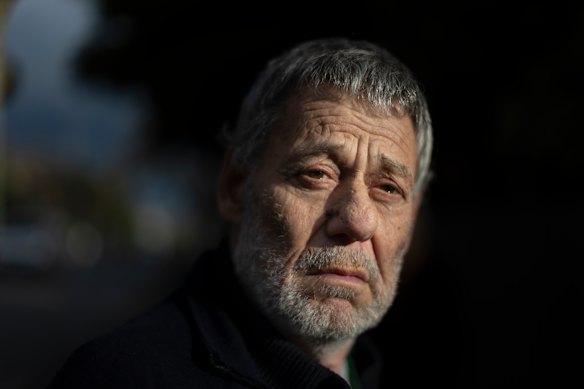
Minutes earlier, 73-year-old Warren Brygel sat at Elene’s table, grinning and reminiscing about the old days on Chapel Street. There was Paterson’s Cakes, “the best cakes in Melbourne”, and you could see AC/DC perform for nothing at their local haunt. In the ’60s, “everybody was supposed to have a house over their head”, he says.
“That’s just out the window now.”
Brygel was working full-time as a courier 14 years ago. He now considers Hartley’s his “first home”, and comes here even on Christmas Day. Things have changed on the strip, he says, but not for the better.
“I’ve seen everything. It’s gotten a lot worse,” Brygel says. “A lot more people are on drugs, unfortunately.”
The City of Stonnington, which includes Prahran, ranks fourth across metropolitan Melbourne for the number of drug- and alcohol-related ambulance attendances, despite ranking 14th when not accounting for the council area’s population.
Its position has crept up in recent years.
By 2023, Stonnington consistently sat in the top five municipalities for ambulance attendance rates involving ketamine, ecstasy, cocaine, GHB and heroin (per every 100,000 residents), which is indicative of what addiction research organisation Turning Point describes as a “concentrated burden”.
That’s part of what local services are talking about when they refer to the “complexity” of the area, which has a significant transactional population thanks to the party scene.
The Better Health Network’s office is over the road from the charred remains of the Love Machine nightclub, which was gutted by fire in March. The organisation takes a harm minimisation approach, arming nightclubs with the overdose medication Naloxone, and offering a free needle and syringe exchange program.
“The services that we have really meet the demands of what we’re seeing here,” says Lucien Keene, the lead of the network’s alcohol and drug harm reduction team.
“Like, there’s a big amount of gyms around here, so we have a peer performance and image-enhancing drug drop-in service.”
It’s grassroots work like this the area needs more of to keep people safe and prevent them from ending up in acute services, Better Health chief operating officer Wayne Merritt says.
Keene adds: “We’re zero stigma, zero judgment in places like this. It can be a nice interaction that does set them up to further engage in the healthcare system.”
Within five minutes’ drive of Chapel Street, The Alfred is trialling a Naloxone vending machine outside its emergency and trauma centre as part of a $95 million state government harm reduction plan.
On homelessness, Stonnington takes a decidedly contrary view to the neighbouring City of Port Phillip, which last month voted to confiscate homeless people’s belongings.
“Homelessness is not a crime. People don’t realise that,” Stonnington Mayor Melina Sehr told the most recent council meeting.
The council has, since 2021, aimed for “functional zero” homelessness, meaning housing and support outweighs the number of people who are homeless.
Though the state government already funds Housing First, which helps people secure and maintain long-term housing, Stonnington wants money into local outreach and health services, including Launch Housing and the Better Health Network.
“Every Victorian deserves the dignity of a home, which is why we work closely with specialist agencies to support people who are experiencing or at risk of homelessness, including in the Chapel Street precinct,” a state government spokeswoman said.
The council draws a harder line on public drinking, which Sehr suggests is commonplace in Prahran Square. The council is investigating reviewing local laws to allow confiscating alcohol from people drinking in certain public areas, but the mayor told the most recent council meeting “it’s a long and arduous process”.
“I’m hoping this time in 12 to 18 months we’ll have that that rule tightened up,” Sehr said. Stonnington is also lobbying the state government to commit to an inquiry into whether decriminalising public intoxication has improved public safety and amenity.
Josh Lefers is among people who say vulnerability on and around Chapel Street is the worst it’s even been. As a business owner for more than a decade, he says everyone wants better mental health outcomes, fewer people sleeping rough, and less alcohol- and drug-related harm along the strip.
However, Lefers says the council is presenting these issues “as though they have suddenly appeared, when many of the problems now affecting Chapel Street have developed under [Stonnington’s] own watch through its own neglect”, he says.
A mentally unwell woman recently threatened one trader with a hammer, according to locals. Lefers cites another trader who felt afraid to walk past a homeless man living out the back of her shop because he was aggressive.
“It means that both those people are suffering because he’s also getting people who are not happy with him,” Lefers says.
In addition to Stonnington’s Chapel Street precinct improvement plan, which details its plan for change, the council is also lobbying the state government to fund the continuation of a Salvation Army daytime outreach program trial.
Back at Hartley’s, people young and old are queuing to be served by a beaming man in an apron standing behind the buffet. A woman wearing a tartan scarf thanks him warmly as he ladles vegetables onto her plate.
Warren Brygel and Elene say they want more services like this on Chapel Street. “Not having a family here in a big country like Australia is hard,” Elene says. “But at least for five days, I’m OK.”
When you have a little, somewhere like this means a lot.
*Not her real name
Start the day with a summary of the day’s most important and interesting stories, analysis and insights. Sign up for our Morning Edition newsletter.
From our partners
Disclaimer : This story is auto aggregated by a computer programme and has not been created or edited by DOWNTHENEWS. Publisher: www.smh.com.au