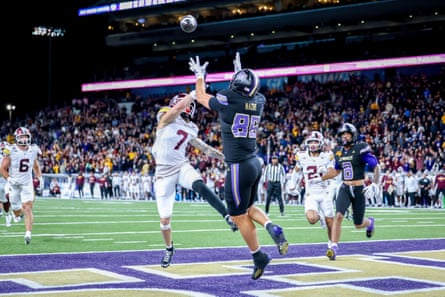
The Senate passed a sweeping bipartisan bill on Monday that would regulate college sports, an attempt to end “chaos” in an industry that has been upended by skyrocketing athlete payments and near-unrestricted transfers between schools.
The overwhelming 77-22 vote to pass the Protect College Sports Act is the strongest effort yet by Congress to set national regulations governing payments to college athletes for their name, image and likeness and how often they can transfer. It would give the NCAA new authority over those rules and limited antitrust protections to enforce them.
The bill is the product of years of Senate negotiations that intensified after a lawsuit settlement uprooted the college sports landscape by allowing colleges to pay their players. The legislation, which would still have to pass the House, would codify the settlement into law but also establish new guardrails around the system in an attempt to rein in the runaway costs for colleges.
“It would be nice if college sports could somehow magically fix itself, but this is a matter of law, federal law, and only Congress can fix it,” said Republican Texas senator Ted Cruz, who negotiated the bill with a Democrat senator, Washington’s Maria Cantwell.
Donald Trump praised the bill in a social media post after the late night passage. “This is a really big deal,” he said. “It will not only save college sports, it will save the colleges themselves.”
The bill’s backers – more than 70 senators from both parties – say it aims to curtail constant litigation and uncertainty across college sports for athletes, schools and fans. It would also give hundreds of thousands of athletes new health and labor protections.
But critics say the bill doesn’t do enough to protect athletes or curtail the enormous sums of money flowing to coaches, colleges and conferences.
“This is a bill that essentially ensconces a system of exploitation, and it doesn’t fix the broader problems,” said Connecticut senator Chris Murphy, a Democrat who has worked with labor and civil rights groups to rally opposition to the bill.
The bill’s future is still unclear. It could face an uphill battle in the House, which failed repeatedly over the last year to get a different version to the floor and is in recess until after the November elections. Lawmakers will have to start over in the next Congress if the bill doesn’t pass both chambers by the end of the year.
College sports have been reeling in the wake of the 2025 court settlement allowing colleges to directly pay players for their name, image and likeness. The fallout has reshaped the industry and led to football roster payrolls that can exceed $40m.
The bill would codify the court settlement, including a revenue cap that allows schools to share up to $21.5m in revenue with their players. The legislation would more than double that amount for some schools, allowing up to an additional $27.5m in payments through a retention fund – a change that helped win the support of the two largest conferences, the Big Ten and Southeastern Conference.
To help schools raise more revenue, the bill would give schools and conferences the option of pooling their TV media rights.
The legislation also aims to stabilize the NCAA transfer portal that has led to players constantly switching teams. It would restrict player transfers to one “free” move over five years without sitting out a year, with some exceptions, and also would restrict players to five years of total eligibility.
The proposed eligibility limit comes amid backlash to schools that have increasingly pushed boundaries, including LSU’s now-canceled plans to place players on the roster who had participated in NFL training camps.
The bill also would restrict coaches from leaving their schools during the season, force schools that want to switch conferences to spend three years as an independent and prevent conferences from growing larger than 20 programs – an effort to prevent so-called “superleagues” from taking over sports.
Some Democrats say the bill wouldn’t do enough to limit the big money in college sports though.
The legislation “places a cap on the students’ cut of the revenues, but there are no caps on coaches’ salaries or on the size of donations to athletic programs,” Murphy said last week.
Groups like the NAACP, Congressional Black Caucus and AFL-CIO have also opposed the bill, in part, because it leaves unresolved whether athletes should be considered employees with the ability to collectively bargain.
All four Black Democrats in the Senate – Cory Booker, Raphael Warnock, Lisa Blunt Rochester and Angela Alsobrooks — have opposed the bill.
Booker, who played football at Stanford in the late 1980s on a scholarship, noted the “outsized role” that Black athletes play in college sports. He said it wasn’t until college athletes were able to begin to win cases in court that the power started to shift, “and now the NCAA is coming here to the United States Senate, asking for sweeping powers” to exempt antitrust laws.
“We know who this bill is protecting,” Booker said.
Disclaimer : This story is auto aggregated by a computer programme and has not been created or edited by DOWNTHENEWS. Publisher: theguardian.com